

World News20.08.2024
Eurostat: Solar overtook hard coal as electricity source in 2022 in EU


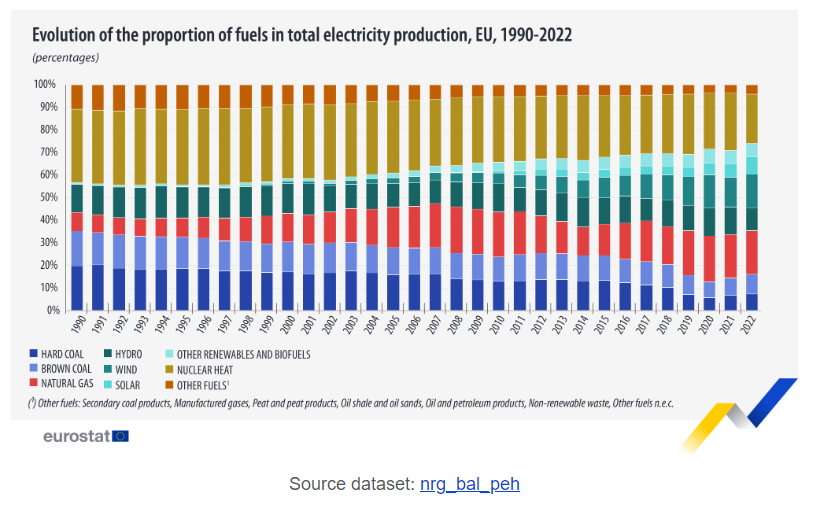
QAZAQ GREEN. In 2022, hard coal for the first time was overtaken by solar energy in electricity generation in the EU. The proportion of solar energy in the EU’s total electricity production was 210 249 GWh compared with 205 693 GWh for hard coal.
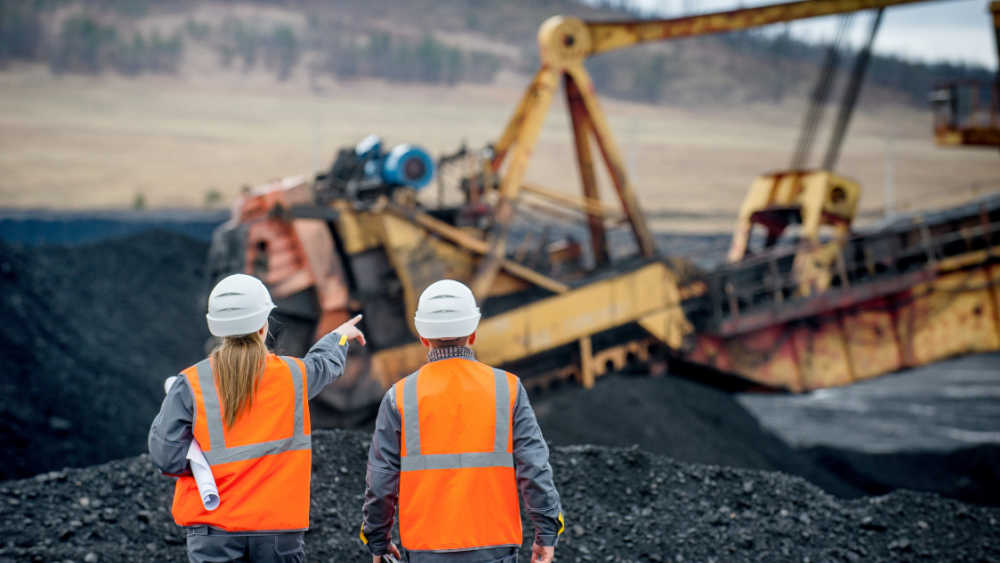
Poland and Czechia are the only two remaining producers of hard coal in the EU, with only Poland using it as a major source for electricity generation. Brown coal, a category of coal with lower energy content, is used in electricity generation by 9 EU countries and was the source of 241 572 GWh of electricity.
On the other hand, hard coal’s import dependency rate reached its highest point in 2022 at 74.4%. This sharp increase of 15 percentage points compared to 2021 can be explained by EU countries building coal stocks. Unlike previous years where EU countries mostly reported stock draws, they put 9 million tonnes of hard coal in their stocks in 2022, the first stock build since 2019 and the highest since 2008. Despite its peak in 2022, hard coal’s import dependency rate remains below the ones for oil and natural gas (both above 97%).
In 2022, Russia remained the largest supplier of hard coal to the EU at 24%, ahead of the United States (18%) and Australia (17%). However, following the EU’s ban on hard coal imports from Russia entering into force in August 2022 due to the war of aggression against Ukraine, imports from Russia fell to 27 million tonnes in 2022. This equals a decrease of 45% compared with 2021.
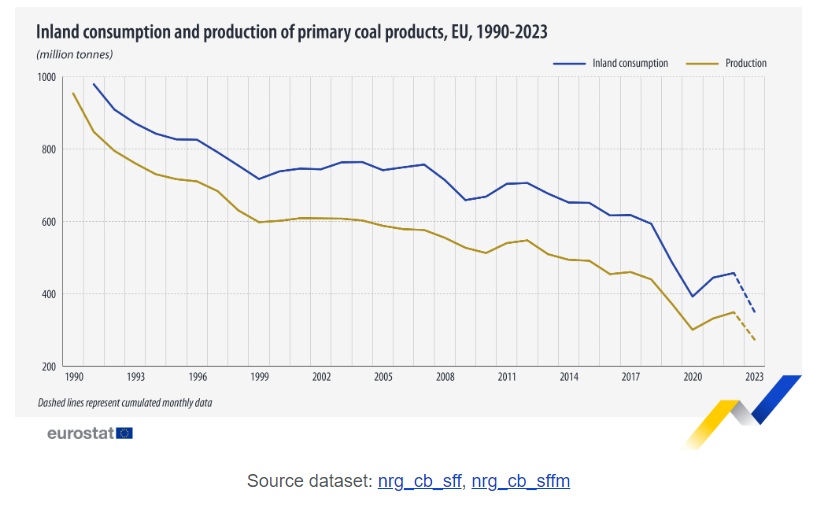
Preliminary monthly data suggests that in 2023, EU coal production and consumption decreased to their lowest recorded levels, reaching 274 million tonnes (-22% compared with the previous year) and 351 million tonnes (-23%) respectively. With a decrease of more than 100 million tonnes in coal consumption, this appears to be one of the largest historical yearly decreases observed for the fuel in the EU. In 2023, Germany (37%) and Poland (27%) were the main consumers of coal in the EU, taking up almost two thirds.
Saudi Arabia's operating renewable projects reach 12.3 GW
Large wind power plant to be built in Issyk-Kul
New 120 MW solar plant launched in Russia's Zabaikalye region
Omsk refinery's solar power plant generated over 20M kWh in a year
Australia to let solar systems up to 1 MW qualify for small-scale certificates
Spain to allocate €612M to modernize 173 wind and hydropower projects
Electricity demand in Portugal hits all-time first-half high as renewables supply 71%
Google to buy electricity from RWE's Oklahoma solar plant
KOREM launches new digital portal for Kazakhstan's electricity market
Ember: Renewables, storage and stronger grids key to building resilient power systems in ASEAN
IEA: quarterly electric car sales hit records in several key markets amid energy crisis
How wildlife is responding to solar power plant in the Mojave Desert, USA
Water area in the Caspian Sea designated as a renewable energy zone
Kazakhstan's renewable electricity generation reaches 8.6 billion kWh
TotalEnergies to acquire Shell's European renewables business
China marks new green energy breakthrough as renewables top 40%, coal falls below 50% in H1
Uzbekistan pays out over 330.8 billion soums in solar panel subsidies
New battery-only electric cars up 30% across the EU in 2025
U.S. patents technology for modular orbital data centers with passive cooling
Tesla and ContourGlobal sign long-term PPA for 1 TWh of renewable electricity annually