



World News09.10.2026
Ember identifies bankability as a key barrier to ASEAN’s energy transition


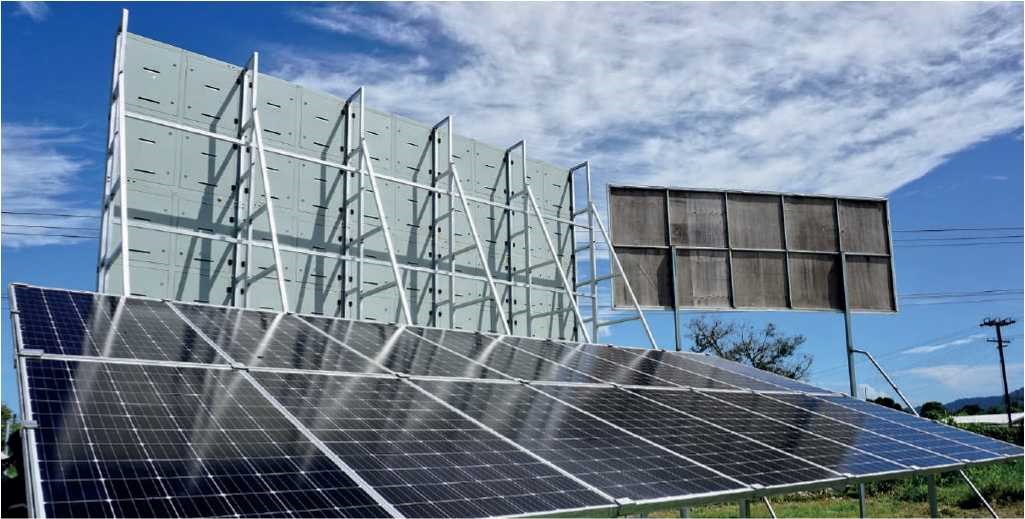
QAZAQ GREEN. The main obstacle to financing the energy transition in the Association of Southeast Asian Nations (ASEAN) is no longer a lack of capital, but a shortage of projects that lenders and investors are willing to finance, according to a new report by energy think tank Ember.
The report, Bankable by design: Financing ASEAN’s energy system transformation, was authored by Dinita Setyawati and Alnie Demoral.
Over the past decade, ASEAN’s installed solar capacity has grown to 39 GW, while wind capacity has reached 9.6 GW. An analysis of 50 utility-scale projects that reached financial close suggests that financing large power plants is no longer the main barrier in several markets across the region.
Ember estimates that a 20 MWp solar project can deliver a return on equity of 13.2% at an interest rate of 7%. A tariff of around $72/MWh would be required to achieve a 12% return, broadly in line with market levels in Indonesia ($74/MWh), the Philippines ($76/MWh) and Viet Nam ($71/MWh).
However, the same financing model is less effective for small distributed solar projects, battery storage and power grids.
For distributed solar, project size has a greater impact on returns than the cost of debt alone. Each additional megawatt increases the estimated return on equity by around 0.5 percentage points, while cutting the interest rate from 9% to 5% adds approximately 4.4 percentage points. Under the same assumptions, a 0.5 MW project delivers a return of 2.6%, compared with 13.1% for a 20 MW project.
The financing challenge is significant given Indonesia’s plans to develop around 80 GW of distributed solar capacity and the Philippines’ goal of achieving full household electrification by 2028. Ember recommends reducing the development and transaction costs of smaller projects and aggregating them into larger portfolios that are better suited to financing.
Battery storage faces a separate set of barriers. ASEAN will need an estimated 23–26 GW of storage capacity by 2030, but projects totalling only around 7 GW have been publicly announced. In Ember’s storage market readiness index, the Philippines ranks first at 86.9%, followed by Singapore at 83.5%, Indonesia at 52.1% and Viet Nam at 51.3%. Malaysia, at 35.8%, remains at an early stage of market development.
None of the countries has a dedicated capacity market, while opportunities for storage operators to earn revenue from multiple services remain limited. Ember recommends opening wholesale electricity, ancillary services and congestion management markets to storage providers, allowing them to combine revenue streams.
Grid infrastructure also struggles to attract private investment. The estimated return on equity for the 128-kilometre, 230 MW Sarawak–West Kalimantan interconnector is 7.2–8.8%, below the 12% benchmark required by private investors. The benefits of grid infrastructure extend to generators, consumers and the wider power system, but regulated tariffs based mainly on cost recovery do not allow these benefits to be fully monetised.
Dinita Setyawati, Ember’s External Affairs and Strategic Impact Lead for Asia, said financing measures should be tailored to the specific asset class and market. Clearer power offtake arrangements and additional revenue streams for batteries providing flexibility and grid services could make projects more attractive to investors.
Other recommendations include giving renewable electricity priority in dispatch, expanding direct power purchase agreements between renewable generators and corporate buyers, and harmonising technical standards through the ASEAN Consultative Committee for Standards and Quality (ACCSQ). For grid infrastructure, Ember also calls for innovative financing mechanisms, guarantees and more flexible tariff structures.
The report estimates that current investment levels remain below what is needed for the region’s energy transition. ASEAN will need around $281 billion in annual investment by 2035 to achieve a full transformation of its energy system.
Coca-Cola HBC Bulgaria secures long-term supply of renewable electricity
Ember identifies bankability as a key barrier to ASEAN’s energy transition
Nearly 1,200 low-income households in Uzbekistan to receive solar panels
Kazakhstan to commission 5 GW of renewable capacity in 2028–2029
Solar and storage support 982,000 jobs in the EU
China plans to help Moldova build solar farms and expand energy storage
Central Asian and European universities discuss renewable energy research network
Global floating offshore wind capacity rises 38% in a year
Renewables' share in Kazakhstan's power generation rises from 7% to 8.5% since early 2026
Kazakhstan to establish climate investment platform
Researchers develop wireless EV charging system with 98.51 percent efficiency
IEA urges Southeast Asia to diversify energy supplies and accelerate electrification
China completes world’s tallest wind measurement tower
Six Flags has installed one of the largest solar carports in the US
Swedish study tests combined broccoli production and solar power generation
U.S. military program funds ground beacon for space-based solar power
Abai region develops renewable energy projects totaling 160 MW
Tajikistan commissions two solar power plants with energy storage
Sunlight instead of filters: Chinese researchers develop solar catalyst to reduce waste odours
20 MW solar power plant commissioned in Kyzylorda region
