



News Kazakhstan05.04.2025
Kazakh President proposes to create a Central Asian Center for Rare Earth Metals in Astana


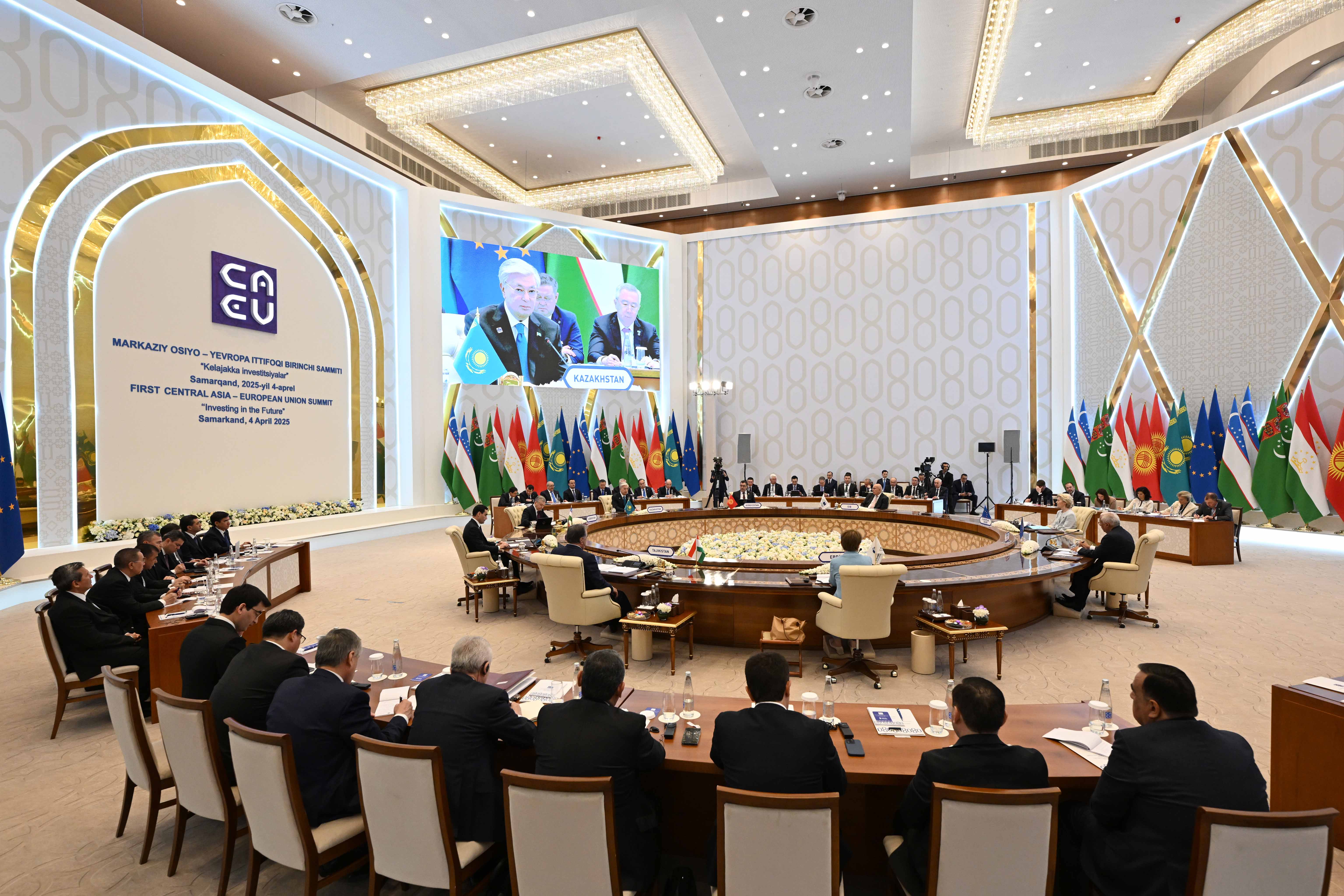
QAZAQ GREEN. During the Central Asia – European Union summit held in Samarkand, President of Kazakhstan Kassym-Jomart Tokayev highlighted the climate agenda as a key pillar of interregional cooperation, according to Akorda.
In his address, President Tokayev underscored the growing importance of energy partnership with the European Union. While Kazakhstan remains a reliable supplier of hydrocarbons, he stressed the country’s accelerated efforts in renewable energy and clean fuel development.
“Kazakhstan is implementing projects in the field of renewable energy and clean fuel. We are building up wind and solar power capacities, as well as developing projects to produce ‘green’ hydrogen together with our long-time partners Total, Eni, Svevind and other European companies,” said Tokayev.
He also noted that Kazakhstan, Uzbekistan, and Azerbaijan have launched a large-scale initiative to construct a ‘green’ energy transmission line across the Caspian Sea, aimed at connecting with European markets.
Highlighting Kazakhstan’s mineral resource base, Tokayev stated that the country produces 19 of the 34 raw materials essential for the EU economy—including uranium, lithium, copper, and cobalt—which opens significant opportunities for collaboration in clean technology development.
To support this, he proposed the establishment of a Regional Research Centre for Rare Earth Metals in Astana, designed to serve as a platform for information exchange and to attract investment into the sector.
“Kazakhstan is actively promoting decarbonisation initiatives. Our country plays a crucial role in the production of clean energy, providing about 40% of the world's supply of nuclear fuel,” Tokayev added.
He also pointed out the establishment of a Climate and Green Energy Project Office for Central Asia in Kazakhstan, which now acts as a coordination hub for environmental projects across Central Asia.
Coca-Cola HBC Bulgaria secures long-term supply of renewable electricity
Ember identifies bankability as a key barrier to ASEAN’s energy transition
Nearly 1,200 low-income households in Uzbekistan to receive solar panels
Kazakhstan to commission 5 GW of renewable capacity in 2028–2029
Solar and storage support 982,000 jobs in the EU
China plans to help Moldova build solar farms and expand energy storage
Central Asian and European universities discuss renewable energy research network
Global floating offshore wind capacity rises 38% in a year
Renewables' share in Kazakhstan's power generation rises from 7% to 8.5% since early 2026
Kazakhstan to establish climate investment platform
Researchers develop wireless EV charging system with 98.51 percent efficiency
IEA urges Southeast Asia to diversify energy supplies and accelerate electrification
China completes world’s tallest wind measurement tower
Six Flags has installed one of the largest solar carports in the US
Swedish study tests combined broccoli production and solar power generation
U.S. military program funds ground beacon for space-based solar power
Abai region develops renewable energy projects totaling 160 MW
Tajikistan commissions two solar power plants with energy storage
Sunlight instead of filters: Chinese researchers develop solar catalyst to reduce waste odours
20 MW solar power plant commissioned in Kyzylorda region
