

World News11.07.2025
Solar becomes EU’s top power source for the first time ever


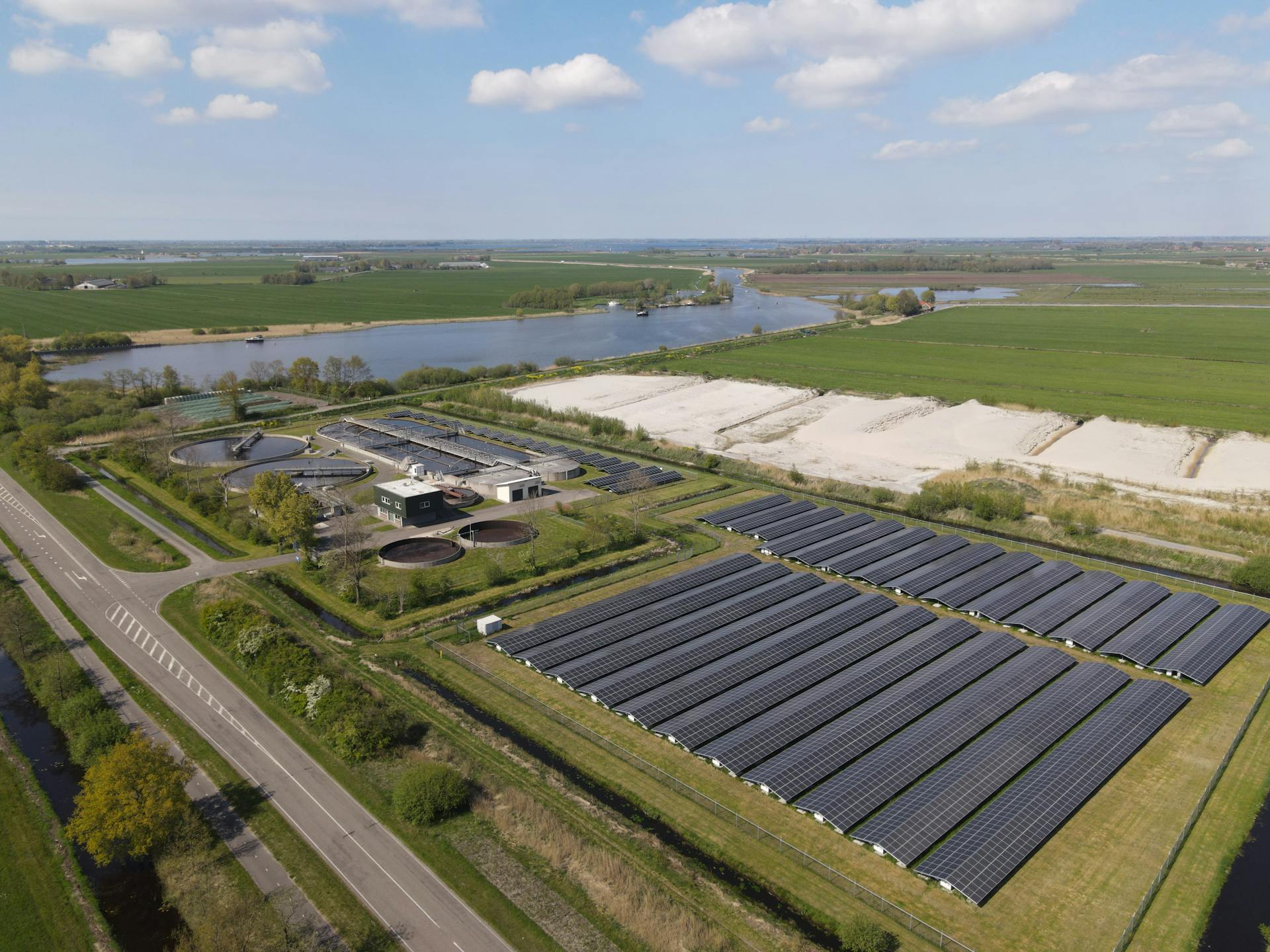
QAZAQ GREEN. June 2025 marked a historic energy shift in Europe, as solar power overtook all other sources to become the EU’s largest source of electricity. Global energy think tank EMBER reported.
Solar generates 22.1% of EU electricity in June
In June 2025, solar power generated 22.1% (45.4 TWh) of EU electricity — more than any other source. This marks a 22% increase compared to June 2024.
Nuclear came second with 21.8% (44.7 TWh), followed by wind with 15.8% (32.4 TWh).
Record highs across at least 13 EU countries
At least 13 EU countries set new solar records in June, due to continuous installations and long stretches of sunny weather.
These record levels helped meet peak electricity demand during the heatwaves that hit the continent in late June.
Wind sets records for May and June
Wind farms generated 16.6% (33.7 TWh) of EU electricity in May and 15.8% (32.4 TWh) in June — the highest ever for these months.
This marked a strong rebound from earlier in the year and was supported by additional wind capacity, including large offshore projects.
Coal generation falls to record low
Coal generated just 6.1% (12.6 TWh) of EU electricity in June 2025 — down from 8.8% a year earlier.
Germany and Poland, which accounted for 79% of EU coal generation, both hit record lows:
• Germany: 12.4% (4.8 TWh)
• Poland: 42.9% (5.1 TWh)
Czechia (17.9%), Bulgaria (16.7%), Denmark (3.3%), and Spain (0.6%) also saw their lowest ever coal generation levels. Spain is nearing full coal phase-out.
Fossil fuels: year-on-year increase in H1
Despite record lows in June, fossil fuel generation in H1 2025 was 13% higher than in the first half of 2024 — due to a 19% rise in gas output (+35.5 TWh).
This is attributed to reduced hydro and wind generation during the early part of the year due to drought and poor wind conditions.
Hydropower from January to June fell 15% year-on-year to 164 TWh (12.5%).
Electricity demand grows steadily
Electricity demand in the EU reached 1,313 TWh in the first half of 2025 — a 2.2% increase year-on-year.
Five out of the first six months in 2025 saw higher electricity use compared to the same months in 2024.
CAREC and Central Asian universities sign new memoranda on green skills development
100,000 jobs and a skills gap: how Central Asia is preparing for the renewables boom
No transition without transmission: How Central Asia is building its energy future
ADB to invest $5.5bn across 15 projects in Kazakhstan
17 agreements worth over $2.3 billion signed at the opening of RES 2026 EXPO in Astana
World Bank to invest $1bn in Central Asia's energy integration
Kazakhstan and China to launch a 500 MW wind farm in Karaganda region
Kazakhstan and Tajikistan move toward clean power deal over Rogun HPP
Regional Ecological Summit 2026 opens in Astana
Solar pumps and drip irrigation help Kyrgyz farmers cut costs amid rising energy prices
Hormuz closure failed to trigger coal comeback as solar and wind filled the gap
Astana set to launch RES 2026 EXPO and ink key international deals
Central Asian countries to discuss energy transition at RES 2026 in Astana
Moldova surpassed 1 GW of installed renewable energy capacity
China begins building US$1 billion hydropower station in Cambodia
Thousands protest in Germany urging faster green shift
Scientists from Russia and Uzbekistan improved the stability of green energy systems by 24%
Kazakh startup ranks in GCIP global top 3 in Vienna
Kazakhstan poultry farm produces 15 million kWh of energy from waste
China, Spain expand partnership in solar and wind power