

World News06.12.2023
35 countries and the EU launched the Climate Club to decarbonise industry


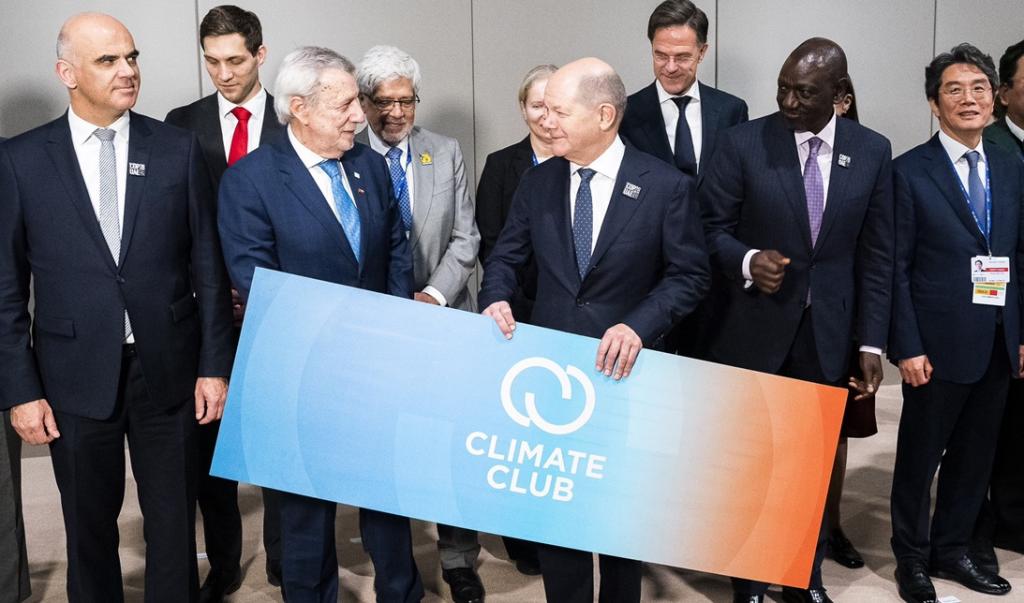
QAZAQ GREEN. On December 1, 2023, the Climate Club was officially launched at COP 28 in Dubai at this event in the form of a roundtable discussion hosted by Co-Chairs Germany and Chile, the Climate Club said.
36 nations, including the European Union came together at leader level to present the Climate Club as a leading high-ambition intergovernmental forum for exchange on industry decarbonisation which serves as an enabling framework for increased cooperation and collective action across diverse geographies.
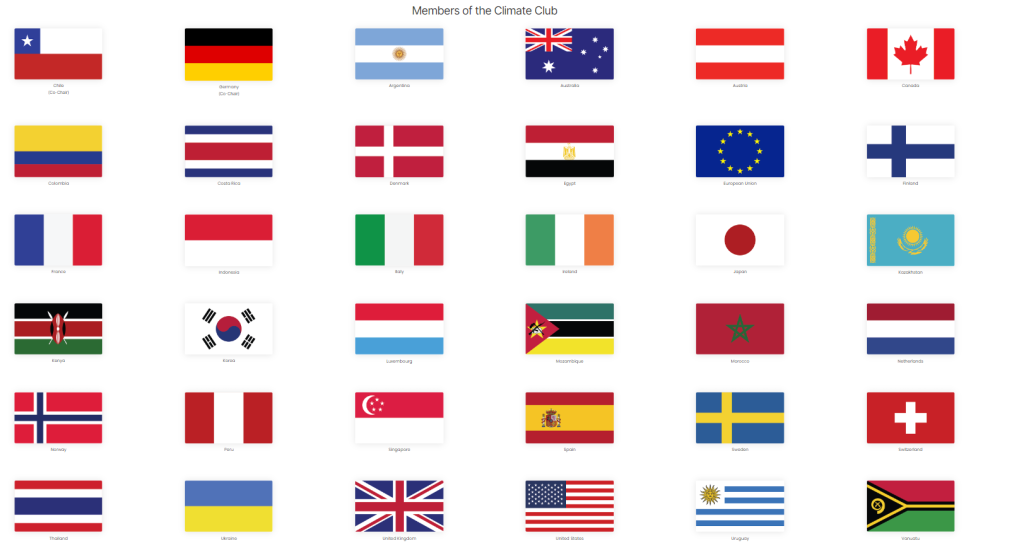
As of 1 December 2023, the members of the Climate Club are: Chile, Germany, Argentina, Australia, Austria, Canada, Colombia, Costa Rica, Denmark, Egypt, European Union, Finland, France, Indonesia, Italy, Ireland, Japan, Kazakhstan, Kenya, Korea, Luxembourg, Mozambique, Morocco, Netherlands, Norway, Peru, Singapore, Spain, Sweden, Switzerland, Thailand, Ukraine, United Kingdom, United States, Uruguay, Vanuatu.
Recognizing that a quarter of global CO2 emissions emanate from industrial activities, with the steel, cement, and chemical sectors posing particular challenges, the Climate Club targets these «hard-to-abate» industries responsible for around 70% of industrial CO2 emissions. The club's 36 members, collectively representing over 55% of the global economy, acknowledge the need for a transformative approach to meet the 1.5 °C target set by the Paris Agreement.
Addressing the pressing challenges posed by long-lived and capital-intensive heavy industry facilities, the Climate Club aims to prevent the inadvertent locking-in of emissions. It recognizes the growing demand for materials from heavy industries, particularly in emerging and developing countries, where over 90% of the expected demand growth is anticipated by 2050.
The Climate Club will play a pivotal role in fostering green industrial development through international cooperation and bold actions. To ensure the success of decarbonization efforts, the club will support ambitious policies, align methodologies and standards, and enhance access to finance and technical assistance, particularly for emerging and developing nations.
The detailed work program for 2024 includes efforts to align standards, promote markets for low-emission materials, and develop an industry transition toolkit. The Climate Club members will engage in strategic dialogues on carbon leakage, emphasizing the need for global industry decarbonization, even in emerging and developing nations.
Crucially, the Climate Club will launch a Global Matchmaking Platform at COP28 to accelerate and coordinate international support for developing and emerging markets in their industrial decarbonization efforts.
Notable figures, such as Robert Habeck, Vice Chancellor and Minister for Economic Affairs and Climate Action, Germany, and María Heloísa Juana Rojas Corradi, Minister for the Environment, Chile, expressed optimism about the Climate Club's potential impact. Habeck emphasized the importance of creating fair lead markets for green goods, while Corradi highlighted the need to fully engage emerging and developing countries in the initiative.
The Climate Club's joint statement reinforces the commitment of its members to positive-sum collaboration, emphasizing the creation of larger shared markets for low-emission goods and the alignment of regulations to accelerate the transition at a lower cost for all involved.
As an open and inclusive intergovernmental forum, the Climate Club is poised to assume a leadership role in the global decarbonization landscape. The interim Secretariat, hosted by the OECD and IEA, has been providing crucial technical and administrative support since mid-2023.
With its emphasis on collaboration, inclusivity, and bold action, the Climate Club invites ambitious governments worldwide to join in their collective efforts to tackle the most challenging aspects of decarbonization and pave the way for a sustainable future.
Kazakhstan and World Bank discuss energy integration in Central Asia
Construction of 500 MW wind power plant begins in Karaganda region
50 MW solar power plant auction winner determined in Kazakhstan's Southern Grid Zone
Rooftop solar panels: Kyrgyzstan prepares rules for households and businesses
Europe’s rising heat: Can renewables provide the solution?
Winner announced for 100 MW solar auction in Kazakhstan
Chinese company ready to invest $1 billion in solar and wind generation in Kyrgyzstan
Meta to invest in space solar energy and ultra-long-duration energy storage
Tokyo pushing plan for world’s biggest floating wind power farm
Kazakhstan cancels 50 MW solar auction due to lack of participants
Tokayev ratifies Green Energy Corridor Agreement with Azerbaijan and Uzbekistan
China raises RES share to 60% of total installed capacity
Batys Kaspiy Energo wins auction for 250 MW wind farm in Atyrau region
Ember: Renewables overtake coal in global power generation for the first time
Kazakhstan continues accepting applications for May RES auctions
Water-energy balance of the region discussed by ministers of four Central Asian countries
Just transition: leaving no one behind in the energy transformation
CAREC and Central Asian universities sign new memoranda on green skills development
Kazakhstan and UNECE discuss energy resilience and low-carbon technologies
100,000 jobs and a skills gap: how Central Asia is preparing for the renewables boom