

World News17.07.2024
Solar energy in Armenia reaches 9% of domestic generation


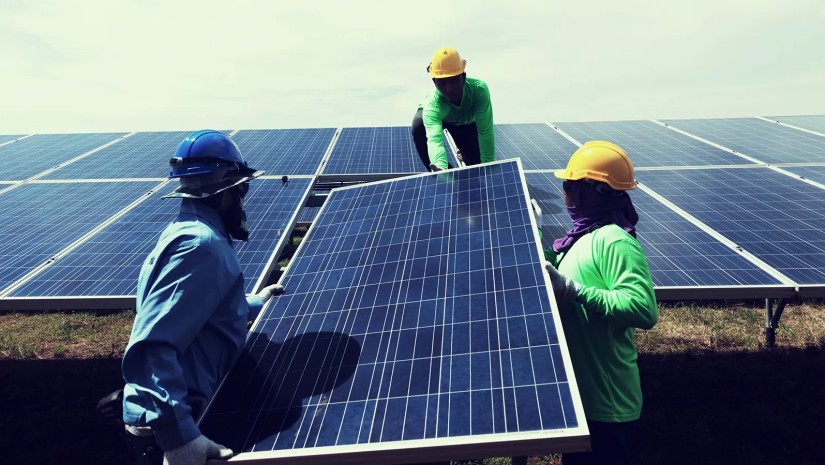
QAZAQ GREEN. In January-May 2024, the production volumes of solar power plants in Armenia, including autonomous producers, reached 9% of domestic generation, according to data from the Statistical Committee, reports Business Media.
Currently, the country's electricity demand is about 1200 MW, which is roughly equally met by hydropower plants (23%), thermal power plants (32%), and the Armenian NPP (36%).
The number of solar power plants in Armenia is growing, but their share in the total electricity output remains modest - just over 4% for the first five months of 2024. However, taking into account the electricity generated by autonomous producers and transmitted to the "Electric Networks of Armenia" or consumed on-site, the generation volumes of solar plants reach approximately 9%.
According to the Statistical Committee, the cost of electricity produced by autonomous producers is not included in the overall production calculation. Thus, the structure of electricity production varies both in terms of cost and volumes depending on the type of power plant.
There are about 60 licensed solar power plants in Armenia with a total capacity of 204.8 MW, and more than 11,000 autonomous producers have installed solar panels with a combined capacity of 207.5 MW.
The total installed capacity of all solar systems in the country is 412.3 MW, slightly exceeding the capacity of the Metsamor nuclear power plant unit (407.5 MW). However, the actual electricity output from solar plants is often lower than the installed capacity due to weather conditions and other factors.
Armenia’s Minister of Territorial Administration and Infrastructure, Gnel Sanosyan, previously stated that by 2030, the share of solar energy in the country's energy balance will be 15%.
Plans include the construction of additional solar power plants with a capacity of 500 MW and wind power plants, with the goal of increasing the total capacity of solar and wind power plants to 2000 MW by 2040.
Solar pumps and drip irrigation help Kyrgyz farmers cut costs amid rising energy prices
Hormuz closure failed to trigger coal comeback as solar and wind filled the gap
Astana set to launch RES 2026 EXPO and ink key international deals
Central Asian countries to discuss energy transition at RES 2026 in Astana
Moldova surpassed 1 GW of installed renewable energy capacity
China begins building US$1 billion hydropower station in Cambodia
Thousands protest in Germany urging faster green shift
Scientists from Russia and Uzbekistan improved the stability of green energy systems by 24%
Kazakh startup ranks in GCIP global top 3 in Vienna
Kazakhstan poultry farm produces 15 million kWh of energy from waste
China, Spain expand partnership in solar and wind power
Mongolia engages Hanwha Group in industrial and clean energy development
Russia to test horizontal and vertical wind power plants at new renewable energy test site in Adygeya
Brussels sets timeline: grid package by summer, electrification strategy to follow
RES 2026 to address workforce training for renewable energy scale-up
Algeria commissions 400 MW of solar capacity
Deadline approaching: KOREM invites bids for wind and solar power auctions
From crisis to security: IRENA lays out renewables roadmap for governments
Renewable energy generation in Kazakhstan rises 15% in Q1 2026
Kazakhstan climbs the Climatescope rankings