

World News22.07.2024
Brazil becomes G20 leader in terms of renewables share in energy mix


QAZAQ GREEN. The year 2023 saw Brazil become the leader among the G20 countries in terms of the share of renewable energy sources in its energy mix: wind, solar and hydroelectric power plants accounted for 89% of Brazil’s electricity output, while the G20 average was 29%, reports Global Energy Prize citing the data from Ember.
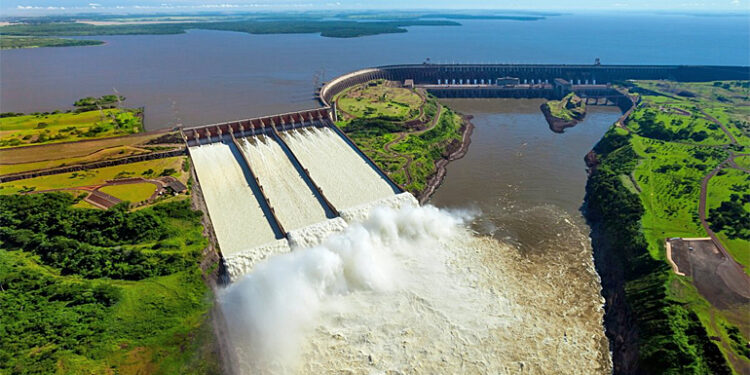
Hydroelectric power plants remain the backbone of Brazil’s power industry, as they provided 60% of electricity generated in 2023. There are three major cascades of HPPs in Brazil: the Paraná River cascade that includes the 14 gigawatt (GW) Itaipu HPP, which had long been the world’s largest HPP; the HPP cascade on the Tietê River in the state of São Paulo, where hydroelectric power plants are used not only for energy supply, but also to reduce floods and enable navigation; and a cascade of HPPs on the Madeira River, which consists mainly of low-pressure run-of-the-river hydroelectric power plants that do not require the construction of artificial reservoirs.
By the end of 2023, the installed capacity of Brazil’s HPPs totaled 110 GW, which is more than half as low as the capacity of all operating power plants in the Unified Power System of Russia (248.2 GW). Meanwhile, the country’s wind and solar generation infrastructure is undergoing rapid development. According to the International Renewable Energy Agency (IRENA), the aggregate capacity of wind and solar in Brazil skyrocketed from 5 GW in 2014 to 67 GW in 2023, with their share in the country’s energy mix rising from 2% to 21% (the share of HPPs fell from 63% to 60% over the same period). The development of renewables was facilitated by cheaper technologies: IRENA estimates that the average global cost of bringing wind generators into operation dropped by 67% (to $876 per kilowatt of capacity) in the period from 2014 to 2022, while that of onshore wind turbines fell by 37% to $1,274 kilowatts (no later estimates are available).
In addition to solar and wind generators, Brazil has several dozen biomass units that use agricultural and industrial waste as raw materials. According to Ember, the share of these units in the country’s energy mix stood at 8% in 2023. Low-carbon sources also include two reactors at the Angra NPP with a total net capacity of 1.9 GW, which were launched in 1982 and 2000, respectively.
The overall share of low-carbon generation in Brazil made up 91% (including nuclear reactors) in 2023, while it was at a mere 41% in the G20 countries. This explains why Brazil became the leader in cutting down emissions from the power sector last year. In 2023, the G20 averaged 2.42 tons of carbon dioxide emissions per electricity consumer, whereas Brazil produced only 330 kg of emissions per consumer.
Japan to add 50MW/196MWh battery energy storage system
Portuguese scientists find deep geological formations could store enough energy to power a city
Trams in Poland’s Szczecin to run on waste-generated electricity
China sets 2030 targets for smart, connected NEVs
Masdar and Luxcara explore more than €5bn in German energy investments
BRICS Summit 2026: New Development Bank helps finance renewable energy transition in Brazil
Ember: clean energy is beginning to displace fossil fuels in China
Former German nuclear plant site to host 254 MW battery storage facility
U.S. solar capacity can now power more than 50 million homes
Construction begins on 104 MW wind farm in Georgia with Chinese Investment
Moldova simplifies permitting for renewable energy projects
2 MW solar power plant commissioned at Chornobyl Nuclear Power Plant
Kyrgyzstan plans nearly 170 MW of new renewable energy capacity in 2026
1 GW wind power project with energy storage discussed by Kazakhstan and SPIC
Taiwan’s Formosa 6 offshore wind farm secures corporate power deal
Rocket Lab unveils germanium-free solar cell for spacecraft
Masdar plans to commission a 1 GW wind farm in Kazakhstan in 2029
Kazakhstan to adopt energy storage law
Azerbaijan to raise renewables share to 34% by end-2027
Solar power helped Europe weather the energy crisis, but growth is slowing