

World News08.09.2026
Solar power helped Europe weather the energy crisis, but growth is slowing


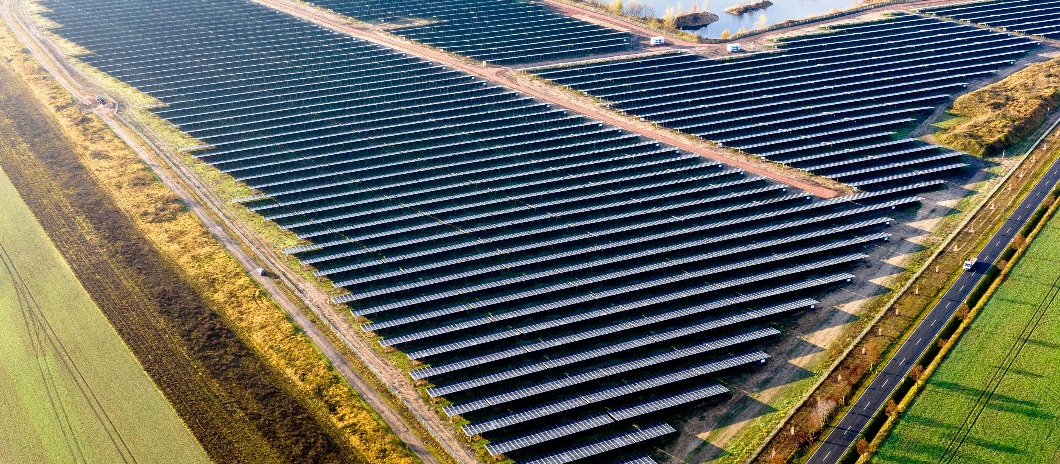
QAZAQ GREEN. Solar power helped Europe's electricity system cope with rising demand and higher fossil fuel prices in the first half of 2026. However, weakening government support and grid constraints are slowing the industry's expansion, according to a new mid-year report from SolarPower Europe published on September 8.
In June, solar became the European Union's largest source of electricity for the first time, accounting for a record 25% of total generation during the month. Across May, June and July, solar power supplied more than one-fifth of EU electricity generation for the second consecutive year.
Record solar output came during a period of extreme heat, when rising temperatures drove up demand for air conditioning and put additional pressure on conventional power plants. Warmer rivers and lower water levels also reduced hydropower generation, while nuclear output declined. Solar power helped partly offset these losses.
Since the conflict in the Middle East began on March 1, 2026, solar installations across the EU have generated 282 TWh of electricity. SolarPower Europe estimates that this generation helped the bloc avoid more than €30 billion in gas import costs, equivalent to roughly €164 million in savings every day.
Despite these benefits, the European solar market is losing momentum. Preliminary figures indicate that the market grew only slightly in the first half of 2026 compared with the same period last year. SolarPower Europe still expects new installations for the full year to decline from 2025 levels.
The report attributes the growth seen so far largely to the shock in fossil fuel prices rather than stronger government policy support. In several European markets, support for solar is instead being reduced.
France has further cut incentives for rooftop solar, while changes to Czechia's green savings programme have weakened household demand. Germany is considering reforms that could reduce support for new rooftop solar systems from 2027.
Regulatory uncertainty and grid constraints are also making it more difficult to develop new projects and increasing the risks facing investors across the bloc.
As solar's share of the electricity mix grows, new system-level challenges are becoming increasingly visible. SolarPower Europe points to rising levels of curtailment, lower revenues for solar generators during periods of high output, more frequent negative electricity prices and sharper price increases in the evening as solar generation falls.
According to the association, these trends show that the expansion of solar generation has not been matched by sufficient investment in electricity grids and flexible capacity.
SolarPower Europe warns that, under current market and policy conditions, the EU risks falling short of its 2030 solar deployment target. Maintaining the resilience demonstrated by solar power in 2026 will require faster investment in energy storage, electrification, grid upgrades and other flexibility solutions, alongside more stable and predictable government support.
SolarPower Europe CEO Walburga Hemetsberger said solar power had demonstrated its importance to Europe's energy security during periods of high fossil fuel prices and extreme heat. At the same time, she warned that governments were weakening support for the technology just as its role in the energy system was becoming increasingly important.
Azerbaijan to raise renewables share to 34% by end-2027
Solar power helped Europe weather the energy crisis, but growth is slowing
Nepra tightens wheeling rules, mandates battery storage for solar, wind projects
Women in Bangladesh turn EV battery swapping into a new source of income
Sydney CBD solar farm to cut carbon emissions by 2,000 tonnes a year
IEA: Türkiye needs faster investment in grids and storage as energy demand rises
Kazakhstan holds auction for selection of hydroelectric power plant construction projects
Equinor brings its largest US battery storage project online
Norway launches project to integrate wind propulsion into commercial shipping
China's photovoltaic power capacity overtakes coal-fired power for first time
Germany moves to cut the cost of offshore wind
UN presents Climate Report: 1.5°C threshold will be breached without urgent action
Europe on track for a record year in wind power
Rosatom plans wind turbine component plant in Russia’s Amur region
EBRD backs Tajikistan’s plans for solar power auctions
Solar power helps Europe avoid €30 billion in gas imports
Kazakh scientists test energy storage device with more than 750,000-cycle lifespa
Agrivoltaics cut worker heat stress and saved 22% of water, new model shows
Uzbekistan commissions 300 MW solar plant with 150 MW ESS
SolarWindow unveils ultra-thin solar film for curved surfaces