

Expert opinion25.12.2023
Mikhail Kadymov: about our common mission to build a world that has a future


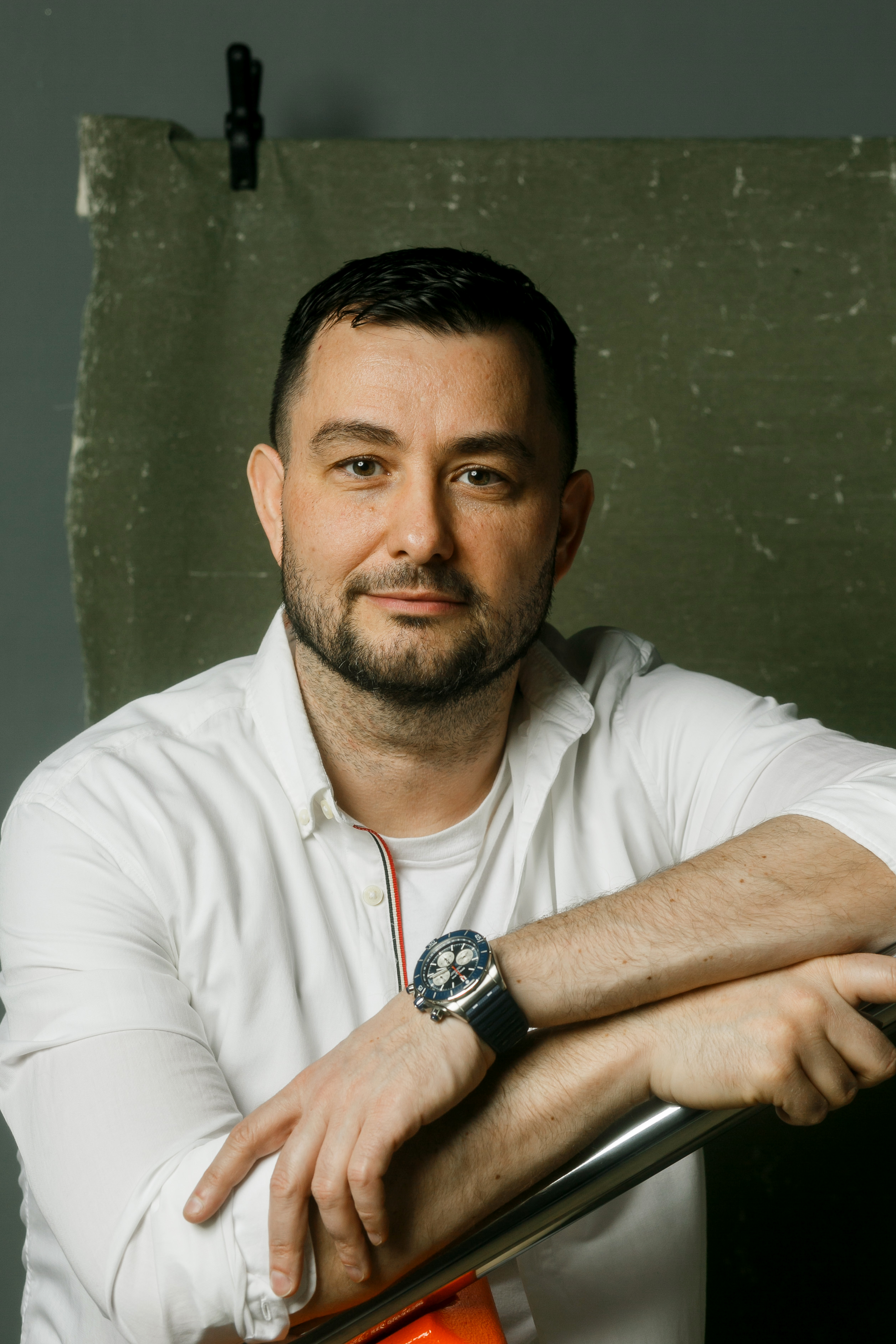
MIKHAIL KADYMOV - professional with extensive experience in finance, strategic management, sales, started his career at AES Global Energy and reached the position of financial manager at Borkit International LLP.
At Painting Solutions LLP in Atyrau, where Mikhail Kadymov was CEO, he successfully implemented a new legal structure, developed a brand and sales in the oil and gas sector. At Burnoye Solar-1 SPV in Astana, he supervised the construction of solar power plants.
Currently, Mikhail Kadymov is a co-founder and Director of Business Development at Alpha Center LLP and Alpha Energy LLP in Astana.
With this author's material, we begin a series of publications of personal essays by "environmentally oriented" people, those who have chosen the path of preserving the planet for the future of our children as their life mission. The first hero of the column was Mikhail Kadymov - independent director of the Board of Directors of Qazaq Green.
Without a clearly defined mission and image, to which we strive to lead the company as leaders, it is very difficult in principle to understand where our ship is sailing, not to mention the fact that we can want something and be happy to get up in the morning and hurry to the good old office, to the employees who hate us quietly in their own way. When we start a career, we may still be motivated by remuneration in some form, but over time we come to one thing - we need something more than just money.
For me, the catalyst for change and raising serious questions to myself was my children. I thought about their legacy not from the perspective of houses, refrigerators and cars, but about what kind of world they will live in and what kind of world they will continue to create after me. As responsible parents, we can protect them all our lives, but our time will come to leave and we should do something in advance in this regard. For example, right now is the time for this.
Back in 2014,1 started thinking about ecology, the environment, about global climate change and responded to the offer to participate in the financial management of the Burnoye Solar-1 project, a 50 megawatt solar power plant, the implementation of which prevented the release of more than 435 thousand tons of CO2 into the atmosphere and generated over518 million kilowatt-hours of electricity since launch. After some time, this experience was projected onto the operational activities of my company as well.
My team and I have seriously thought about the fact that if humanity continues to increase consumption and disrupt the balance wherever possible, as it is done almost every day, consuming more than it is possible to produce and process, then someday it will all end. Five, ten, fifteen years will pass - and we risk being in an unpleasant situation if we do nothing now or simply brush it off, telling ourselves that someone else will definitely do it. One of the strongest realizations that ever visited me was that no one will take certain steps and only I can take them.
And then it began... individual responsibility in me began to gradually give way to global responsibility. Sorry for the pathos, but it's true. As an entrepreneur and head of business development (the legendary BD), I began to see that if each corporation allocates 1-2% of its budgets for even minor green initiatives, then, in common terms, it will be easier for the whole world to breathe.
The pandemic perfectly showed that after some month (!) of underproduction in the heavy machinery industry in China, the Central Asian region showed a significant drop in CO2 levels. Birds began to return to the region; the whole nature began to actively recover, the quality of oxygen improved ...And at the same time not to say that the world has just so much “suffered" from this underproduction.
From the virus, yes, but not from the lack of cars, engines and depleted uranium for surface-to-surface missiles.
Having tried on the simplified wording of the term "global responsibility" for our company, my team and I implemented a number of simple green protocols and immediately faced a number of obstacles, about which more than one article has been written.
In general, they can be described as "the unwillingness of companies to change, to rebuild, to take responsibility for this direction as well." This is precisely unwillingness, since a number of green innovations-take at least our sector of production of protective coatings for oil and gas and shipping - allow us to significantly increase the company's production indicators. For example, by modifying or rebuilding factory lines, you can not only save huge budgets on the production of coatings themselves, but also make them much more efficient in terms of increasing the coverage area, when 20 liters of composition can give not 80 squares but all 120; in terms of extending the service life of assets on which these coatings are used, to protect an oil platform that will not rot under the influence of an aggressive environment for 10 years (by the way, without special coating, it can rot in 6 months). But that's not all: the risk of leaks due to equipment failure is reduced, the total cost of its maintenance is reduced, the risks of accidents due to sudden equipment failure are reduced, and much more.
I have implemented a number of solutions in the company for a smooth transition to a new format of work. We really wanted to leave our mark. Only now it's green. Together we have identified a number of areas with a green bias in which we can work and at the same time be a cost-effective company. We have implemented several policies regarding the selection of suppliers, business partners and customers, giving strategic priority to those who are ready or planning to adapt to a new format. Having implemented absolutely basic, simple things, we faced - and in 80% of cases we continue to face now - the unwillingness of the market to look at our common present, which lies beyond productions and summary tables, endless corporate parties and strat sessions. We understand that no one can escape to the conditional Maldives from the situation that people are creating right now and we need to be able to project this very present into the foreseeable future, plan strategically and look for a delicate balance between building up capital and building a beautiful future with fresh air and a healthy biosphere.
Personally, I am afraid of the prospect of coming with myfamily on vacation and swimming in oil water or seeing how a wave will throw a garbage stream along with dead coastal inhabitants onto the shore.
Of course, it is not difficult to understand what exactly is behind the reluctance to change and the relatively sluggish process of strengtheningthe green agenda. It's not easy: to take and “green up” the whole company with all its internal and external systems ofchecks and balances. It is necessary to adjust thinking, introduce new protocols, change legislation and regulatory instruments for new types of industries and sectors, or even develop new bills and liability systems, plus hundreds of thousands more details, modifications and changes. We, as a country, have done a lot in terms of supporting a green world, developing green energy, complying with all kinds of conventions and new policies... And, despite all that has been done, we are still at the very beginning of the road.
And I invite you to join me on this difficult but interesting green journey. After all, we already have everything: so let's leave even more behind. Let's leave behind something that no amount of money can buy: a cleaner world where our children and grandchildren will breathe deeply and live a healthy life in a world that has a future.
Azerbaijan allocates land for 100MW solar power plant in Baku
Europe plans to deploy nearly 200 ocean energy devices by 2030
East Kazakhstan plans to build renewable energy complex for green hydrogen and ammonia production
Kazakhstan plans to increase renewable energy capacity to 8.4 GW by 2035
Kazakhstan and South Korea to expand cooperation in renewable energy and critical minerals
EU to support Kazakhstan in developing carbon markets and water resource management
NOVVA Group to acquire 3.17GW renewable energy portfolio from ABO Energy in Argentina
UK needs at least £511bn to deliver clean energy transition by 2040
Renewables reach 74.4% of Portugal’s electricity generation in 2026
Japan to add 50MW/196MWh battery energy storage system
Portuguese scientists find deep geological formations could store enough energy to power a city
Trams in Poland’s Szczecin to run on waste-generated electricity
China sets 2030 targets for smart, connected NEVs
Masdar and Luxcara explore more than €5bn in German energy investments
BRICS Summit 2026: New Development Bank helps finance renewable energy transition in Brazil
Ember: clean energy is beginning to displace fossil fuels in China
Former German nuclear plant site to host 254 MW battery storage facility
U.S. solar capacity can now power more than 50 million homes
Construction begins on 104 MW wind farm in Georgia with Chinese Investment
Moldova simplifies permitting for renewable energy projects