

World News04.11.2024
Iceland could get solar power from space in 2030


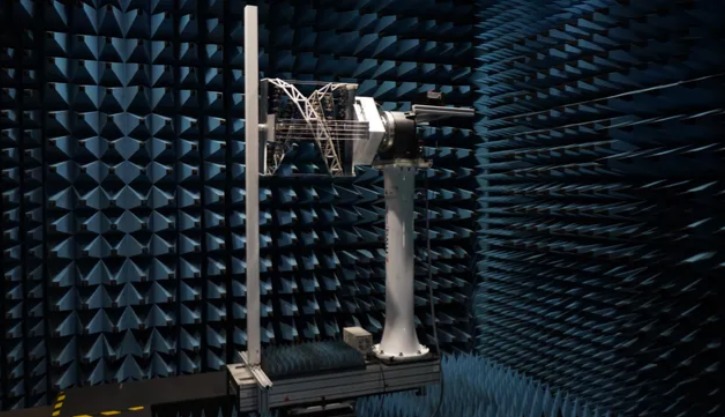
QAZAQ GREEN. British startup plans to supply solar power from space to Icelanders by 2030, in what could be the world's first demonstration of this novel renewable energy source, Space.com reports.
The space solar power project, announced on Monday (Oct. 21), is a partnership between U.K.-based Space Solar, Reykjavik Energy and Icelandic sustainability initiative Transition Labs.
It intends to launch a demonstrator satellite by 2030, which will beam to Earth 30 megawatts of clean energy — enough to power about 3,000 homes.
The power-beaming satellite will weigh 70.5 tons (64 metric tons), be about 1,312 feet (400 meters) wide (including its solar arrays) and circle the planet in medium Earth orbit, a near-space region at altitudes between 1,241 miles and 22,000 miles (2,000 and 36,000 kilometers).
By 2036, the partners want to build a fleet of six such space-based solar power stations, capable of supplying gigawatts of clean electricity to users on Earth 24/7 regardless of weather. By the mid-2040s, Space Solar's orbiting power plants could be delivering over 15 gigawatts of energy.
Space Solar said the development and manufacturing of the pilot plant will cost $800 million. The system will provide electricity at about one-quarter the cost of nuclear power, at $2.25 billion per gigawatt, the company added, making it competitive with Earth-based renewable sources. Unlike photovoltaics and wind turbines on Earth's surface, the orbiting power stations will not suffer from intermittency — a major drawback of conventional renewable power generation. They will produce electricity constantly, regardless of the time of day or weather conditions.
The share of renewable energy in Kazakhstan's energy mix has quadrupled over six years
Egypt grants golden licence to 1 GW solar project with storage
Canada to invest $10 billion in hydropower and wind energy development
Transition to clean energy requires land. Can it also help restore it?
Kazakhstan plans to add 570 MW of new renewable capacity in 2027
IRENA: Renewables could accelerate industrial electrification and digital growth
LG Energy Solution starts producing EV and energy storage batteries in new Michigan plant
AI to boost renewable energy generation forecasting accuracy to 80%
Almaty to host Commercial Solar Energy — Seminar 2026 on August 21
Solar and battery storage to power Scottish water facility
Gurīn Energy secures 379 MW of licences for three solar projects in South Korea
Global energy demand continues to rise as renewable energy reaches record growth
Renewables account for 88.1% of Turkey's power capacity growth over the past year
Kazakhstan commissions 7 of 10 renewable energy projects planned for 2026
End-of-life solar panels could become a multibillion-dollar market by 2050
Kazakhstan launches its first wind-turbine component manufacturing plant
EBRD to provide up to €120 million for solar-and-storage project in Romania
Chinese researchers develop perovskite solar module with 22% efficiency
Turkey sets sights on Aegean Sea for first offshore wind tender
Batteries have unlocked the era of anytime solar