

News Kazakhstan10.05.2024
EU keen to deepen renewable energy cooperation with Kazakhstan - ambassador


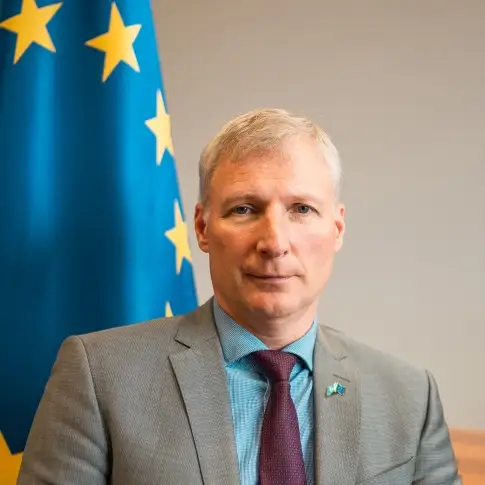
QAZAQ GREEN. The EU is interested in expanding cooperation with Kazakhstan in the field of renewable energy sources, Kestutis Jankauskas, EU Ambassador to Kazakhstan, told Trend.
"As the EU moves away from fossil fuels, we want to work with Kazakhstan on renewable energy and green technologies. Kazakhstan is abundant in solar and wind power. So far, it has implemented certain renewable power producing facilities with European investors," he said.
According to the ambassador, one of the largest is the German-Swedish SVEVIND project to produce green hydrogen in the Western Mangystau region of Kazakhstan.
"Within two years, it will supply Kazakhstan with green hydrogen to boost its global competitiveness and send green energy to Europe. So, project success depends on the Trans-Caspian corridor," Jankauskas noted.
He pointed out that European companies are also successfully developing renewable wind or solar projects in Kazakhstan.
"The Team Europe Initiative on Water, Energy and Climate which bundles activities from Member States and the EU in Central Asia, will start its implementation with a first 20 million euro program and support regional energy cooperation and grid development. Our experience in Europe shows that such cooperation will stimulate the green transition and the reduction of emissions," he added.
Meanwhile, Kazakhstan's renewable energy installations generated 6.675 billion kWh of electricity by the end of 2023. This volume accounts for 5.92 percent of total electrical energy production in 2023.
The country currently has 147 renewable energy facilities (over 100 kW) with an installed capacity of 2,903.54 MW: 59 wind power plants with a capacity of 1,409.55 MW; 46 solar power plant facilities with a capacity of 1,222.61 MW; 39 hydroelectric power plants with a capacity of 269.605 MW; and three biogas power plant facilities with a capacity of 1.77 MW.
Furthermore, by the end of 2023, 16 renewable energy facilities with a total installed capacity of 495.57 MW had been operational: 12 wind farms with a total capacity of 437.1 MW in the Akmola and Zhetysu regions, 2 hydroelectric power plants with a total capacity of 3.7 MW in the Almaty and Turkestan regions, and two solar power plants with a capacity of 54.77 MW in the Turkestan region.
Hence, a total of 25 renewable energy projects with a combined 599.85 MW of capacity are expected to be commissioned by 2027.
Solar pumps and drip irrigation help Kyrgyz farmers cut costs amid rising energy prices
Hormuz closure failed to trigger coal comeback as solar and wind filled the gap
Astana set to launch RES 2026 EXPO and ink key international deals
Central Asian countries to discuss energy transition at RES 2026 in Astana
Moldova surpassed 1 GW of installed renewable energy capacity
China begins building US$1 billion hydropower station in Cambodia
Thousands protest in Germany urging faster green shift
Scientists from Russia and Uzbekistan improved the stability of green energy systems by 24%
Kazakh startup ranks in GCIP global top 3 in Vienna
Kazakhstan poultry farm produces 15 million kWh of energy from waste
China, Spain expand partnership in solar and wind power
Mongolia engages Hanwha Group in industrial and clean energy development
Russia to test horizontal and vertical wind power plants at new renewable energy test site in Adygeya
Brussels sets timeline: grid package by summer, electrification strategy to follow
RES 2026 to address workforce training for renewable energy scale-up
Algeria commissions 400 MW of solar capacity
Deadline approaching: KOREM invites bids for wind and solar power auctions
From crisis to security: IRENA lays out renewables roadmap for governments
Renewable energy generation in Kazakhstan rises 15% in Q1 2026
Kazakhstan climbs the Climatescope rankings