

World News24.02.2023
Berlin lays out plan to bring back solar, wind industry on German soil


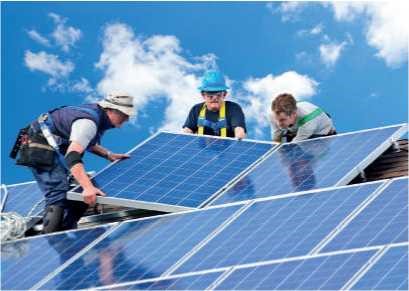
QAZAQ GREEN. The German government is looking to acquire shares in renewable energy firms and provide support to wind turbine and solar panel manufacturers in order to encourage their production in Germany, Euractiv reports.
Once upon a time, Germany was home to a fledgling – but promising – industrial landscape of solar panel and wind turbine makers. But as domestic financial support dried up, so did the industry.
Today, home-grown production capacity is once again becoming a priority following Russia’s attack on Ukraine and the sudden interruption of cheap gas flows coming from Russia.
After a public consultation was held from April 2022 to February 2023, the German government now has a three-step plan.
“We need to strengthen the production capacities for renewable energies and electricity grids in Germany and Europe,” said Robert Habeck, the country’s minister of economy and climate action, during a speech in Berlin on Tuesday (21 February).
First, he wants to help companies invest and support the operation of renewable manufacturing facilities.
“We want to identify further instruments,” said Habeck, specifically naming a special electricity tariff for industry, as well as support for operating expenses that are currently contrary to EU regulations. Around the world, countries like China for instance offer cheap electricity tariffs to industry at €0.07 per kilowatt-hour.
Additionally, the government is looking to create a “transformation fund” through which it will seek to acquire shares in renewable energy companies.
“Hybrid capital and hedging should enable the investments, not permanent state participation,” Habeck explained.
Second, the government is looking to de-risk onshore wind and electricity grid expansion “temporarily”.
A wind park developer unable to sell his electricity due to lagging grid capacity may be compensated through a new instrument, for example. These guarantees could include off-take agreements that provide long-term guaranteed cash flows to project developers.
“These are funds that are not supposed to flow,” Habeck pointed out, noting that the upcoming “run” on renewables will soon make such assurances superfluous. As such, providing such guarantees would be a “very calculated risk” and a “brave step ahead”, pending approval by Brussels, he said.
Third, Habeck wants to launch a new round of EU-approved innovative funding schemes called Important Projects of Common European Interest (IPCEI) and extend them to solar. Here, Berlin looks for backing from Spain, which initially floated the idea.
But the government will also conduct a study on restoring the solar PV value chain in Germany, where currently only the initial product, polysilicon, is produced on German soil in any meaningful quantity.
Recent reports that China was considering restricting solar PV exports have only strengthened the industry’s argument.
“Germany wants to triple the photovoltaic share of electricity supply from the current level of around 10% to around 30% in just ten years,” said Jörg Ebel, head of the solar industry lobbying association BSW.
To safeguard “this target, which has no alternatives” and given the “systemic relevance” of solar PV, Germany should “not only rely on buying” solar panels, the lobbyist added.
Habeck was notably tight-lipped on a price tag for the initiative, referring to “rough estimates” that may be subject to change. Yet, it is unlikely that government support for operating expense (OpEx) at scale could come cheaply.
Moldova surpassed 1 GW of installed renewable energy capacity
China begins building US$1 billion hydropower station in Cambodia
Thousands protest in Germany urging faster green shift
Scientists from Russia and Uzbekistan improved the stability of green energy systems by 24%
Kazakh startup ranks in GCIP global top 3 in Vienna
Kazakhstan poultry farm produces 15 million kWh of energy from waste
China, Spain expand partnership in solar and wind power
Mongolia engages Hanwha Group in industrial and clean energy development
Russia to test horizontal and vertical wind power plants at new renewable energy test site in Adygeya
Brussels sets timeline: grid package by summer, electrification strategy to follow
RES 2026 to address workforce training for renewable energy scale-up
Algeria commissions 400 MW of solar capacity
Deadline approaching: KOREM invites bids for wind and solar power auctions
From crisis to security: IRENA lays out renewables roadmap for governments
Renewable energy generation in Kazakhstan rises 15% in Q1 2026
Kazakhstan climbs the Climatescope rankings
Kazakhstan and China launch joint Hydrogen Energy Technology Innovation Center
Switzerland builds world’s most powerful redox-flow battery
UK approves its largest ever solar farm at 800 MW
Sonnedix wins major solar energy contracts in Italy