

World News09.05.2024
Record renewables propel the world towards a new era of falling fossil generation


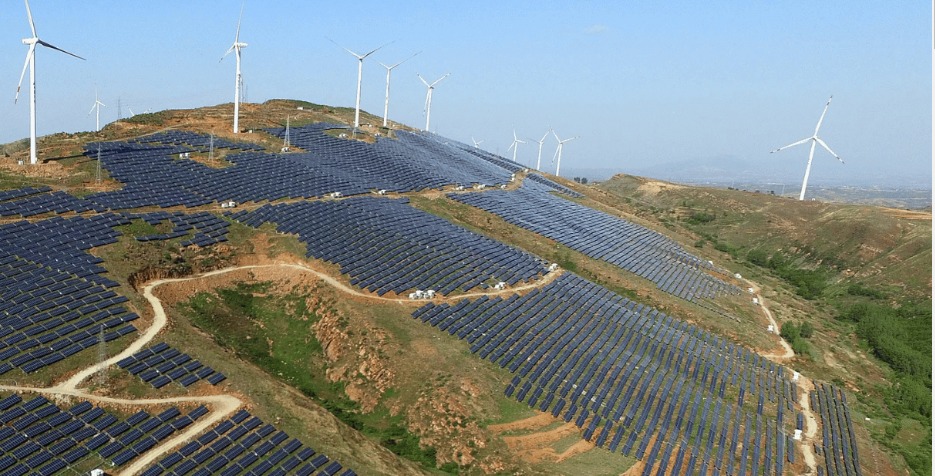
QAZAQ GREEN. Renewables generated a record 30% of global electricity in 2023, driven by growth in solar and wind. With record construction of solar and wind in 2023, a new era of falling fossil generation is imminent. 2023 was likely the pivot point, marking peak emissions in the power sector, according to Ember.
The renewables revolution – led by solar and wind – is breaking records and driving ever-cleaner electricity production. The world is now at a turning point where solar and wind not only slow emissions growth, but actually start to push fossil generation into decline.
Indeed, the expansion of clean capacity would have been enough to deliver a fall in global power sector emissions in 2023. However, drought caused a five-year low in hydropower, which created a shortfall that was met in large part by coal. Nonetheless, the latest forecasts give confidence that 2024 will begin a new era of falling fossil generation, marking 2023 as the likely peak of power sector emissions.
Renewables provided 30% of global electricity for the first time
In 2023, growth in solar and wind pushed the world past 30% renewable electricity for the first time. Renewables have expanded from 19% of global electricity in 2000, driven by an increase in solar and wind from 0.2% in 2000 to a record 13.4% in 2023. China was the main contributor in 2023, accounting for 51% of the additional global solar generation and 60% of new global wind generation. Combined with nuclear, the world generated almost 40% of its electricity from low-carbon sources in 2023. As a result, the CO2 intensity of global power generation reached a new record low, 12% lower than its peak in 2007.
Solar was the main supplier of electricity growth in 2023
Solar is leading the energy revolution. It was the fastest-growing source of electricity generation for the 19th year in a row, and surpassed wind to become the largest source of new electricity for the second year running. Indeed, solar added more than twice as much new electricity as coal in 2023. The record surge in installations at the very end of 2023 means that 2024 is set for an even larger increase in solar generation.
Hydropower fell to a five-year low, preventing a fall in emissions in 2023
Drought conditions resulted in a record fall in hydropower generation, which dropped to a five-year low. Under normal conditions, the clean capacity added during 2023 would have been enough to enable a 1.1% fall in fossil generation. However, the shortfall in hydropower was met by an increase in coal generation, which led to a 1% increase in global power sector emissions. 95% of the coal generation rise in 2023 occurred in four countries that were severely affected by droughts: China, India, Viet Nam and Mexico.
Demand growth slowed in 2023, but in future it will only go up
Global electricity demand rose to a record high in 2023, with an increase of 627 TWh which is equivalent to adding the entire demand of Canada (+607 TWh). Nevertheless, the 2023 increase of 2.2% was below the average for recent years, due to a pronounced decrease in demand in OECD countries, notably the US (-1.4%) and the EU (-3.4%). In contrast, the rapid demand growth in China (+6.9%) was equivalent to the total global growth in demand in 2023. More than half of the electricity demand rise in 2023 was from five technologies: electric vehicles (EVs), heat pumps, electrolysers, air conditioning and data centres. The spread of these technologies will accelerate the growth in electricity demand, but overall energy demand will decline as electrification is much more efficient than fossil fuels.
A new era of declining power sector emissions is about to begin
Ember forecasts fossil generation to fall slightly in 2024, leading to larger falls in subsequent years. Demand growth in 2024 is expected to be higher than in 2023 (+968 TWh) but clean generation growth is forecast to be even greater (+1300 TWh), leading to a 2% fall in global fossil generation (-333 TWh). Already the rollout of clean generation, led by solar and wind, has helped to slow the growth in fossil fuels by almost two-thirds in the last ten years. As a result, half the world’s economies are already at least five years past a peak in electricity generation from fossil fuels. OECD countries are at the forefront of this, with power sector emissions collectively peaking in 2007 and falling 28% since then.
The decade ahead will see the energy transition enter a new phase. A permanent decline in fossil fuel use in the power sector at a global level is now inevitable, leading to falling sector emissions. Clean electricity additions – led by solar and wind – are already forecast to outpace demand growth in the coming decade, securing moderate reductions in fossil fuel use and hence emissions, even as demand accelerates to meet the growing needs of electrification and other booming technologies.
For the goal of achieving international climate change targets, this is critical, with multiple analyses finding that the power sector should be the first to decarbonise – by 2035 in OECD countries, by 2045 in the rest of the world. The sector is currently the highest emitting of all, producing more than a third of energy-related carbon dioxide emissions. Clean electricity is also key to decarbonising transport, heating and much of industry, by replacing the fossil fuel burning that currently takes place in car and bus engines, boilers, furnaces and other applications. An accelerating transition to a clean electrified economy powered by wind, solar and other forms of clean energy will also unlock benefits in areas such as economic growth, jobs, air quality and energy sovereignty.
The pace of emissions declines will be shaped by how quickly the build-out of clean power continues. There is a global consensus on the scale of ambition needed. At the UN’s COP28 climate change conference in December, world leaders reached a historic agreement to triple global renewables capacity by 2030. The target would see the world reach 60% renewable electricity by 2030, almost halving power sector emissions and putting the world on a pathway aligned with the 1.5C climate goal. Leaders also agreed at COP28 to double annual energy efficiency improvements by 2030, which will be crucial to delivering the full potential of electrification and avoiding runaway growth in electricity demand.
Countries are already demonstrating the key enablers that galvanise rapid growth in solar and wind, including high-level policy ambition, incentive mechanisms and flexibility solutions. The report highlights three countries – China, Brazil and the Netherlands – which show that despite very different starting points, the combination of these approaches is delivering rapid transformations of their electricity systems and preparing the way for a clean, electrified economy.
The renewables future has arrived. Solar in particular is accelerating faster than anyone thought possible. The decline of power sector emissions is now inevitable. 2023 was likely the pivot point – peak emissions in the power sector – a major turning point in the history of energy. But the pace of emissions falls depends on how fast the renewables revolution continues. The good news is we already know the key enablers that help countries unleash the full potential of solar and wind. There’s an unprecedented opportunity for countries that choose to be at the forefront of the clean energy future. Expanding clean electricity not only helps to decarbonise the power sector. It also provides the step up in supply needed to electrify the whole economy; and that’s the real game-changer for the climate.
CAREC and Central Asian universities sign new memoranda on green skills development
100,000 jobs and a skills gap: how Central Asia is preparing for the renewables boom
No transition without transmission: How Central Asia is building its energy future
ADB to invest $5.5bn across 15 projects in Kazakhstan
17 agreements worth over $2.3 billion signed at the opening of RES 2026 EXPO in Astana
World Bank to invest $1bn in Central Asia's energy integration
Kazakhstan and China to launch a 500 MW wind farm in Karaganda region
Kazakhstan and Tajikistan move toward clean power deal over Rogun HPP
Regional Ecological Summit 2026 opens in Astana
Solar pumps and drip irrigation help Kyrgyz farmers cut costs amid rising energy prices
Hormuz closure failed to trigger coal comeback as solar and wind filled the gap
Astana set to launch RES 2026 EXPO and ink key international deals
Central Asian countries to discuss energy transition at RES 2026 in Astana
Moldova surpassed 1 GW of installed renewable energy capacity
China begins building US$1 billion hydropower station in Cambodia
Thousands protest in Germany urging faster green shift
Scientists from Russia and Uzbekistan improved the stability of green energy systems by 24%
Kazakh startup ranks in GCIP global top 3 in Vienna
Kazakhstan poultry farm produces 15 million kWh of energy from waste
China, Spain expand partnership in solar and wind power