

World News03.05.2024
Floating solar can power Africa’s energy goals, study finds


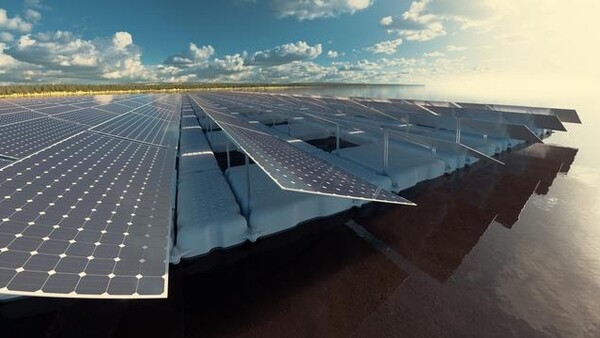
QAZAQ GREEN. Research emerging from Politecnico di Milano suggests that floating solar photovoltaics can help Africa meet its energy targets, Innovation News Network reports.
The study highlighted that floating solar can support sustainable development in Africa, addressing climate, water, and energy goals across the continent while supplanting current hydropower reliance.
Using a cutting-edge energy planning model covering the continent’s entire energy system, the researchers found that installing floating solar at existing reservoirs could produce 10-100% of the electricity expected from Africa’s planned hydropower dams.
Moreover, they identified that floating solar is cost-competitive with other renewable energy sources used in Africa.
Wyatt Arnold, lead author of the research, explained: “Floating solar is fast becoming cost-competitive with land-based solar, and our results suggest it could conceivably avoid the need to build many of the dams planned for hydropower across Africa.
“This would allow nations to meet future electricity demands while sidestepping the damaging environmental and social impacts of large dams.”
Floating solar vs hydropower
The study focused on the Zambezi watercourse, revealing insights that challenge conventional approaches to energy development and water management.
The detailed case study suggests that rather than relying solely on conventional dam projects for energy generation, incorporating floating solar into the mix could offer more efficient capital investment and enhance energy stability.
By reducing the number of reservoirs and supplementing energy supply with solar, the approach demonstrated a 12% decrease in interannual variability in electricity supply compared to dam-centric solutions.
Moreover, it proved more resilient against potential long-term drought conditions exacerbated by climate change.
Professor Andrea Castelletti added: “By embracing floating solar and reducing the reliance on hydropower, developing economies can ensure a more stable energy supply that is robust to hydrological uncertainties brought about by climate change.
“Moreover, floating solar avoids many of the negative impacts new dams may have on downstream communities and river ecosystems.”
Integrated resource planning
The study underscores the importance of integrated resource planning and considering transboundary impacts in sustainable development strategies.
Traditional energy-water modelling often overlooks such integrated approaches, focusing instead on singular sectors like hydropower.
However, the research showcases advanced multisector modelling that balances trade-offs across energy, agriculture, environmental protection, and economic development objectives within transboundary river basins.
The researchers acknowledged potential technical and social constraints on floating solar adoption at certain sites.
However, the study argues that these impacts would pale in comparison to those of new hydropower dam constructions. The latter can irreversibly disrupt river ecology, displace communities, and exacerbate regional tensions over shared water resources.
While challenges remain, the study advocates for a shift towards the strategic deployment of floating solar technology, not only to enhance energy stability but also to promote environmental sustainability and social responsibility in energy infrastructure development.
Kazakhstan and World Bank discuss energy integration in Central Asia
Construction of 500 MW wind power plant begins in Karaganda region
50 MW solar power plant auction winner determined in Kazakhstan's Southern Grid Zone
Rooftop solar panels: Kyrgyzstan prepares rules for households and businesses
Europe’s rising heat: Can renewables provide the solution?
Winner announced for 100 MW solar auction in Kazakhstan
Chinese company ready to invest $1 billion in solar and wind generation in Kyrgyzstan
Meta to invest in space solar energy and ultra-long-duration energy storage
Tokyo pushing plan for world’s biggest floating wind power farm
Kazakhstan cancels 50 MW solar auction due to lack of participants
Tokayev ratifies Green Energy Corridor Agreement with Azerbaijan and Uzbekistan
China raises RES share to 60% of total installed capacity
Batys Kaspiy Energo wins auction for 250 MW wind farm in Atyrau region
Ember: Renewables overtake coal in global power generation for the first time
Kazakhstan continues accepting applications for May RES auctions
Water-energy balance of the region discussed by ministers of four Central Asian countries
Just transition: leaving no one behind in the energy transformation
CAREC and Central Asian universities sign new memoranda on green skills development
Kazakhstan and UNECE discuss energy resilience and low-carbon technologies
100,000 jobs and a skills gap: how Central Asia is preparing for the renewables boom