

Industry News04.09.2025
BESS as a Driver of Energy Transition in Kazakhstan: Technology, Legislation, Prospects


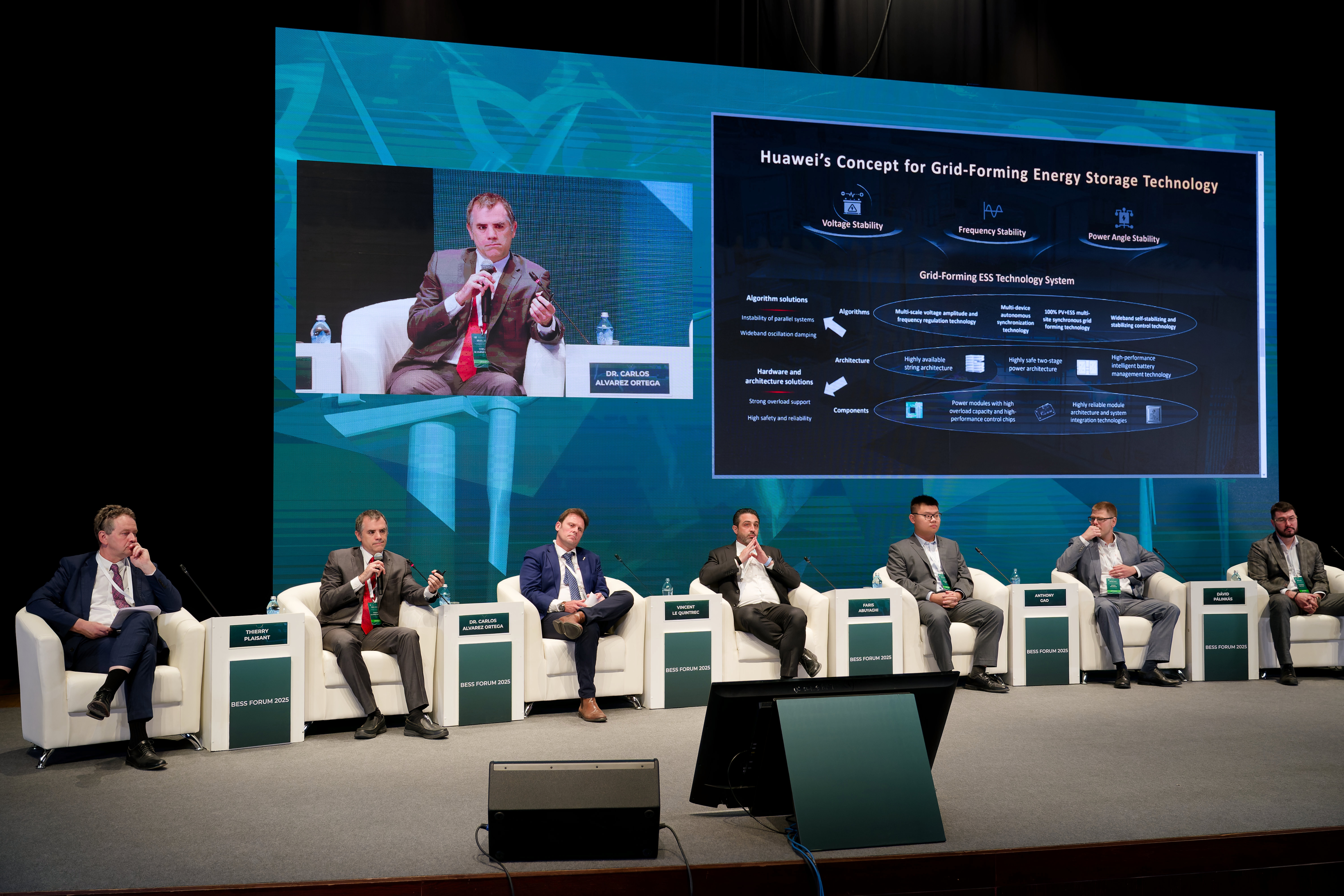
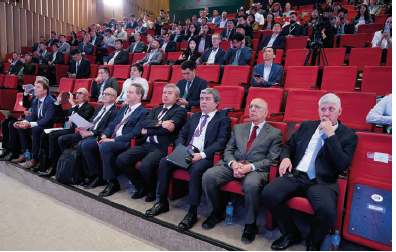
On May 28, 2025, Nazarbayev University hosted the international conference "The Role of Energy Storage Systems (BESS) in the Energy Sector of Kazakhstan."
The event brought together over 300 participants, including representatives of government bodies, leading international companies, research institutions, technology leaders, and investors. The conference was organized by Nazarbayev University, the Qazaq Green Renewable Energy Association, and TotalEnergies Renewables Kazakhstan, with the support of the Ministry of Energy of the Republic of Kazakhstan.
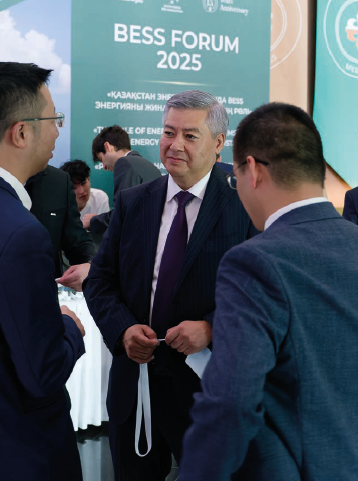
Discussions focused on the potential for integrating Battery Energy Storage Systems (BESS) into Kazakhstan’s Unified Power System. Participants explored how these technologies could improve the reliability and flexibility of the power grid, facilitate the integration of renewable energy sources, and enhance the country’s overall energy security.
An important part of the discussion addressed international experience with BESS implementation in Europe, the United States, and Asia, including cutting-edge technologies, business models, standards, and the legal and economic prerequisites for large-scale deployment of storage systems in Kazakhstan.
Key speakers included Sungat Yessimkhanov, Vice Minister of Energy of the Republic of Kazakhstan; Professor Waqar Ahmad, President of Nazarbayev University; Thierry Muller, Vice President of TotalEnergies Renewables; Dyusenbai Turganov, Member of the Mazhilis (Lower House) of the Parliament of Kazakhstan; Nabi Aitzhanov, Chairman of the Management Board of KEGOC JSC; Gulzhan Nalibayeva, General Director of the Financial Settlement Center for Renewable Energy Support; and executives and experts from international companies such as Huawei, Saft, Sungrow, Envision, and others.
Following the session “International Experience with Large-Scale BESS Projects: Lessons Learned,” Thierry Plaisant, General Director of TotalEnergies Renewables in Kazakhstan, stated:
“As a responsible multi-energy leader committed to sustainable development and creating in-country value, TotalEnergies was not just building and operating wind farms. We were also committed to supporting the Republic of Kazakhstan in developing its own advanced expertise in the field of renewable energy. That was why we decided to establish a Competence Center for Energy Storage Systems at the Center for Energy and Advanced Materials Science of the National Laboratory Astana, based at Nazarbayev University. We hoped this would help Kazakhstan become one of the global hubs for research into storage and conversion of both conventional and renewable energy.”
Special emphasis was placed on the unveiling of Kazakhstan’s inaugural White Paper titled “Application of Battery Energy Storage Systems (BESS) within the Unified Power System of the Republic of Kazakhstan.” Prepared by the Qazaq Green Renewable Energy Association in partnership with Huawei, the document offered an in-depth look at global BESS implementation, modern technology solutions, international standards, and suggested legal and regulatory measures for Kazakhstan.
Nurlan Kapenov, Chairman of the Board of the Qazaq Green Renewable Energy Association, highlighted:
"At the conference, the Qazaq Green Renewable Energy Association presented the White Paper on ‘Application of Battery Energy Storage Systems (BESS) within the Unified Power System of the Republic of Kazakhstan,’ prepared by our experts. The White Paper was an analytical report that examined the use of BESS technologies. The report explored international experience with both large-scale industrial deployment of BESS and the use of behind-the-meter BESS at the consumer level. It described current BESS technologies, their market costs, and the international standards applied in BESS project implementation. The report also included recommendations from domestic and international experts regarding technical requirements for BESS, as well as suggestions for regulatory and legal frameworks governing these technologies within Kazakhstan’s legislation. We hoped this document would serve as a significant initial practical step towards the integration of these technologies into the country’s power system.”
During the conference, two memoranda of cooperation were signed:
1. Between the Ministry of Energy of the Republic of Kazakhstan, CAEPCO JSC, Huawei, and the Qazaq Green Renewable Energy Association — on the launch of a pilot project for the implementation of a BESS at the 100 MW CAPEC Green Energy wind power plant.
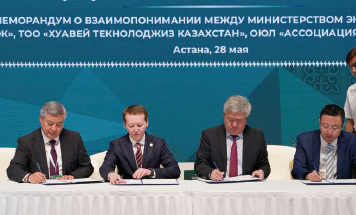
2. Between Huawei and the Qazaq Green Association — on collaboration for a number of future energy storage projects.
Sun Yaxiu, General Director of Huawei Technologies Kazakhstan, stated:
“At the conference, Huawei signed a Memorandum of Understanding with the Ministry of Energy of the Republic of Kazakhstan, CAEPCO JSC, and the Qazaq Green Renewable Energy Association. Our company intended to implement the first pilot project for a Battery Energy Storage System (BESS) at the 100 MW CAPEC Green Energy wind power plant. We planned to supply and provide full expert and technical support for the 4.4 MW BESS system over a period of one year. Thanks to this project, all interested stakeholders in Kazakhstan would be able to assess the positive impact of our energy storage technology on integrating wind power into the energy system.”
A significant part of the program was dedicated to the scientific session on innovations, technologies, and critical materials for energy storage systems. The session was moderated by Professor Zhumabay Bakenov of Nazarbayev University, Head of the Center for Energy and Advanced Materials Science. His team was recognized as one of the leading research groups in the region specializing in energy materials, advanced energy solutions, and BESS technologies. The session brought together international experts in battery technology and BESS.
Professor Zhumabay Bakenov of Nazarbayev University stated:
"Research in materials science and engineering was enabling the development of more efficient, durable, and sustainable solutions for BESS. In the context of the global energy transition, technological innovation was becoming a key driver of resilience and technological sovereignty for nations. Leading universities and research centers like Nazarbayev University provided the critical scientific foundation needed to advance this strategic field."
Kazakhstan held significant potential in the global battery materials supply chain — particularly in cathode materials, lithium, and other critical minerals — owing to its natural resource base, geopolitical position, and scientific and technological capabilities. At the time, it was essential not only to scale up raw material extraction but also to develop a full value-added cycle, from beneficiation and processing to component manufacturing and applied research. This approach would have enabled Kazakhstan to secure a strong position in international partnerships and make a substantial contribution to global efforts toward decarbonizing the economy.
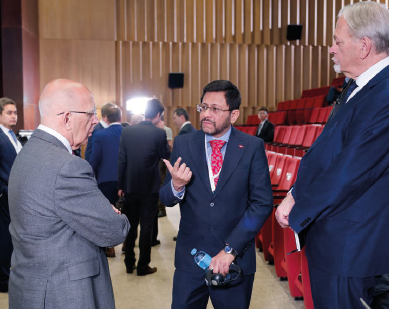
The event concluded with the adoption of a resolution defining the main priorities for advancing the deployment of energy storage systems within Kazakhstan's power sector.
Scientists from Russia and Uzbekistan improved the stability of green energy systems by 24%
Kazakh startup ranks in GCIP global top 3 in Vienna
Kazakhstan poultry farm produces 15 million kWh of energy from waste
China, Spain expand partnership in solar and wind power
Mongolia engages Hanwha Group in industrial and clean energy development
Russia to test horizontal and vertical wind power plants at new renewable energy test site in Adygeya
Brussels sets timeline: grid package by summer, electrification strategy to follow
RES 2026 to address workforce training for renewable energy scale-up
Algeria commissions 400 MW of solar capacity
Deadline approaching: KOREM invites bids for wind and solar power auctions
From crisis to security: IRENA lays out renewables roadmap for governments
Renewable energy generation in Kazakhstan rises 15% in Q1 2026
Kazakhstan climbs the Climatescope rankings
Kazakhstan and China launch joint Hydrogen Energy Technology Innovation Center
Switzerland builds world’s most powerful redox-flow battery
UK approves its largest ever solar farm at 800 MW
Sonnedix wins major solar energy contracts in Italy
China-developed 1,000-MW solar project enters operation in Laos
Kazakhstan’s Senate passes agreement to export green energy to Europe
Zayed Sustainability Prize opens global call for submissions