

Expert opinion15.09.2023
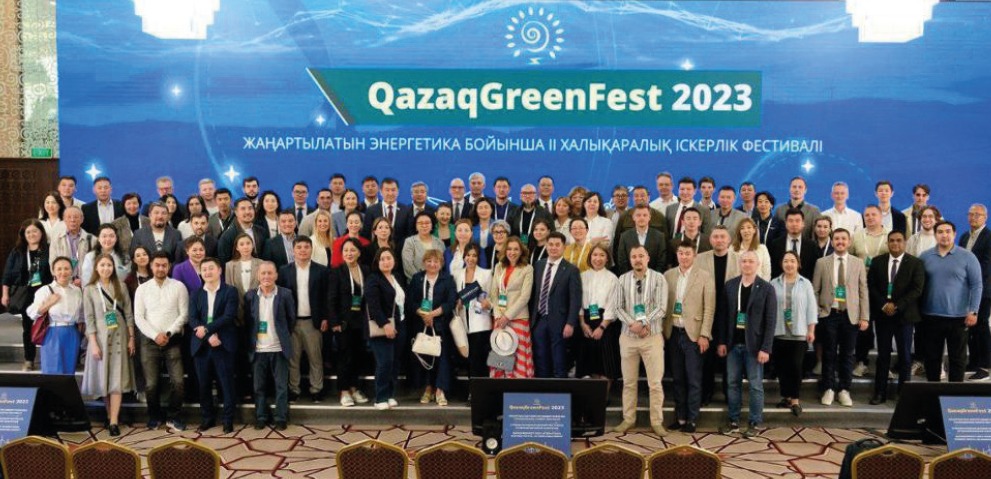
Recommendations to the Government of the Republic of Kazakhstan on development of ESG policy based on the results of session "ESG Policy: Gender aspects and corporate governance" within the framework of the II-th International Business Festival on Renewable Energy “Qazaq Green Fest”, May 25-26, 2023


1. Set specific and measurable gender diversity goals for boards of directors, executive teams and all staff. These goals should be consistent with industry best practices and take into account the unique circumstances of the company's activities. For example, gender indicators. Formulate a position or policy recommending that all enterprises and companies publish an annual sustainability report and an assurance from a third independent party to ensure transparency and reliability.
2. Advocate for introduction of transparent payment systems and regular payment equity checks to eliminate the gender pay gap. Call for public disclosure of data on the gender pay gap and taking the necessary steps to ensure equal pay for equal work.
3. Promote the adoption of inclusive workplace policies that support work-life balance, parental leave, flexible work hours and placement in childcare facilities. Encourage companies to implement comprehensive anti-discrimination and harassment policies to ensure a safe and inclusive work environment.
4. Encourage companies to implement mentoring and sponsorship programs that support the professional growth and development of women in the labor market. These programs should provide opportunities for professional development, career growth and leadership training.
5. Encourage companies to implement supplier diversity programs that promote the inclusion of women-owned businesses in their supply chains. Implement practices in organizations to take into account gender diversity and inclusivity as criteria in their procurement processes.
6. Advocate for increased engagement with stakeholders, including employees, customers, investors, and local communities, on gender issues. Encourage practices to create mechanisms for feedback, consultation and cooperation so that the voices of various stakeholders are heard and taken into account.
7. Encourage organizations to improve their ESG reports, including specific indicators and indicators related to gender aspects. Promote transparency and disclosure of information on progress made towards achieving gender equality goals, including sharing best practices and lessons learned.
8. Promote collaboration between companies, industry associations, NGOs and government agencies to share best practices, research and resources related to gender equality and ESG. Encourage the creation of partnerships and initiatives that promote gender equality and inclusivity. One example may be the holding a series of round tables by the Government of the Republic of Kazakhstan in partnership with international companies to familiarize key private sector companies with best practices in the field of ESG.
9. Attach importance to monitoring and evaluating progress towards achieving gender equality goals. Involve independent auditors and third-party evaluations to ensure transparency and credibility of gender initiatives.
10. Promote education and awareness programs to challenge gender stereotypes, biases, and unconscious biases. Conduct gender-related trainings for employees and conduct awareness-raising campaigns to foster a culture of inclusiveness and respect. Make recommendations to universities and educational institutions regarding inclusion of courses on ESG and sustainable development in their curricula.
Israel to build its largest-ever solar power plant in the Negev desert
Solar pensions and wind dividends: how South Korea is turning renewables into a rural development tool
Kyrgyzstan announces tender for land plots for construction of six small hydropower plants
ADB to invest $70 billion in Asia's power grids and digital infrastructure
Kazakhstan and World Bank discuss energy integration in Central Asia
Construction of 500 MW wind power plant begins in Karaganda region
50 MW solar power plant auction winner determined in Kazakhstan's Southern Grid Zone
Rooftop solar panels: Kyrgyzstan prepares rules for households and businesses
Europe’s rising heat: Can renewables provide the solution?
Winner announced for 100 MW solar auction in Kazakhstan
Chinese company ready to invest $1 billion in solar and wind generation in Kyrgyzstan
Meta to invest in space solar energy and ultra-long-duration energy storage
Tokyo pushing plan for world’s biggest floating wind power farm
Kazakhstan cancels 50 MW solar auction due to lack of participants
Tokayev ratifies Green Energy Corridor Agreement with Azerbaijan and Uzbekistan
China raises RES share to 60% of total installed capacity
Batys Kaspiy Energo wins auction for 250 MW wind farm in Atyrau region
Ember: Renewables overtake coal in global power generation for the first time
Kazakhstan continues accepting applications for May RES auctions
Water-energy balance of the region discussed by ministers of four Central Asian countries