

News Kazakhstan26.02.2024
Solar, wind, maneuverable...


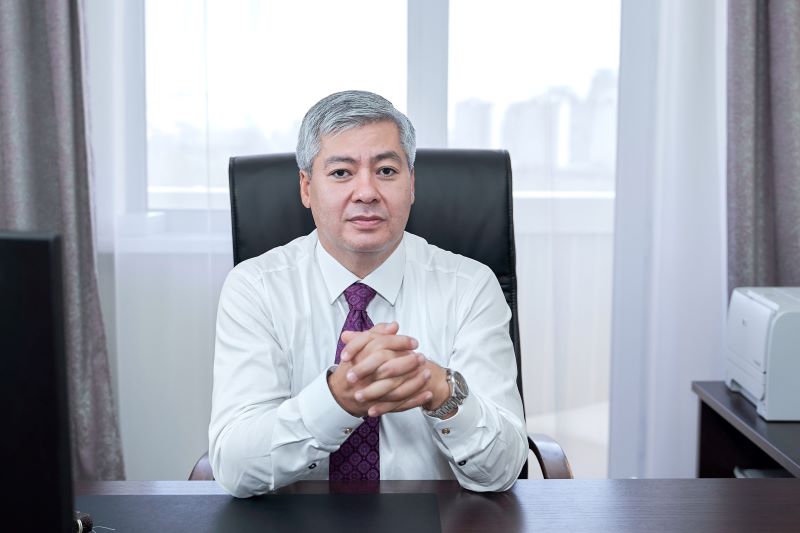
What are the prospects for the development of renewable energy sources in Kazakhstan? What are the pros and cons of solar and wind installations? Nurlan Kapenov, Chairman of the Board of Directors of the Qazaq Green Renewable Energy Association, answered these and other questions from Kazakhstanskaya Pravda.
– Nurlan Nurgalievich, how long ago did the first “green” energy facilities appear in the republic?
– The Law “On Supporting the Use of Renewable Energy Sources”, adopted in 2009, became fundamental for this area. Since that time, solar and wind power plants related to renewable energy sources began to be built in the country.
The process was given great impetus by the introduction in 2014 of a new mechanism to support entities in this segment of the domestic energy sector in the form of a fixed tariff. It began to be provided by the state to investors in renewable energy projects as part of concluded contracts for the purchase of electricity for a period of 15 years.
– What does a fixed tariff mean, what are its advantages?
– For renewable energy sources, which at that time were a relatively new phenomenon in Kazakhstan, there was a separate tariff. Let me explain what this means.
Starting from 2014, an investor who decided to build a solar, wind, biogas or hydroelectric power station in the republic was provided with a fixed tariff for a period of 15 years. This is a long-term guarantee from the state, a factor of stability, which is very important in business. It made it possible to attract foreign and domestic companies to the field of “green” energy.
Since 2018, the tariff setting mechanism has become more transparent: open electronic auctions began to be held in the country, the winners of which were given the opportunity to build renewable energy facilities at the desired point on the territory of the republic.
– Electronic trading, like the separate, fixed prices that were in effect before, act as stimulating instruments of the state. Please tell me what the algorithm is here?
– The auction is announced by the Ministry of Energy through the established Settlement and Financial Center for the Support of Renewable Energy Sources. The latter acts as a single purchaser of energy and puts the corresponding contract up for auction.
Announces that in a certain point of the republic it is necessary to build a wind or power plant with a capacity of, for example, 100 megawatts. According to the terms of the auction, the winner will have to build a facility at his own expense and then supply electricity for at least 20 years at the price specified in the contract. During the specified period, the investor recoups his costs.
The construction of a solar power plant is given two years, and a wind power plant – three. In this case, all costs, including preparation of the project, the actual construction of the facility, and its further operation within the period specified in the contract, fall on the shoulders of the investor. The state only buys “green” energy from him. This is the mechanism for supporting renewable energy sources.
It is important to note that the winners of the auctions are the participants who offer the lowest rates. This condition, introduced into the regulations for investors, made it possible to significantly reduce prices for “green” electricity in our country.
The very first big record for cost reduction was set when the Italian company Eni entered the renewable energy market as an investor. She won the auction for the construction of a solar power plant with a capacity of 50 MW on the terms of supplying electricity at a price of 12.5 tenge per kilowatt-hour. The facility has already been built in the Shaulder district of the Turkestan region and produces “solar current”.
If relatively recently renewable sources were considered the most expensive, now the sun and wind provide us with the cheapest electricity. Last year, the aforementioned record for reducing the price of solar electricity was broken by another investor, who offered a tariff of 10.38 tenge per kilowatt-hour at an auction for a wind farm project.
– What is the renewable energy system in Kazakhstan today?
– At the beginning of 2024, there are 146 “green” energy facilities in the republic. Among them: wind - 59, solar - 45, mini-hydroelectric power plants - 39 and biogas - 3. The total capacity of all these stations is 2,880 megawatts.
The owners are investors from different countries, including Germany, Great Britain, China, Russia, as well as domestic companies. In the total generation in our country, the share of renewable energy sources is 5.9%. This can be considered a good result among the countries of the post-Soviet space. Especially if we take into account the fact that more than 70% of all generation in Kazakhstan comes from coal-fired stations.
Kazakhstan has signed the Strategy to achieve carbon neutrality by 2060. According to this document, up to 80% of all generation in the republic should switch to renewable energy sources. That is, we have to replace the existing “dirty” coal generation with clean, “green” ones. Steps are being taken in this direction, and I would like to believe that we will achieve our goal.
– European countries are considered leaders in the movement towards carbon neutrality. I would like to know how they manage to successfully transition to “green” energy, what factors favor this?
– Indeed, Europe has achieved high rates in terms of transition to renewable energy sources. For example, in Germany and Denmark their share in the total energy volume already exceeds 50%. This result was achieved mainly due to solar and wind power plants.
One of the factors contributing to the development of renewable energy sources in European countries is high electricity tariffs for consumers. If Kazakhstan has one of the lowest tariffs in the world, for example, in Astana - 16-18 tenge per kilowatt-hour of energy for households, then in Europe the picture is different. For any, say, German, electricity is a big headache. Because for the family budget this item of expenditure is one of the most expensive.
If a Kazakh citizen pays an average of 16–18 tenge per kilowatt-hour, then a resident of Germany pays 200 tenge... Accordingly, if we transfer an average of 10 thousand tenge for light every month, then a resident of Germany pays about 150 thousand. If we were in the place of the Germans, we would know well the price of electricity.
It is not surprising that in Germany it is very profitable to install solar panels on the roofs of houses; they pay for themselves in five to six years. These countries do not have the fossil resources that our country has. In our country, the same mini-installations will pay for themselves in 20–30 years.
The fact is that we inherited the old, Soviet coal-fired generation, which was put into operation back in the 60s and 70s of the last century, as well as existing large state district power plants and thermal power plants. They have already passed all conceivable depreciation periods and do not require a return on investment. However, we must admit that all these facilities have a high degree of deterioration and require regular major repairs and modernization.
It is worth saying that, despite all the listed indisputable advantages - environmental friendliness and low cost of solar and wind sources - they are not without problems. The fact is that they are characterized by an imbalance in energy production and instability.
For example, after sunset the solar station will not generate energy; almost the same thing will happen in fog, rain or snowfall. That is, if your house is entirely powered by a solar power plant, then during such periods you may find yourself without light. And vice versa, the wind station will continue to generate electric current as the wind speed increases and the same storm occurs.
To summarize, we can say that the disadvantages of solar stations are that if the weather “goes bad”, they will stop generating electricity. The wind farm will pause during the “calm”. During these periods of instability, there are disadvantages of solar and wind generating sources.
Historically, Kazakhstan has had little maneuverable, flexible capacity in the form of gas and hydroelectric power plants. They are needed to quickly fill emerging energy deficits. The latter can appear in any energy system during peak load hours, which arise, including due to the growth of household consumption. For example, in the morning, when people turn on electrical appliances after sleep and actively use them before leaving for work, sending their children to schools and kindergartens.
Similar peaks appear in the evening, when everyone returns home and electrical appliances are turned on again. During these hours, additional maneuverable energy generation is needed. Gas and hydroelectric power plants have this capability.
However, there are not enough of them in Kazakhstan. As I already said, we have a high share of coal generation, but it is not flexible, because in order to quickly add energy capacity, you need to quickly launch an additional coal boiler, and this will take several hours, sometimes a whole day.
The problem has historical roots: during the Soviet period, Kazakhstan with its open basins of Ekibastuz coal was considered as the base power. Unlike our southern neighbors, where there are many mountain rivers and where hydroelectric power plants with good maneuverability were built.
Today, the following situation has developed in the energy sector of the republic. Over the years of independence, we have not been able to develop maneuverable capacities; we rely on the historical energy system inherited from Soviet times. They began to build solar and wind stations, which, as I already said, are unstable and depend on weather conditions.
That is, renewable energy sources can strengthen the existing imbalance. Therefore, it becomes an obstacle to the further development of solar and wind energy. Our RES Association “Qazaq green” advocates the development of flexible capacities and makes efforts to improve the current state of affairs in the country’s energy system.
– How is this problem currently being solved?
– Now Kazakhstan is smoothing out imbalances in the energy system mainly due to electricity flows from the Russian Federation. KEGOC JSC purchases these volumes during peak hours - morning and evening, in accordance with the signed agreement. At night we have excess energy, which we now send to Russia. The energy systems of our countries, as well as our southern neighbors, are looped, and there are no obstacles to the flow of electricity.
At the same time, we have to admit that Kazakhstan’s energy security is not yet sufficiently ensured due to its dependence on neighboring states. If at some point the neighboring states deny us the balancing capacity to cover our daily imbalances, then we will return to the 90s with their rolling blackouts.
I repeat, we need to develop our maneuvering capabilities. By the way, this is what they did in Russia. Over the past 30 years, they were able to build many new, modern hydroelectric power plants there, developed flexible gas generation, that is, they managed to create what we are just starting to do.
In addition to the development of maneuverable capacities, we need to develop in the unified electric power system of Kazakhstan a modern, centralized dispatch control that meets new challenges, as well as apply the latest technical solutions, such as energy storage systems, in simple words, batteries, which can also help in the fight against imbalances.
In addition, the economic measures and mechanisms adopted can provide significant assistance in smoothing out the peaks. For example, such mechanisms may include demand management of electricity consumption or the use of differentiated energy supply tariffs. These issues are within the competence of the Ministry of Energy and should be addressed to this department.
The reason that the situation in the Kazakh energy system is not very rosy is not only that there has been no investment in the industry for a long time. The root of the problem is in tariffs, or more precisely, in their underestimation.
Modernization of energy facilities, including thermal power plants, where accidents that lead to collapse regularly occur, is impossible with existing tariffs. In turn, the Government cannot sharply raise tariffs, since there are many low-income families in the country who will not be able to pay for electricity and other utilities at the new, higher tariffs.
In his speech at an extended meeting of the Government, the Head of State noted that energy tariffs should include the profit necessary to modernize the system. At the same time, targeted social assistance should be provided for those for whom the new tariffs will be unaffordable. By the way, of the total electricity consumption in the country, the population accounts for just over 10%.
We need to improve the entire energy system in the country in order to more successfully develop renewable energy sources. Unfortunately, we cannot now move on to the accelerated mass construction of solar and wind power plants in order to replace coal generation with them. Due to the fact that they, as already mentioned, are unstable and unmaneuverable.
For this we need energy storage systems and new tariffs. It is impossible to switch to the latter due to the social factor and the insufficiently high level of income of the population. In general, it turns out to be a kind of vicious circle that needs to be broken.
– Then why do developed countries rely on solar and wind energy?
– Due to the availability of flexible sources, accumulation systems, and finally, high tariffs, and the overall level of economic development. In Germany and Denmark, for example, it is possible to use “balancing” energy, when part of its sources are switched off during a period of calm in the energy system and begin to work during peak consumption hours. As I said, these countries do not have the base coal generation that we do, and they are moving towards carbon neutrality at an accelerated pace.
Currently, the leader in the number of green energy facilities in our country is the Zhambyl region, followed by Akmola, Almaty, and Turkestan regions. In general, wind and solar installations are already operating in all regions of the republic.
For investors who are building renewable energy sources on the territory of Kazakhstan, 1 megawatt of a solar power plant costs about 700 thousand dollars, a wind power plant costs 1 million 200 thousand dollars. Thus, “green” energy is an area that requires very large investments. Nevertheless, there are quite a lot of companies that would like to become investors in renewable energy projects. This once again convinces us of the great prospects for the further development of “green” energy in our country.
Scientists from Russia and Uzbekistan improved the stability of green energy systems by 24%
Kazakh startup ranks in GCIP global top 3 in Vienna
Kazakhstan poultry farm produces 15 million kWh of energy from waste
China, Spain expand partnership in solar and wind power
Mongolia engages Hanwha Group in industrial and clean energy development
Russia to test horizontal and vertical wind power plants at new renewable energy test site in Adygeya
Brussels sets timeline: grid package by summer, electrification strategy to follow
RES 2026 to address workforce training for renewable energy scale-up
Algeria commissions 400 MW of solar capacity
Deadline approaching: KOREM invites bids for wind and solar power auctions
From crisis to security: IRENA lays out renewables roadmap for governments
Renewable energy generation in Kazakhstan rises 15% in Q1 2026
Kazakhstan climbs the Climatescope rankings
Kazakhstan and China launch joint Hydrogen Energy Technology Innovation Center
Switzerland builds world’s most powerful redox-flow battery
UK approves its largest ever solar farm at 800 MW
Sonnedix wins major solar energy contracts in Italy
China-developed 1,000-MW solar project enters operation in Laos
Kazakhstan’s Senate passes agreement to export green energy to Europe
Zayed Sustainability Prize opens global call for submissions