

World News04.10.2023
EU's CBAM starts to apply in its transitional phase


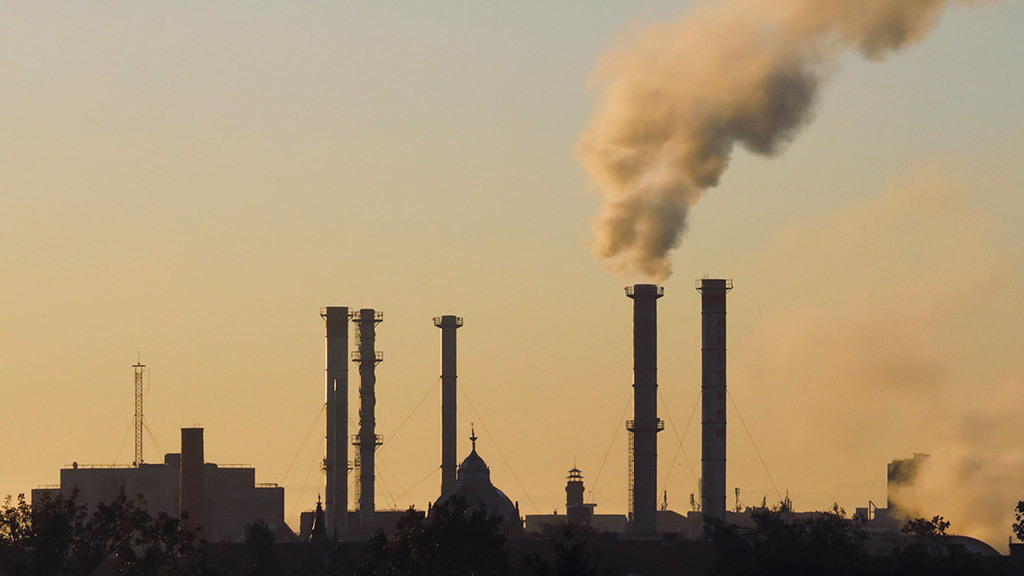
QAZAQ GREEN. Since 1 October, the Carbon Border Adjustment Mechanism (CBAM) entered into application in its transitional phase, the press release of the EC said.
CBAM is the EU's landmark tool to fight carbon leakage and one of the central pillars of the EU's ambitious Fit for 55 Agenda. It will equalise the price of carbon between domestic products and imports. This will ensure that the EU's climate policies are not undermined by production relocating to countries with less ambitious green standards or by the replacement of EU products by more carbon-intensive imports. CBAM is a WTO-compatible measure that encourages global industry to embrace greener and more sustainable technologies.
In its transitional phase, CBAM will only apply to imports of cement, iron and steel, aluminium, fertilisers, electricity and hydrogen. EU importers of those goods will have to report on the volume of their imports and the greenhouse gas (GHG) emissions embedded during their production, but without paying any financial adjustment at this stage. While importers are asked to collect data for the fourth quarter of 2023, their first report will only have to be submitted by 31 January 2024. Furthermore, a number of flexibilities have been built into the CBAM's structure for the first year of application, such as the use of default values for the reporting of embedded emissions and the possibility to use the monitoring, reporting and verification rules of the country of production.
The transitional phase will serve as a learning period for all stakeholders (importers, producers and authorities). It will allow the European Commission to collect useful information on embedded emissions in order to refine the methodology for the definitive period, which starts in 2026. As of that date, importers will need to buy and surrender the number of “CBAM certificates” corresponding to the GHGs embedded in imported CBAM goods.
To help EU importers and non-EU installations in the practical implementation of the new rules, a new CBAM transitional registry will become available on 1 October to help importers perform and report these calculations. The Commission is also gradually making available detailed written guidance, online training materials and webinars, sector-specific factsheets and a step-by-step checklist to support businesses as the transitional mechanism begins. Reviews of the CBAM's functioning and product scope during its transitional phase will be concluded before the start of the definitive period, as well as the feasibility of extending the scope of CBAM to other goods produced in ETS sectors.
Moldova surpassed 1 GW of installed renewable energy capacity
China begins building US$1 billion hydropower station in Cambodia
Thousands protest in Germany urging faster green shift
Scientists from Russia and Uzbekistan improved the stability of green energy systems by 24%
Kazakh startup ranks in GCIP global top 3 in Vienna
Kazakhstan poultry farm produces 15 million kWh of energy from waste
China, Spain expand partnership in solar and wind power
Mongolia engages Hanwha Group in industrial and clean energy development
Russia to test horizontal and vertical wind power plants at new renewable energy test site in Adygeya
Brussels sets timeline: grid package by summer, electrification strategy to follow
RES 2026 to address workforce training for renewable energy scale-up
Algeria commissions 400 MW of solar capacity
Deadline approaching: KOREM invites bids for wind and solar power auctions
From crisis to security: IRENA lays out renewables roadmap for governments
Renewable energy generation in Kazakhstan rises 15% in Q1 2026
Kazakhstan climbs the Climatescope rankings
Kazakhstan and China launch joint Hydrogen Energy Technology Innovation Center
Switzerland builds world’s most powerful redox-flow battery
UK approves its largest ever solar farm at 800 MW
Sonnedix wins major solar energy contracts in Italy