



World News26.03.2026
Researchers push solar cell efficiency beyond physical limits


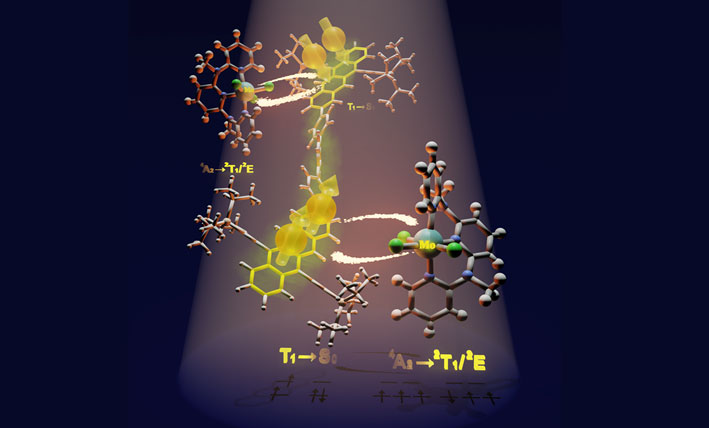
QAZAQ GREEN. Scientists at Kyushu University, in collaboration with Johannes Gutenberg University Mainz, have developed a technology that allows solar cells to extract more energy than previously thought physically possible. The system achieved a quantum yield of 130%, surpassing the conventional 100% barrier.
Solar cells have long been constrained by the Shockley–Queisser limit, a physical ceiling that restricts energy conversion efficiency to roughly one-third of incoming sunlight. Lower-energy infrared photons cannot excite electrons, while higher-energy photons lose their excess as heat.
The researchers harnessed a process called singlet fission, in which one high-energy photon splits into two lower-energy excitons, theoretically doubling the energy output. The key challenge was capturing these excitons before their energy dissipated through an unwanted process known as Förster resonance energy transfer.
The solution came in the form of a molybdenum-based metal complex — a so-called spin-flip emitter — in which an electron flips its spin during absorption or emission of near-infrared light. This allows the complex to selectively capture the triplet excitons produced in singlet fission. By carefully tuning the energy levels, the team suppressed the wasteful transfer process and achieved a quantum yield of around 130%.
The work remains at the proof-of-concept stage, with experiments conducted in solution. The next step is to bring the materials together in the solid state for integration into working solar cells. Beyond photovoltaics, the technology holds potential for LEDs and next-generation quantum technologies.
The findings were published in the Journal of the American Chemical Society.
New York sets out plan to deploy $200 million for affordable solar
Victorian Government approves Australia’s largest planned wind farm
Renewable capacity must grow more than sevenfold by 2050, IRENA says
Vattenfall secures 100 MW of battery storage from Vopak in the Netherlands
Kazakhstan's renewable energy facilities generate 7.8 billion kWh in nine months
London Stadium solar panels generate more than 1 million kWh of clean electricity
EIB discusses renewable energy investment and energy infrastructure with Kazakhstan
China connects 1 GW hybrid solar power project to the grid
Nine hydropower plants and one solar plant to be commissioned in Zhetysu region by 2028
Ukraine adds up to 1.1 GW of solar capacity in H1 2026
Tajikistan develops standard solar power plant designs for private homes
Taxonomy approved for green projects financed through green bonds
Coca-Cola HBC Bulgaria secures long-term supply of renewable electricity
Ember identifies bankability as a key barrier to ASEAN’s energy transition
Nearly 1,200 low-income households in Uzbekistan to receive solar panels
Kazakhstan to commission 5 GW of renewable capacity in 2028–2029
Solar and storage support 982,000 jobs in the EU
China plans to help Moldova build solar farms and expand energy storage
Central Asian and European universities discuss renewable energy research network
Global floating offshore wind capacity rises 38% in a year
