


Environmental policy08.12.2025
The Impact of Energy Infrastructure on Biodiversity in Kazakhstan



Ksenia Zyukova, Senior Specialist, Association for the Conservation of Biodiversity of Kazakhstan (ACBK)
Energy infrastructure is a cornerstone of Kazakhstan’s sustainable development, supporting economic growth and modernization. Alongside traditional energy sources, renewable solar and wind power are expanding rapidly. However, this growth also brings increased environmental risks, with the impact of energy facilities on biodiversity, particularly on birds, being especially significant.
The Problem: Effects of Energy Infrastructure on Birds
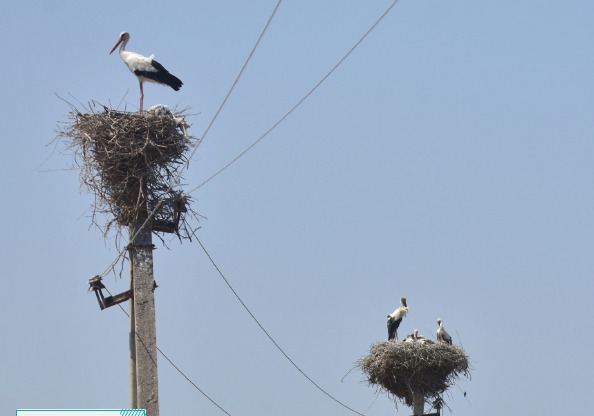
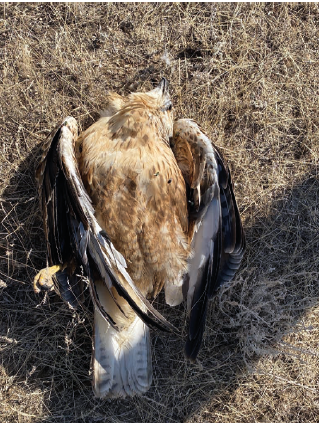
One of the most pressing issues is bird mortality on overhead power lines (OPLs). Birds collide with wires during flight or are electrocuted when landing on certain OPL structures, many of which are mounted on reinforced concrete supports carrying 6–10 kV. Research and data extrapolation indicate that roughly 58,000 birds of prey die on power lines in Kazakhstan each year, with 61% of these being eagles. Mortality is particularly high on 6–10 kV lines with porcelain or glass pin insulators, where contact between a live wire and a grounded element results in a fatal shock for the bird and often a line failure causing short circuits.
The growing network of renewable energy facilities also contributes to this issue by increasing the total length of power lines. Wind turbines, if sited without thorough environmental assessment, can pose collision risks to migratory birds and bats. Solar power plants can alter habitat quality and reduce food availability, particularly affecting steppe species.
ACBK’s Experience
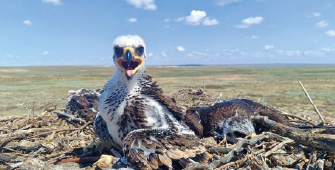
Since 2004, the Association for the Conservation of Biodiversity of Kazakhstan has run programs to study and protect rare bird species, including raptors like the steppe eagle and saker falcon. The organization monitors the impact of energy infrastructure on birds, develops practical recommendations to mitigate harm, and engages actively with energy companies, government agencies, and international partners. ACBK also participates in global initiatives to conserve migratory species and promotes best environmental practices in Kazakhstan’s infrastructure development.
Research Findings
As part of its work on energy infrastructure and biodiversity, ACBK surveyed power lines in Western Kazakhstan in 2023 and 2024 within the habitats of the Steppe Eagle population in the Volga-Ural region. In 2023, a survey at the Bokey Orda State Nature Reserve recorded 319 dead birds of 16 species, over 80% of which were steppe eagles. In autumn 2024, research in West Kazakhstan and Aktobe regions confirmed the severity of the problem: of 754 km of lines surveyed, 248 km were deemed hazardous, with 459 bird fatalities of 16 species recorded, mostly due to electrocution, and in some areas mortality reached 44 birds per 10 km of line. These results align with earlier studies; for instance, a 2011 survey of 680 km of power lines in Karaganda and Kostanay regions recorded over 1,100 dead birds of 35 species.
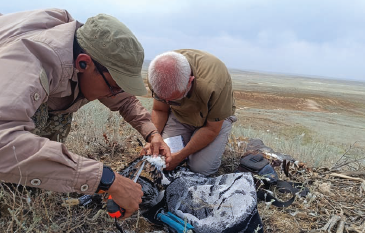
ACBK also conducts satellite tagging of birds, yielding unique data on migration routes and concentration areas for rare species. This information is critical for planning infrastructure projects, including renewables, by assessing potential risks and designing mitigation measures. Tagging data inform both conservation strategies and infrastructure placement.
Regulatory Framework and Gaps
Bird protection in energy infrastructure is addressed in Kazakhstan’s Environmental Code (Articles 245 and 246) and the Law “On the Protection, Reproduction and Use of Wildlife” (Article 17). However, these regulations are broad and lack detailed requirements for preventing bird mortality. Many facilities are therefore designed and operated without fully considering their impact on birds.
Some companies have adopted effective bird protection devices, demonstrating positive results. Yet existing penalties are inadequate: a fine for killing a single steppe eagle is only 20 MCI, far below the species’ ecological value.
Solutions
Mitigating risks to birds requires a comprehensive approach:
· Conduct pre-construction ornithological studies for energy projects.
· Install protective devices on power line poles to prevent electrocution.
· Use visual markers on wires to reduce collisions.
· Consider bird migration routes when siting wind farms.
· Develop national standards and guidelines for infrastructure design and operation that integrate conservation requirements.
These measures allow energy development to coexist with natural ecosystems, a key consideration as Kazakhstan transitions to a green economy.
Conclusion
Energy infrastructure can and must develop in harmony with nature. Adopting environmentally responsible practices at every stage, from planning to operation, will prevent bird fatalities and preserve Kazakhstan’s biodiversity. Implementing protective technologies, strengthening legislation, and fostering collaboration among government, business, and environmental organizations will ensure that energy infrastructure becomes a model of sustainable coexistence between humans and nature.
ADB to invest $5.5bn across 15 projects in Kazakhstan
17 agreements worth over $2.3 billion signed at the opening of RES 2026 EXPO in Astana
World Bank to invest $1bn in Central Asia's energy integration
Kazakhstan and China to launch a 500 MW wind farm in Karaganda region
Kazakhstan and Tajikistan move toward clean power deal over Rogun HPP
Regional Ecological Summit 2026 opens in Astana
Solar pumps and drip irrigation help Kyrgyz farmers cut costs amid rising energy prices
Hormuz closure failed to trigger coal comeback as solar and wind filled the gap
Astana set to launch RES 2026 EXPO and ink key international deals
Central Asian countries to discuss energy transition at RES 2026 in Astana
Moldova surpassed 1 GW of installed renewable energy capacity
China begins building US$1 billion hydropower station in Cambodia
Thousands protest in Germany urging faster green shift
Scientists from Russia and Uzbekistan improved the stability of green energy systems by 24%
Kazakh startup ranks in GCIP global top 3 in Vienna
Kazakhstan poultry farm produces 15 million kWh of energy from waste
China, Spain expand partnership in solar and wind power
Mongolia engages Hanwha Group in industrial and clean energy development
Russia to test horizontal and vertical wind power plants at new renewable energy test site in Adygeya
Brussels sets timeline: grid package by summer, electrification strategy to follow