

News Kazakhstan22.04.2026
World Bank to invest $1bn in Central Asia's energy integration


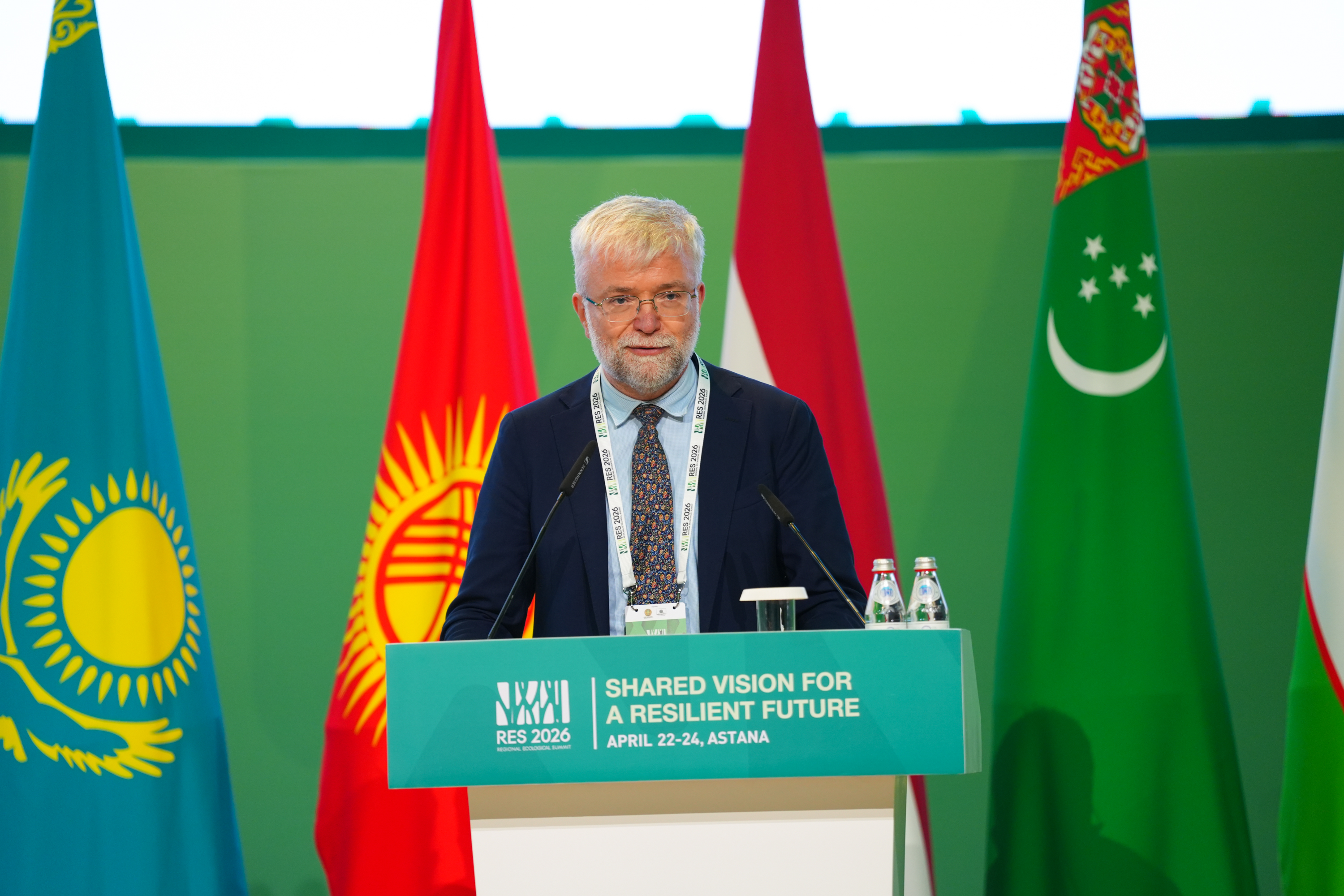
QAZAQ GREEN. The World Bank, together with development partners, will direct around $1 billion toward energy system integration in Central Asia under the regional programme REMIT (Regional Energy Market Integration and Trade), said Dmitriy Petrin, Regional Projects Coordinator at the World Bank's Central Asia Regional Office and Head of the CAWEP programme, speaking at on the sidelines of the CACCC 2026 (Central Asia Climate Change Conference), which is being held this year as part of the RES 2026 in Astana.
REMIT is designed to deepen energy integration and expand cross-border electricity supplies across the region, and is set to become one of the defining initiatives of Central Asia's energy agenda in the years ahead.
Total financing mobilisable under the programme, including development partners, stands at around $1 billion, while investment commitments agreed with participating countries reach approximately $2 billion, Petrenko said.
"The goal is to double the volume of electricity trade — from around 9 TWh per year to 15 TWh per year," he noted.
The first phase of REMIT covers Kyrgyzstan, Tajikistan and Uzbekistan, including a regional component, with other countries expected to join in subsequent phases.
Petrin said the build-out of cross-border energy infrastructure would substantially increase grid transmission capacity. "We expect to improve energy transfer capabilities by roughly three times," he said.
A key outcome of the programme will be enabling large-scale renewable energy integration. "These are the conditions needed to bring around 9 GW of solar and wind generation into Central Asia's unified energy system," the World Bank representative said.
He also highlighted the broader economic case for regional energy cooperation. "Expanded electricity trade alone could deliver at least $15 billion in economic benefit, with a further $4.5 billion per year from improved regional cooperation in the water sector," Petrin said.
The programme also signals a shift in how the World Bank approaches project delivery. "We are moving away from standalone projects in individual countries toward multi-phase, longer-term, and more substantial programmes," he said.
Among the key challenges, Petrin pointed to weak regional coordination and a shortage of quality data. "Coordination mechanisms at the regional level are fairly weak. There are serious problems with data availability — this prevents us from building the kind of analytics that decision-makers actually need," he said.
Stronger regional institutions, he stressed, are essential to making progress. "None of this is possible without building capable and effective regional structures," the World Bank representative said.
Cross-border electricity trade in Central Asia currently stands at just 3% of total demand. REMIT aims to establish a competitive regional market, modernise and digitalise grid infrastructure, and attract investment in new renewable capacity. Experts estimate that the economic gains from integration could reach $15–25 billion by 2050, alongside lower electricity costs and reduced emissions. Country participation in the market will be voluntary, with each nation retaining control over its national energy infrastructure.
Ardak Januzakova
China is ready to localize the production of equipment for “green” energy in SCO countries
Share of renewable energy in Uzbekistan's mix exceeds 45%
Kazakhstan to update power line and wind farm design regulations from August
French startup unveils portable wind turbine that needs no civil engineering
Voltalia breaks ground on 500 kW agrivoltaic complex in Uzbekistan
Poland’s first offshore wind farm nears completion
How Ulytau region developing green energy
Kazakhstan to build 250 roadside service stations equipped with solar panels
Chinese Trinasolar achieves record 29.2% efficiency on tandem solar module
Ireland plans €2 billion green hydrogen storage facility in county Carlow
Former coal mine in Illinois transformed into community solar farm
Sheep graze among solar panels in England — helping protect wildflowers and pollinators
China builds giant horse-shaped solar panel art installation in the desert
Turkmenistan and ADB explore the country's wind potential for renewable energy development
BMW and SOLARWATT unveil home energy integration solution for Neue Klasse electric vehicles
China completes its largest integrated solar-hydrogen-storage project
Canadian researchers test foam-based floating solar system built to survive winter ice
Aktobe regional administration and Plenitude Kazakhstan discuss construction of 100 MW wind farm
Masdar to acquire 49.99% stake in Repsol's €849m Spanish renewables portfolio
Solar power plant construction discussed in Dushanbe