

News Kazakhstan22.04.2026
Regional Ecological Summit 2026 opens in Astana


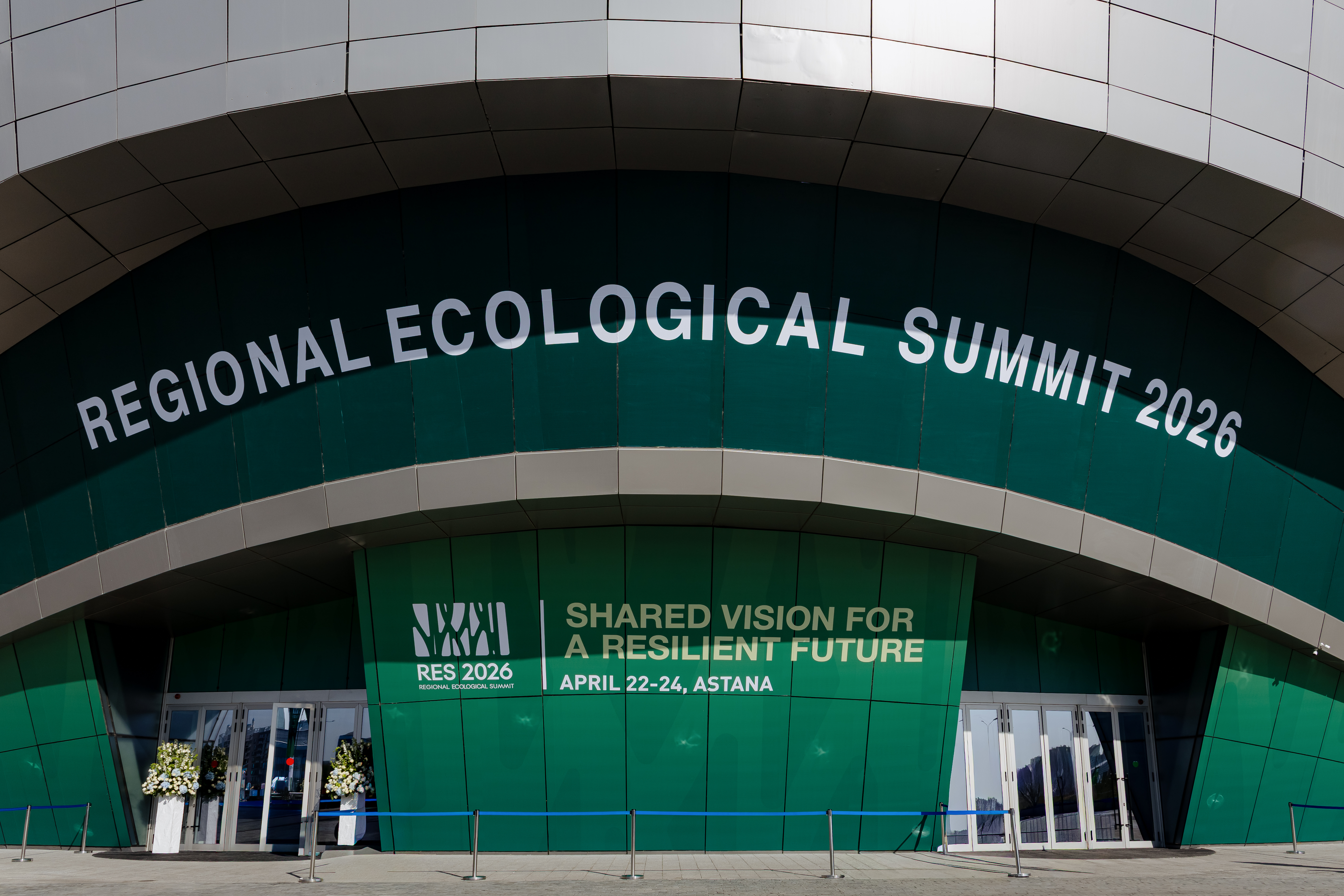
QAZAQ GREEN. The Regional Ecological Summit 2026 (hereinafter – RES), under the theme “A Shared Vision for a Sustainable Future,” is commencing its work in the capital of Kazakhstan. The event is aimed at developing a comprehensive policy framework and practical instruments for the protection, restoration and shared use of ecosystems, water and land resources, as well as for the conservation of biodiversity in the countries of Central Asia.
The RES is organized by the Ministry of Ecology and Natural Resources of Kazakhstan in cooperation with the United Nations and a number of international organizations. It is the first large-scale event focused on developing joint solutions that reflect a regional approach to addressing environmental challenges.
These challenges require strengthened cooperation among governments, international and financial organizations, as well as the scientific and business communities.
Participation in the Summit has been confirmed by the Heads of State of Central Asia, the Presidents of Armenia, Georgia and Mongolia, the Prime Minister of Azerbaijan, as well as heads of UN agencies (UNDP, FAO, UNECE, UNEP, WHO, WMO, UNESCO, UNICEF and others), leading international organizations (OSCE, ECO, OECD, OTS, SCO, EEC, ICESCO, CICA and others), and financial institutions (ADB, EBRD, World Bank, Islamic Development Bank).
In total, official delegations from 15 countries are expected to arrive, namely Azerbaijan, Armenia, Afghanistan, Belarus, Italy, Germany, Georgia, Cambodia, China, Mongolia, Russia, Serbia, Slovakia, Croatia and Japan, which makes the RES platform suitable for holding a series of bilateral meetings on a broad range of issues.
The work of the RES will begin with a plenary session with the participation of Heads of State and leaders of international organizations.
The substantive agenda of the Summit is structured around eight priority areas:
1.Supporting the climate transition;
2.Adaptation and economic resilience to environmental and natural risks;
3.Food security and the region’s ecosystem;
4.Sustainable management of natural resources;
5.Combating air pollution and waste management;
6.Mechanisms for achieving environmental ambitions;
7.Just and inclusive transition;
8.Environmental and digital competencies.
The RES programme includes 58 events, of which 17 are high-level events, 4 are Central Asia country sessions, and 37 are thematic meetings in the format of round tables, conferences and seminars.
The RES programme also includes consultations on the establishment of an International Water Organization within the UN system. Participation is expected from heads of water authorities of UN Member States, agencies implementing the UN water mandate, as well as research institutes.
Among the outcome documents, particular note should be made of the joint declaration of the Heads of State of Central Asia entitled “Environmental Solidarity of Central Asia,” reflecting the political will to deepen cooperation in environmentally sustainable development, as well as the Regional Programme of Action with UN agencies for 2026–2030.
In total, 51 documents are planned to be signed within the framework of the RES, including 13 memorandums, 16 joint statements, agreements and declarations, 16 regional and country initiatives, and 6 investment projects.
An important practical complement to the Summit will be the RES 2026 EXPO International Exhibition of Green Technologies, featuring national pavilions of the Central Asian countries and Azerbaijan as an observer country.
Kazakhstan’s national pavilion will showcase the country’s achievements in biodiversity conservation, including projects on the preservation of Przewalski’s horse, saiga antelope and Turanian tiger populations, the restoration of the Northern Aral, as well as water and scientific solutions and the results of the Taza Kazakhstan programme.
A special focus of Kazakhstan’s exhibition is placed on the introduction of intelligent resource management systems and smart environmental solutions. RES 2026 EXPO will take place from 22 to 24 April 2026 and will bring together around 300 companies from 30 countries. It is expected that approximately 20,000 people will visit the exhibition during this period.
Regional Ecological Summit 2026 opens in Astana
Solar pumps and drip irrigation help Kyrgyz farmers cut costs amid rising energy prices
Hormuz closure failed to trigger coal comeback as solar and wind filled the gap
Astana set to launch RES 2026 EXPO and ink key international deals
Central Asian countries to discuss energy transition at RES 2026 in Astana
Moldova surpassed 1 GW of installed renewable energy capacity
China begins building US$1 billion hydropower station in Cambodia
Thousands protest in Germany urging faster green shift
Scientists from Russia and Uzbekistan improved the stability of green energy systems by 24%
Kazakh startup ranks in GCIP global top 3 in Vienna
Kazakhstan poultry farm produces 15 million kWh of energy from waste
China, Spain expand partnership in solar and wind power
Mongolia engages Hanwha Group in industrial and clean energy development
Russia to test horizontal and vertical wind power plants at new renewable energy test site in Adygeya
Brussels sets timeline: grid package by summer, electrification strategy to follow
RES 2026 to address workforce training for renewable energy scale-up
Algeria commissions 400 MW of solar capacity
Deadline approaching: KOREM invites bids for wind and solar power auctions
From crisis to security: IRENA lays out renewables roadmap for governments
Renewable energy generation in Kazakhstan rises 15% in Q1 2026