

Industry News08.12.2025
From Kashagan to 1 GW of Wind Power: A New Era for TotalEnergies in Kazakhstan


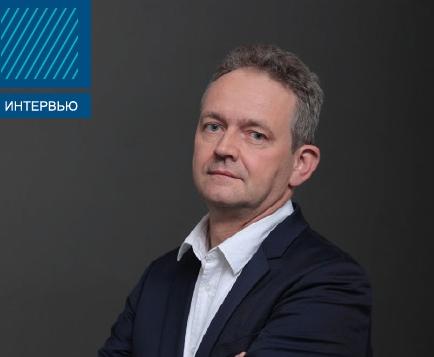
In 2025, global energy reached a historic milestone: for the first time, electricity generation from renewable sources surpassed coal generation, mainly due to growth in China and India. Against the backdrop of this global shift, Kazakhstan is also actively pursuing a decarbonization course, setting a goal to increase the share of renewable energy sources (RES) in electricity generation to 15% by 2030. Currently, according to the Ministry of Energy of the Republic of Kazakhstan, there are 158 RES facilities operating in the country with a total capacity of over 3.2 GW, which in the first half of 2025 provided 6.8% of all electricity produced in the republic. To achieve these goals, Kazakhstan plans to commission 8.5 GW of new "green" capacity by 2035. We spoke with Thierry Plaisant, Managing Director of TotalEnergies Renewables Kazakhstan, about the company's current projects, plans, and role in the development of Kazakhstan's RES sector.
- Thierry, thank you for your time. Please tell us about TotalEnergies' renewable energy strategy in Kazakhstan and globally.
- Thank you for your interest in TotalEnergies' activities and the opportunity to talk about our goals, projects, and plans. Globally, the company is implementing a multi-energy approach to achieve carbon neutrality by 2050.
To reach this ambitious goal, the company actively invests in the development of low-carbon energy sources worldwide. By 2030, we plan to deliver close to 120 TWh of power production by 2030. This will account for approximately 20% of the company's total energy production by that time.
We are building an integrated model that combines solar and wind energy sources with flexible capacities—gas-fired power plants and energy storage systems—to provide consumers with clean electricity without interruption.
As for Kazakhstan, we are implementing a flagship project here—the 1 GW "Mirny" wind farm (WPP) in the Zhambyl region. The Mirny WPP will be equipped with 150 turbines and a 600 MWh energy storage system. This is the largest renewable energy project in the country, and it sets new benchmark in renewable energy sector of Kazakhstan both scale-wise and from technological standpoint of view with the first ever BESS. The planned generation of "Mirny" is about 4 billion kWh—enough to power over 1 million households. The expected annual decarbonization effect will be up to 3.5 million tons of CO2.
Our project is being implemented jointly with Samruk-Energy JSC and KazMunayGas NC JSC. Construction is scheduled to begin in 2026, with commissioning in 2028.
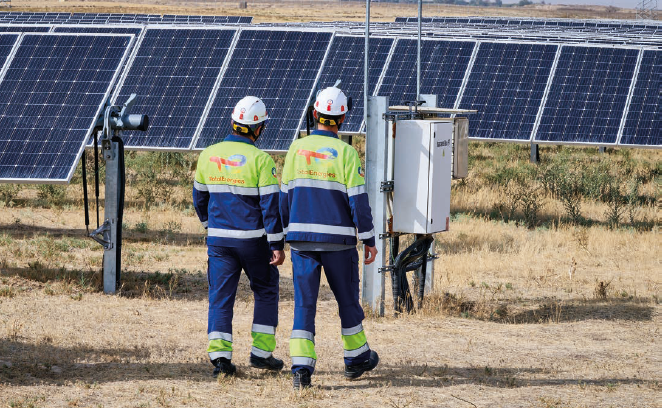
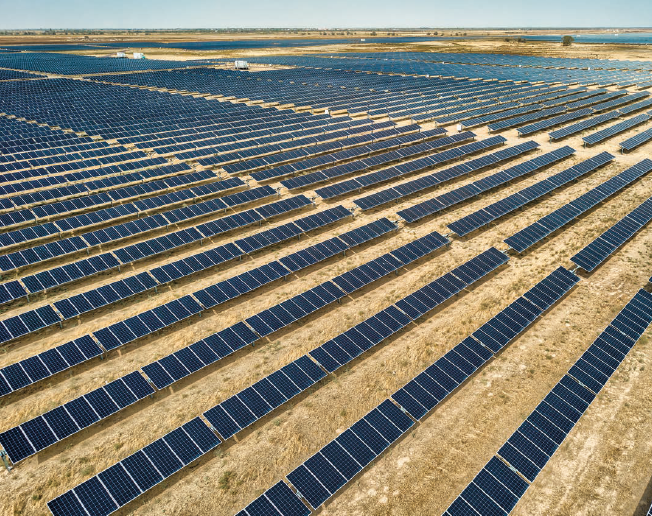
Furthermore, we already operate two solar power plants with a total capacity of 128 MW in the Zhambyl and Kyzylorda regions. These projects directly support Kazakhstan's national goals—increasing the share of RES to 15% by 2030 and achieving carbon neutrality by 2060.
In general, TotalEnergies has been present in Kazakhstan since 1993. Our journey has begun with development of the Kashagan offshore oilfield, and we are proud to be among pioneers of this challenging project. Today Kashagan, where our company holds 16.81% of shares, accounts for around 1/5th of crude oil production in Kazakhstan, which helps position the country as one of the key players in global energy market. We are also successfully represented in the lubricants and motor oils market. As you can see, we have a long-standing and fruitful relationship. And I am glad that Kazakhstan, which I love very much, has become another country where our company is implementing its multi-energy strategy.
- At what stage is the Mirny project?
- Together with our partners, we have completed the selection of turbine suppliers for "Mirny." The corresponding letters of award for supply were signed on October 3rd during the Kazakhstan Energy Week in Astana.
Envision Energy and SANY Renewable Energy Co. were chosen as suppliers—both companies are among the top ten global wind turbine manufacturers. In addition to their leadership positions and expertise, a major role in choosing these manufacturers was their ability to provide cost-effective solutions, making clean energy more accessible, as well as their commitments to localization—both Envision Energy and SANY Renewable Energy Co. plan to localize production processes in the Republic of Kazakhstan.
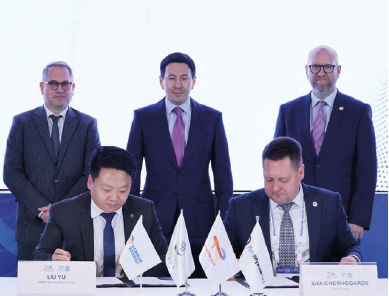
Also, at the end of October, we held public hearings on the project across several communities in the Zhambyl and Almaty regions. The hearings were successful, and all materials have been sent to the authorized bodies to obtain environmental permits for construction work, which is scheduled to begin at the end of the first quarter of next year.
- What specific works are planned as part of the Mirny project? What is the expected economic effect for the region during the construction and operation of the Mirny WPP?
In addition to preparatory work on the future WPP site, installation of turbines, and the energy storage system, we plan to expand the 500kV substations in the town of Shu and the village of Ulken, which will allow us to integrate "Mirny" into the national energy grid. The work will include the construction of over 230 km of 500 kV overhead transmission lines, laying over 250 km of 35 kV cable lines within the WPP territory, and building two 35/500 kV step-up substations.
Currently, the selection of the general contractor (EPC) for the construction work is underway. Upon completion of the tender, I think a procurement plan will be drawn up and updated, which will clarify which goods, services, and works can be localized during construction. The construction phase is expected to generate a substantial number of job opportunities for Kazakhstani workers.
As for the effect during operation, we expect that about [TP2] 200 Kazakhstanis will be employed at the Mirny WPP. I find it difficult to give precise forecasts on the economic contribution to the budget of the Zhambyl region from the full-scale operation of the WPP, but I can say with confidence that significant tax revenues are expected for the local treasury. For example, our 100 MW MKAT solar station in the town of Shu, with an annual generation of over 172 GWh, has contributed over 2.6 billion tenge in taxes[TP3] to the local budget since its launch in late 2019 to the present day.
In addition to additional investments in the region, taxes, and the obvious benefits of a tangible contribution to decarbonization and additional clean electricity generation, which will help balance the deficit in the Southern zone, we are planning to launch social projects in coordination with the local akimats (local executive bodies). The details of the projects are still being worked out, and the needs of the local population, as well as the opinions of the project partners, will be of great importance here.
- Let's talk about the financial component of the Mirny project. How do you plan to attract financing?
- TotalEnergies is known worldwide as a reliable operator in the energy sector, and thanks to this reputation, it is easier for us to find investors for our renewable energy projects. The "Mirny" wind farm, valued at over a billion dollars, is no exception.
Several financial institutions, including the Development Bank of Kazakhstan (DBK) and the EBRD, have expressed interest in funding the project. In our case, a project financing mechanism is implied. We have reviewed all proposals, and negotiations with potential investors are in the final stages. Our potential collaboration with DBK is especially meaningful, as it reflects a shared commitment to the sustainable development of Kazakhstan and contributes directly to achieving the country’s strategic goals in the energy sector. We expect that partners and stakeholders will make a Final Investment Decision (FID) on the project early next year.
Since you have mentioned that “Mirny” WPP is setting up a new technological benchmark in Kazakhstan with its first ever BESS, how would you address shortage of competencies in this specific area?
You've highlighted a critical point. The renewable energy sector is developing rapidly in Kazakhstan and building a highly qualified workforce to support it is essential.
To address this, we are planning to establish a BESS Excellence Center in Kazakhstan as part of the 'Mirny' project. This center will be dedicated to training and developing local talent to operate and maintain this advanced new technology. We are currently in the process of designing the training curriculum and identifying the best institutional partners to serve as a learning base for the Center.
Additionally, we are actively developing a dual training program between French and Kazakhstani universities. While the initial framework is still in development, we believe these educational investments are fundamental to building an even more skilled and resilient workforce for our renewable assets.
This commitment to local development isn't new for us. I am incredibly proud that 100% of the staff operating and maintaining our solar assets in the Kyzylorda and Jambyl oblasts are local talents. Moreover, they are residents of the neighboring communities, such as Shu and Zhalagash.
At TotalEnergies, we place great importance on developing and promoting local professionals. It is a core part of our mission, contributing not only to the success of our own activities but to the strength of the entire renewable industry in Kazakhstan.
- What other projects, besides Mirny, are the company currently considering?
- Our business development team is constantly studying potential projects in Kazakhstan where our experience and expertise would bring mutual benefit to both clients and us. We would be happy to work with large industrial enterprises directly, as well as in regions experiencing electricity deficits where there are no prospects for traditional generation sources, and RES is the optimal solution.
ADB to invest $5.5bn across 15 projects in Kazakhstan
17 agreements worth over $2.3 billion signed at the opening of RES 2026 EXPO in Astana
World Bank to invest $1bn in Central Asia's energy integration
Kazakhstan and China to launch a 500 MW wind farm in Karaganda region
Kazakhstan and Tajikistan move toward clean power deal over Rogun HPP
Regional Ecological Summit 2026 opens in Astana
Solar pumps and drip irrigation help Kyrgyz farmers cut costs amid rising energy prices
Hormuz closure failed to trigger coal comeback as solar and wind filled the gap
Astana set to launch RES 2026 EXPO and ink key international deals
Central Asian countries to discuss energy transition at RES 2026 in Astana
Moldova surpassed 1 GW of installed renewable energy capacity
China begins building US$1 billion hydropower station in Cambodia
Thousands protest in Germany urging faster green shift
Scientists from Russia and Uzbekistan improved the stability of green energy systems by 24%
Kazakh startup ranks in GCIP global top 3 in Vienna
Kazakhstan poultry farm produces 15 million kWh of energy from waste
China, Spain expand partnership in solar and wind power
Mongolia engages Hanwha Group in industrial and clean energy development
Russia to test horizontal and vertical wind power plants at new renewable energy test site in Adygeya
Brussels sets timeline: grid package by summer, electrification strategy to follow