

News Kazakhstan02.12.2025
Kazakhstan adopts new environmental standards


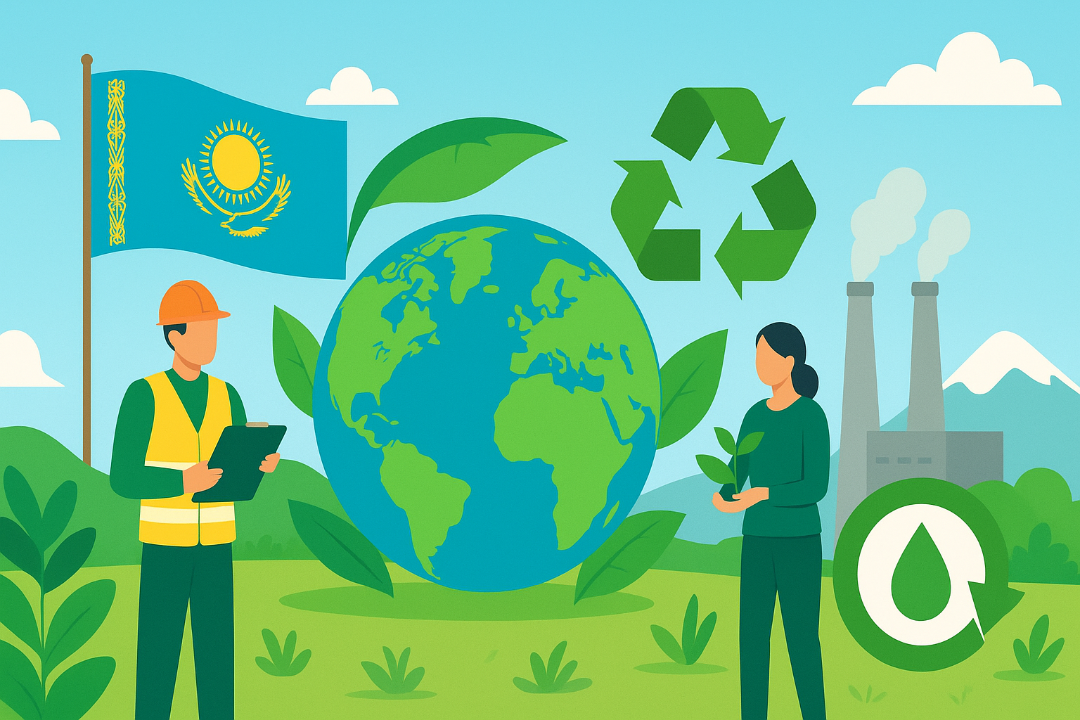
QAZAQ GREEN. Kazakhstan has approved a set of updated environmental standards. The documents, adopted by the Committee for Technical Regulation and Metrology, support the national target of achieving carbon neutrality by 2060, according to information on the ministry's website.
The standards introduce new requirements for waste management, climate adaptation, emissions reduction, and circular economy practices.
The approved documents include:
-
ST RK 4022-2025 “Waste. Waste Management. Requirements for Low-Waste Technologies”. The standard sets requirements for regulating low-waste and so-called “zero-waste” technologies in the management of production and consumption waste, as well as directions and principles for developing zero-waste technologies. This standard will serve as an important tool for the transition to low-waste and zero-waste technologies, supporting sustainable development and environmental protection.
-
ST RK ISO/TS 14092-2025 “Climate Change Adaptation. Requirements and Guidance on Adaptation Planning for Local Governments and Communities,” which describes a step-by-step process that enables the development of a local adaptation plan tailored to the climatic, environmental, and social conditions of each specific case.
-
ST RK ISO 14068-1 “Climate Change Management. Transition to Net Zero. Part 1: Carbon Neutrality” and ST RK IWA 42 “Guidance on Carbon Neutrality.” These standards establish the foundation for responsible emissions management and the implementation of science-based climate solutions. They define unified approaches and principles for all relevant stakeholders — environmental and analytical organizations, national and regional environmental monitoring centers, and environmental institutions.
-
ST RK 4013-2025 “Circular Economy. Measurement and Assessment of Circular Economy Performance.”
ST RK 4012-2025 “Circular Economy. Glossary, Principles and Recommendations for Implementation.” -
ST RK ISO 4789-2025 “Guidelines for the Treatment and Reuse of Wastewater at Thermal Power Plants.” This document is aimed at reducing water consumption at thermal power plants and mitigating negative environmental impacts. The standard involves the implementation of modern treatment technologies — membrane, biological, and chemical.
The adoption of the new standards strengthens Kazakhstan’s environmental regulatory framework and supports the transition to a low-carbon economy.
Kazakhstan and China to launch a 500 MW wind farm in Karaganda region
Kazakhstan and Tajikistan move toward clean power deal over Rogun HPP
Regional Ecological Summit 2026 opens in Astana
Solar pumps and drip irrigation help Kyrgyz farmers cut costs amid rising energy prices
Hormuz closure failed to trigger coal comeback as solar and wind filled the gap
Astana set to launch RES 2026 EXPO and ink key international deals
Central Asian countries to discuss energy transition at RES 2026 in Astana
Moldova surpassed 1 GW of installed renewable energy capacity
China begins building US$1 billion hydropower station in Cambodia
Thousands protest in Germany urging faster green shift
Scientists from Russia and Uzbekistan improved the stability of green energy systems by 24%
Kazakh startup ranks in GCIP global top 3 in Vienna
Kazakhstan poultry farm produces 15 million kWh of energy from waste
China, Spain expand partnership in solar and wind power
Mongolia engages Hanwha Group in industrial and clean energy development
Russia to test horizontal and vertical wind power plants at new renewable energy test site in Adygeya
Brussels sets timeline: grid package by summer, electrification strategy to follow
RES 2026 to address workforce training for renewable energy scale-up
Algeria commissions 400 MW of solar capacity
Deadline approaching: KOREM invites bids for wind and solar power auctions