

World News10.01.2023
Opinion of the Editors of Bloomberg: Net zero isn’t possible without nuclear


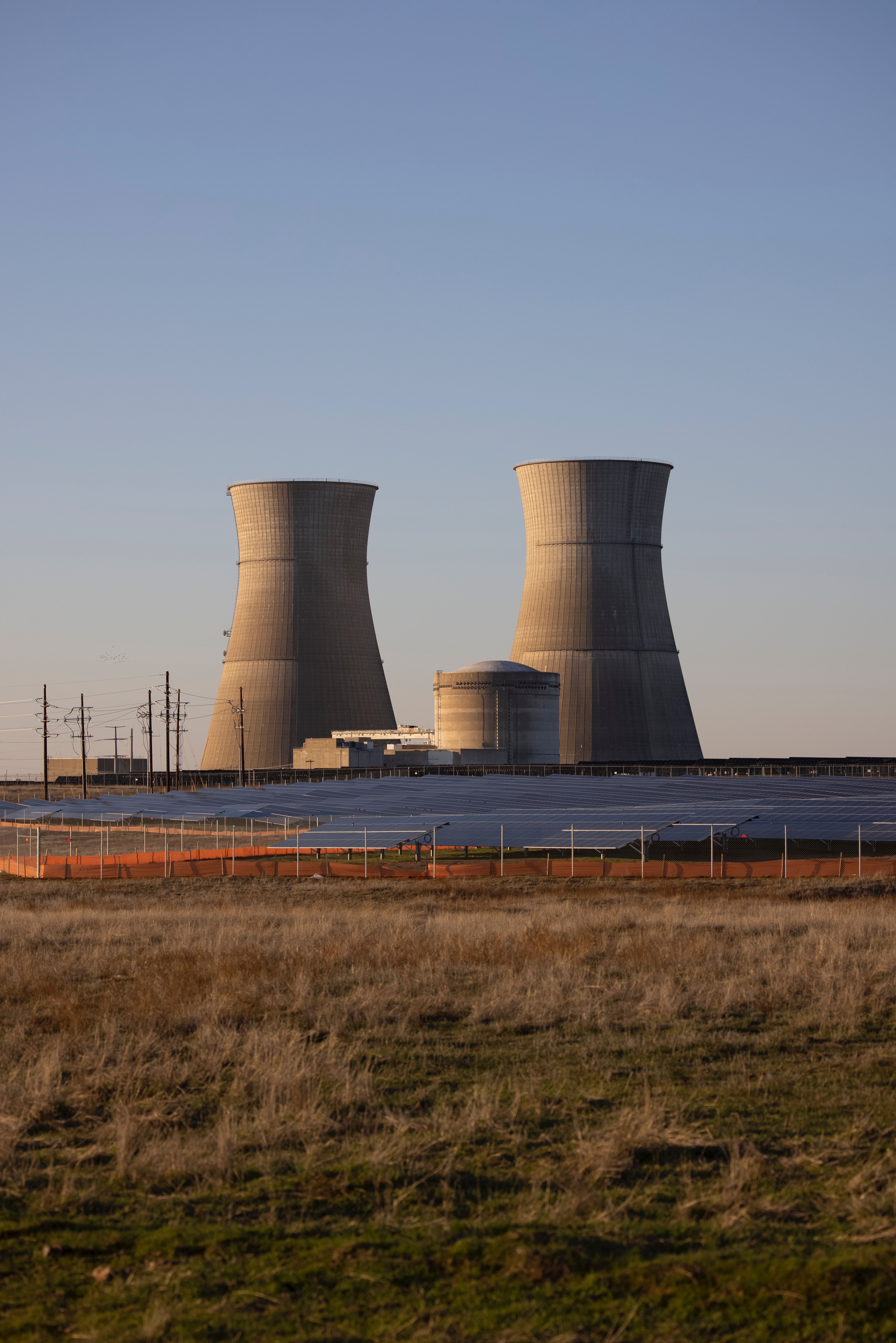
QAZAQ GREEN. Modern nuclear power can become an alternative to coal and natural gas and help the world achieve its decarbonization goals. In the Bloomberg the Editors note that outdated nuclear regulatory rules are hindering the innovation that is desperately needed to combat climate change. “Rather quietly, a new age of atomic energy may be approaching. Splitting atoms may not be as exciting as fusing them, or as modish as wind and solar projects. Yet old-fashioned fission is poised to make a comeback thanks to innovative new reactor designs. The world will be better for this revolution — if policymakers allow it.
As the fight against climate change gears up, new-energy progress is everywhere apparent. Variable renewables — wind and solar — are becoming more abundant as technology improves and funding flows. They’re also getting cheaper: From 2009 to 2021, the unsubsidized cost of wind declined by 72% and that of utility-scale solar fell by 90%. Energy storage is likewise getting more affordable.
Yet on current trends, none of this is enough. Sometimes the sun doesn’t shine and the wind doesn’t blow. Such intermittency requires either implausibly large storage capacities or more reliable sources of power to fill the gaps. At the moment, that’s mostly coal and natural gas — which is why fossil fuels still make up about 80% of the world’s primary energy supply.
Nuclear is the obvious alternative. A fission reactor produces clean, reliable, efficient and abundant energy, 24 hours a day, rain or shine. Despite the alarm raised by rare accidents, such as those at Chernobyl and Fukushima, the risks of nuclear power are exceedingly low per unit of energy produced, and the newest reactor designs are safer still. Similarly, the dangers posed by radioactive waste are quickly receding, thanks to better tools and processes.
To bring global emissions goals within reach, nuclear output will need to roughly double by 2050, according to the International Energy Agency. Unfortunately, the world is moving backward in key respects. Nuclear’s share of global energy production declined to 10.1% in 2020, from 17.5% in 1996. In the US, about a dozen reactors have shut since 2013 and more are on the chopping block. According to the Energy Information Administration, nuclear’s share of US generation will fall from about 19% today to 11% by 2050, even as electricity demand rises. Although renewables will pick up some of the slack, fossil fuels are expected to predominate for decades.
Given the looming risks of climate change — an «existential threat» as President Joe Biden says — these trends are cause for alarm. Worldwide, governments need to extend the lifetimes of existing nuclear plants, work with industry to finance new ones, and redouble efforts to improve waste disposal and otherwise ease the public’s mind about potential risks.
More important, they need to promote nuclear innovation. In recent years, small modular reactors (known as SMRs) have been inching toward commercial reality. Companies are testing dozens of competing designs. These reactors promise a much safer, cheaper and more flexible energy supply to supplement wind and solar. They could leverage economies of scale through standardized manufacturing, while potentially powering everything from homes to factories to transportation.
Yet red tape is standing in the way. In particular, the US Nuclear Regulatory Commission has been obstructing new reactors for decades, thanks largely to outdated safety standards. In 2019, Congress directed the commission to create a new licensing regime for SMRs, in the hopes of speeding their development and commercialization. Instead, the NRC has been busily bloating its own rulebook. Going forward, any increases to the commission’s budget should be conditioned on boosting US nuclear production; if the NRC can’t adapt to this challenge, Congress should push it aside and authorize a new overseer for advanced reactors.
More generally, lawmakers need to revisit their entire approach to nuclear regulation — devised in a different era, with different needs — and return to first principles. Their overriding goals should shift from total risk avoidance to maximizing nuclear power, accelerating innovation, and reducing carbon emissions with technologies old and new.
Confronting climate change means acknowledging hard realities. The world can’t decarbonize without nuclear power — and it can’t expand its nuclear output without rethinking the rules. Time is running short” the article says.
Moldova surpassed 1 GW of installed renewable energy capacity
China begins building US$1 billion hydropower station in Cambodia
Thousands protest in Germany urging faster green shift
Scientists from Russia and Uzbekistan improved the stability of green energy systems by 24%
Kazakh startup ranks in GCIP global top 3 in Vienna
Kazakhstan poultry farm produces 15 million kWh of energy from waste
China, Spain expand partnership in solar and wind power
Mongolia engages Hanwha Group in industrial and clean energy development
Russia to test horizontal and vertical wind power plants at new renewable energy test site in Adygeya
Brussels sets timeline: grid package by summer, electrification strategy to follow
RES 2026 to address workforce training for renewable energy scale-up
Algeria commissions 400 MW of solar capacity
Deadline approaching: KOREM invites bids for wind and solar power auctions
From crisis to security: IRENA lays out renewables roadmap for governments
Renewable energy generation in Kazakhstan rises 15% in Q1 2026
Kazakhstan climbs the Climatescope rankings
Kazakhstan and China launch joint Hydrogen Energy Technology Innovation Center
Switzerland builds world’s most powerful redox-flow battery
UK approves its largest ever solar farm at 800 MW
Sonnedix wins major solar energy contracts in Italy