

Industry News08.12.2025
Charter – Appeal to the Government of the Republic of Kazakhstan from the Renewable Energy Business Community


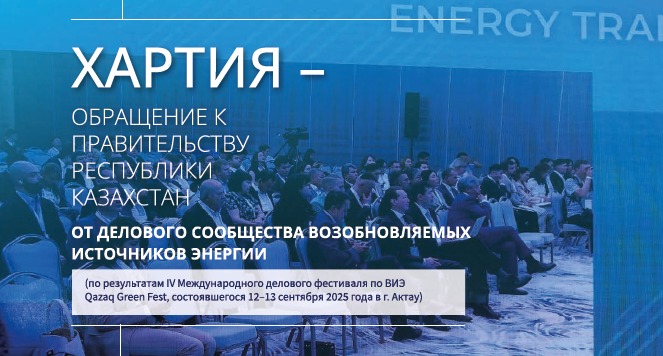
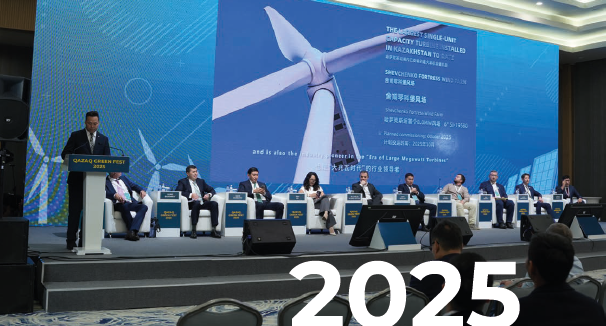
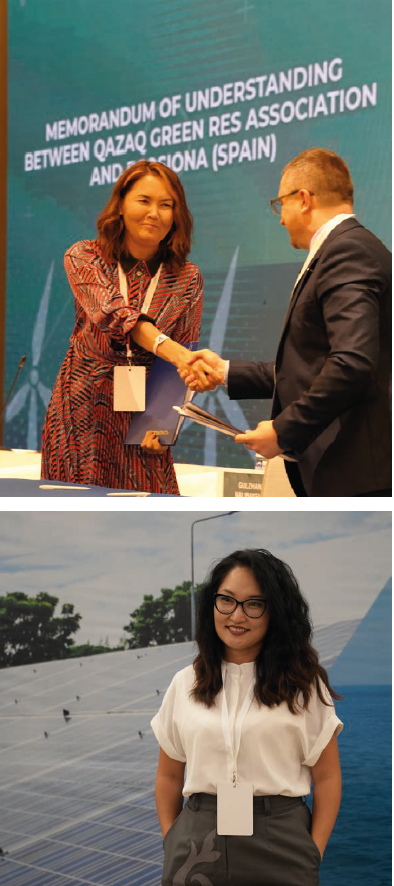
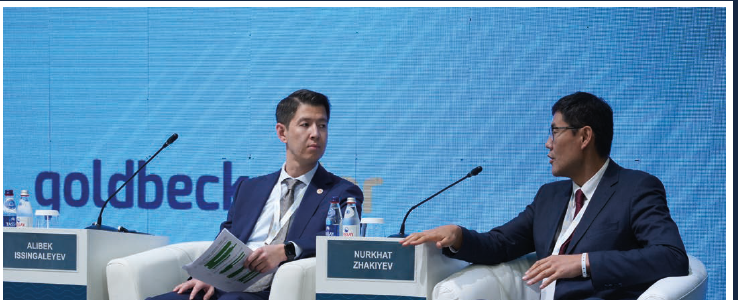
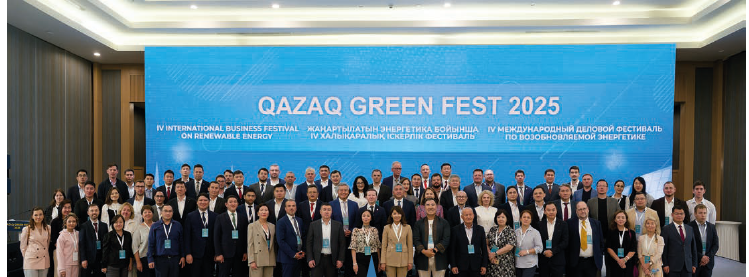
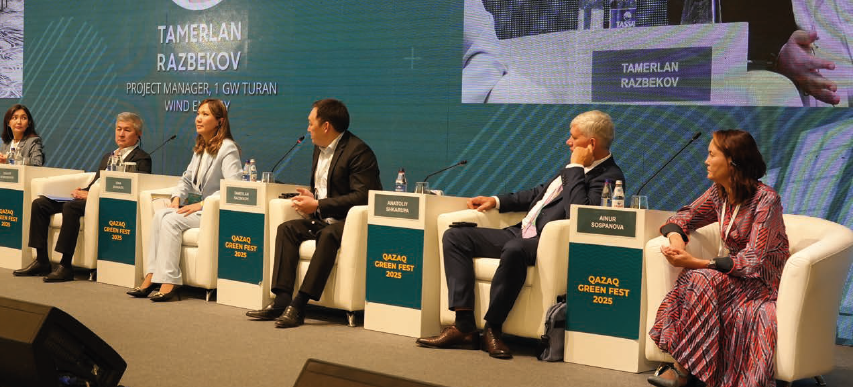
(based on the results of the IV International Business Festival on Renewable Energy “Qazaq Green Fest”, held on September 12-13, 2025 in Aktau)
The business community of the renewable energy sector (hereinafter – RES) supports the initiatives of the President of the Republic of Kazakhstan Kassym-Jomart Tokayev on the transition of the Republic of Kazakhstan to a green economy and sustainable development.
As is known, the Republic of Kazakhstan has declared its commitment to achieving carbon neutrality by 2060. In February 2023, President of Kazakhstan signed the Strategy for Achieving Carbon Neutrality of the Republic of Kazakhstan by 2060. Under the Paris Agreement the country pledged an unconditional greenhouse gas emissions reduction of 15%, and a conditional (with international support) reduction of 25% by 2030 from the 1990 level.
Today, Kazakh society is more aware than ever of its responsibility for the country’s environmental future and the health of its people. One of the key tools for achieving these goals is the expansion of renewable energy technologies.
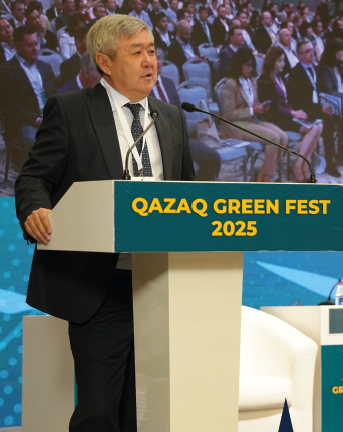
However, a number of factors continue to constrain the growth of the renewable energy market in Kazakhstan. These issues were thoroughly discussed at the 4th International Business Festival “Qazaq Green Fest”, which brought together more than 300 representatives of the green energy sector. Following the event, the business community has put forward the following proposals to the relevant government bodies and the Government of the Republic of Kazakhstan.
- Development of direct RES contracts
One of the key drivers for expanding the renewable energy market is the segment of PPA contracts for RES, under which industrial enterprises enter into direct contracts with renewable energy producers to lower their carbon footprint by purchasing green electricity. Experts note that this segment has significant potential, as most real-sector companies have already adopted corporate strategies to decarbonize their production processes. Overall, the bilateral contracts market has the potential to far exceed the size of the renewable energy auction market and become a key driver of the sector’s further growth, while not affecting electricity tariffs for households and businesses, since the cost of “green” electricity would be borne directly by industrial consumers.
The draft Law of the Republic of Kazakhstan “On Amendments and Additions to Certain Legislative Acts of the Republic of Kazakhstan on the Development of Alternative Energy Sources” introduces provisions to further strengthen this segment. In particular, it defines the terms “direct contract” and “direct consumer of green energy.”
However, one of the main challenges in this area is the potential risk that a direct consumer of green energy might, for objective reasons, withdraw from a contract with a renewable energy producer, since such agreements are civil B2B transactions. Financial institutions have also raised concerns about this issue, noting that long-term commitments to purchase electricity from renewable facilities are essential to prevent financial defaults. To address this, the draft law introduces a mechanism allowing such projects to be transferred to contracts with the Single Purchaser, provided they meet the following criteria:
- The energy-producing company must be included in the official list of renewable energy producers.
- At least thirty-six months must have passed since the start of power supply under direct contracts with green energy consumers.
- The company must ensure the construction of regulating capacity equal to at least thirty percent of its installed renewable generation capacity, connected to the system operator’s automatic power regulation system.
- The company must obtain confirmation from the transmission organization (to whose grid it is connected) and/or from the system operator confirming the technical ability to supply electricity to the Single Purchaser without compromising the stability of Kazakhstan’s Unified Power System (UPS).
- The company must update the technical conditions previously issued by the transmission organization and/or the system operator to reflect the new supply arrangement with the Single Purchaser.
The draft Law of the Republic of Kazakhstan provides that direct contracts may be converted into sales to the Single Purchaser at a price equal to the lowest auction price for the relevant renewable technology recorded in the thirty-six months preceding the application date. Only price indexation for changes in the consumer price index will apply to such projects. When a direct contract transitions to a Single Purchaser agreement, the contract term is reduced by the period that has elapsed since the facility’s commissioning up to the date of the new agreement. Projects transferred under this mechanism will not receive priority dispatch.
The draft law of the Republic of Kazakhstan stipulates that under direct contracts, producers may sell the electricity they generate to the Single Buyer at a price equal to the lowest auction price established during auctions (for the relevant type of renewable energy) over the thirty-six months preceding the date the renewable energy producer applies to the Single Buyer. At the same time, it is envisaged to apply to such projects only the mechanism of price indexation to changes in the consumer price index. And when transitioning from a direct contract to a contract with the Single Buyer, the term of the contract is determined minus the period that has passed from the moment of commissioning the facility until the date of conclusion of the purchase and sale agreement with the single buyer of electricity. Priority dispatching will also not apply to such projects in case of transition to a contract with the Single Buyer.
It should be noted that during the transition, the auction price indicator may be irrelevant – in practice there are cases when companies with the lowest auction prices did not sign PPA contracts and lost the financial security of participation in auctions. In this regard, the fairest approach would be to take into account the lowest auction prices for projects that have been commissioned over the past 3 years, or consider an approach where the authorized state body, taking into account market conditions, determines a single tariff by types of RES technologies.
The Ministry of Energy of the Republic of Kazakhstan, together with interested state bodies, needs to assess the potential for developing the direct RES contracts segment, based on the decarbonization plans of the country's organizations and enterprises. This analysis would help refine Kazakhstan’s strategic targets for renewable energy development.
We call on the Government of the Republic of Kazakhstan to review and endorse these measures aimed at accelerating the energy transition in the real sector of the national economy and achieving carbon neutrality.
2. Cancellation of priority dispatching for RES.
As of January 1, 2025, 156 RES facilities with a total installed capacity of 3037 MW were commissioned in the UPS of the Republic of Kazakhstan. At the same time, a substantial amount of new renewable energy capacity is scheduled to come online in the coming years. According to the 2023–2027 Auction Plan for selecting RES projects, 6.7 GW of new capacity is expected to be commissioned. In addition, under intergovernmental agreements outlined in the Action Plan for the Development of the Electric Power Industry until 2035, another 5 GW of renewable capacity is planned in partnership with major investors.

According to the system operator KEGOC JSC, given the shortage of regulating capacity in the Unified Power System (UPS) of the Republic of Kazakhstan, it is necessary to exclude priorities when forming daily schedules for generation based on RES for periods of elimination of emergency violations and in cases of necessity to ensure the preservation of stable operation of the Unified Power System of Kazakhstan.
KEGOC JSC, in turn, has prepared amendments to the draft Law of the Republic of Kazakhstan "On Amendments and Additions to Certain Legislative Acts of the Republic of Kazakhstan on the Development of Alternative Energy Sources," suggesting the following.
If the transmission capacity of power grids operated by transmission companies is limited, priority should be given to electricity generated from renewable energy sources. This requirement does not apply in the following cases:
- During periods when the System Operator is addressing emergency disruptions in Kazakhstan’s Unified Power System;
- When reducing output from conventional power plants is technically impossible due to reaching their minimum operational limits, and doing so would threaten the stability of the national power system or its individual regions.
Recognizing the current challenges in Kazakhstan’s power system, the renewable energy business community calls on the Ministry of Energy to ensure compliance with the following conditions:
- The cancellation of priority dispatching should not affect RES projects that have concluded PPA contracts with the Single Buyer before the cancellation of priority dispatching comes into force;
- If priority dispatch is revoked, the Ministry of Energy of the Republic of Kazakhstan must introduce equivalent measures to ensure fair compensation for potential investor losses. When renewable generation is curtailed by dispatch order, compensation must be paid (curtailment compensation mechanism), as such restrictions directly affect project payback. This practice is standard in mature renewable energy markets such as Germany and the United Kingdom;
- In line with the national policy on carbon neutrality, it is essential that when renewable generation is limited, daily scheduling minimizes the use of fossil-fuel plants to the technically required minimum. Coal or gas generation that does not provide critical or reserve capacity should be curtailed on the same basis as renewables.
- Under Kazakhstan’s commitments to reduce emissions and implement climate strategies (including the Paris Agreement and the Strategy for Achieving Carbon Neutrality), clean energy should retain dispatch priority, except in cases that threaten power system reliability. Even when restrictions are unavoidable, they must be temporary and supported by a clear plan to address the underlying causes (such as grid inflexibility or overload).
- When forming daily generation and electricity consumption schedules, prioritization should be determined not only by technical parameters, but also by indicators of economic feasibility. The energy sector is increasingly integrated with market mechanisms, and therefore economic feasibility is becoming an equally important prioritization criterion. This means that the choice of certain generators to participate in the schedule should take into account the cost of electricity production, market demand, tariff rates, compensation and other financial aspects.
- When dispatching generating facilities, the System Operator must give priority to renewable energy installations to the extent compatible with the safe and stable operation of the national grid, using transparent and non-discriminatory criteria.
- The system operator, in case of plans to apply restrictions to RES facilities in the future, needs to develop rules ensuring transparency and an appropriate level of communication: decisions on restrictions should be public, well explained and communicated by the system operator to each investor and represent an extreme measure (reasons, volumes, areas of action, calculated data). This increases the trust of market participants and reduces risks for investors. RES developers and operators should understand why their generation is being limited and have the opportunity to challenge such actions.
- Clear indicators of potentially possible restrictions as a percentage by types of RES generation (SPP, WPP, HPP) should be reflected;
- Investors participating in renewable project auctions must be allowed to incorporate potential curtailment levels into their financial models and reflect them in their tariff bids;
- Instead of long-term plans for RES restrictions, attention should be focused on: developing energy storage systems (BESS), constructing flexible capacities (CCGT, GTU), stimulating demand management (demand response), developing smart grids. RES restrictions should be only a temporary tool, not a new norm, and should be applied only in exceptional cases (for example, periods of accident elimination, etc.).
In connection with the above, the RES business community notes that the cancellation of priority dispatching for RES can cause serious damage to the development of renewable energy, the investment attractiveness of the sector and the goals of the energy transition. Instead of unilateral restrictions, it is necessary to build a balanced dispatching policy, eliminate the root causes of problems in the network, ensure transparency and fairness of decisions, stimulate the involvement of RES facilities in network management.
3. Operation of RES facilities within the Single Buyer and the balancing electricity market in real time
In the current version of paragraph 132 of the Rules for the Functioning of the Balancing Electricity Market (as amended by Order of the Minister of Energy of the Republic of Kazakhstan dated March 28, 2025, No. 141-n/қ), for renewable energy producers that signed long-term power purchase agreements with the Single Buyer after July 1, 2023, the upward and downward adjustment coefficients are set at 1.3 and 0.7, respectively. The Order took effect ten calendar days after its first official publication — that is, on April 12, 2025 (official publication date: April 2, 2025). Accordingly, the provisions of this Order apply to legal relations that arose after July 1, 2023, and affect power purchase agreements with the Single Buyer concluded following renewable energy auctions held in 2023 and 2024.

It should be noted that under paragraph 132 of the Rules for the Functioning of the Balancing Electricity Market that were in force during the 2023 and 2024 auctions, renewable energy producers with long-term PPAs signed with the Settlement and Financial Center were subject to fixed coefficients equal to 1 for the entire duration of their agreements. Thus, the new provisions introduced by the 2025 Order retroactively affect earlier agreements and significantly worsen investment conditions for projects that already signed PPAs with the Single Buyer.
In 2023, auctioned renewable capacity totaled 860 MW, and in 2024 — 1,270 MW. All investors implementing projects from these auctions could not have anticipated regulatory changes concerning the adjustment coefficients, which were only introduced by the Ministry in 2025. As a result, more than 2 GW of renewable capacity currently under construction face serious financial risks from the start of generation and electricity supply, even before investors have begun to recover their initial capital.
Under Article 43 of the Law of the Republic of Kazakhstan “On Legal Acts”, a regulatory legal act does not apply to relations that arose before its entry into force. Furthermore, any legislation that imposes new obligations or worsens the position of citizens or entities has no retroactive effect.
Since the norms adopted under Order No. 141-n/қ of March 28, 2025, apply to relations that arose before the Order came into force and materially worsen investor conditions, amendments should be introduced to ensure that the new adjustment coefficients apply only to renewable energy projects selected through auctions held after April 12, 2025.
According to the Ministry of Energy’s official position (Letter No. 05-20/10665 dated June 17, 2025), the new coefficients (1.3 and 0.7) do not apply to power purchase agreements concluded before the entry into force of the Order. However, given that the Settlement and Financial Center for RES LLP is already applying these new coefficients to projects with PPAs signed after July 1, 2023, it is necessary to amend the relevant regulatory acts to eliminate this legal inconsistency.
We urge the Ministry of Energy of the Republic of Kazakhstan to amend the Rules for the Functioning of the Balancing Electricity Market so that the new coefficients (1.3 and 0.7) apply only to new renewable energy projects that sign power purchase agreements after the corresponding Rules come into effect.
4. Improving the development of forecast balances of electricity and capacity
The official publication of forecast electricity and capacity balances is essential for effective industry planning, including renewable energy development. Integration and detailed project planning are carried out at the regional level. Publishing approved forecast balances only by system zones, without regional detail, is insufficient — it prevents proper generation planning, makes it difficult to assess the need for new or upgraded grid infrastructure, and delays the development and approval of grid connection schemes for new projects.
To improve the quality of forecast balance development, we ask the Ministry of Energy of the Republic of Kazakhstan to amend the Rules for the Development of Forecast Electricity and Capacity Balances (Order of the Minister of Energy of the Republic of Kazakhstan dated December 3, 2015, No. 687, as amended on April 29, 2021, No. 151) to include a regional breakdown in addition to the existing system zone division.
For accurate long-term forecasting of renewable electricity volumes and prices purchased by the Single Buyer under the support mechanism for renewables, we also request that the Ministry of Energy of the Republic of Kazakhstan, together with Settlement and Financial Center for RES LLP, establish, maintain, and annually update a unified, publicly accessible database of all renewable power plants (operational and planned). The database should specify the exact plant name, geographical location, installed capacity, auction price or established tariff with indexation for past periods, as well as actual and forecast generation data since commissioning.
To ensure transparency in forecasting and to reflect the interests of both business and electricity consumers—while preventing inflated demand projections that could lead to unjustified increases in capacity requirements—it is proposed to make the participation of business and industry associations mandatory in the approval process for forecast balances. These should include, among others, the Atameken National Chamber of Entrepreneurs, the Qazaq Green Renewable Energy Sources Association, the Kazakhstan Electric Power Association, the KAZENERGY Association, and the Association of Mining and Metallurgical Enterprises (AMME), etc.
5. Application of production control requirements to RES facilities
By Order No. 385 of the Minister of Energy of the Republic of Kazakhstan dated October 30, 2024, the Model Provisions on Production Control (hereinafter – the Provisions) were approved. The Provisions were developed to support energy-producing and energy-transmitting organizations, the system operator, as well as heat-generating and heat-transporting entities within centralized heat supply systems, in implementing production control in the fields of electricity and heat. The Provisions also stipulate that each organization must appoint an official responsible for production control. This appointment must be agreed upon with the relevant territorial division of the state authority for energy supervision and control, taking into account qualification requirements, work experience, and a position not lower than the head of a structural unit.
Under paragraph 3 of Article 6-9 of the Law of the Republic of Kazakhstan “On Electric Power,” energy-producing and energy-transmitting organizations, as well as the system operator, must develop their own production control provisions. It should be noted that according to the Law of the Republic of Kazakhstan “On Support for the Use of Renewable Energy Sources,” an “energy-producing organization using renewable energy sources” is defined as a legal entity engaged in the generation of electricity and/or heat from renewable sources, excluding net consumers. Based on this definition, such organizations do not fall under the category of “energy-producing organizations” as defined by the Law “On Electric Power.”
We therefore request that the Ministry of Energy of the Republic of Kazakhstan issue clarification confirming that the production control requirements do not apply to energy-producing organizations using renewable energy sources. Given the limited staffing capacity in the RES sector and the inability to allocate separate personnel for these functions, we also ask that the Ministry consider amending the Provisions to explicitly exempt RES facilities from these requirements.
6. Support for local content for RES
The development of local content in the renewable energy sector remains one of the most urgent issues. At a meeting on the development of the electric power industry and renewable energy sources held on May 26, 2021, the Head of State instructed the Government of the Republic of Kazakhstan to prepare proposals for localizing the production of components and other equipment for renewable energy and the energy sector as a whole.
Currently, major foreign manufacturers and equipment suppliers operate in Kazakhstan’s renewable energy market, providing solar panels, inverters, and generating equipment for wind and hydropower. At the same time, domestic companies supply metal structures, cable products, and transformers, particularly for solar projects. Local entrepreneurs are also working to establish solar panel production, and efforts are underway to localize the manufacturing of equipment for wind power.
However, the development of local content depends directly on the annual auction volumes and the commissioning pace of renewable energy capacity. According to Order No. 187 of the Minister of Energy of the Republic of Kazakhstan dated May 23, 2023, “On approval of the auction schedule for 2023 and the auction plan for 2024-2027”, substantial auction volumes for RES projects are planned. This provides an opportunity to plan medium-term commissioning targets for new renewable energy capacity.
To promote local content development, the RES business community proposes the following measures:
- Conduct one-stage auctions for the construction of RES facilities with a capacity of 3–5 MW. This will lower the connection costs (for example, to a 10 kV line).
- Include in the auction documentation a requirement for the winning bidder to purchase components and equipment from domestic producers within the established timeframe. This will help ensure demand for locally manufactured products, provided they meet competitive standards.
We request that the Ministry of Energy of the Republic of Kazakhstan introduce the necessary amendments to regulatory acts and include in the 2026 Auction Schedule a separate auction category for RES projects requiring the use of equipment produced by domestic manufacturers.
7. Development of energy storage systems
BESS play a crucial role in enhancing energy security. Such systems support the stability and resilience of electrical grids, offer a way to provide backup power for homes, businesses (including hospitals and other critical infrastructure). Batteries can also provide critical services in emergencies caused by extreme weather conditions or other disruptions.

In order to study the potential and define the role of BESS systems in Kazakhstan's energy sector, in 2025 the RES Association "Qazaq Green" together with Huawei developed the White Paper "Application of BESS Energy Storage Systems in the United Power System of the Republic of Kazakhstan."
Based on the analysis conducted, the development of energy storage systems is presented within the framework of the following measures:
- Implementation of energy storage system projects through the capacity market;
- Creation of an "energy arbitrage" mechanism (different price signals for charging-discharging of ESS);
- Development of the ancillary services market (frequency regulation, inertia, etc.);
- Implementation of energy storage system projects with connection to system operator substations (similar to grid boosters in Germany);
- Separate auctions for energy storage systems with RES;
- Stimulation of "behind-the-meter" energy storage systems at the household and business level within the retail electricity market.
To date, the Ministry of Energy of the Republic of Kazakhstan, within the framework of the draft Law of the Republic of Kazakhstan "On Amendments and Additions to Certain Legislative Acts of the Republic of Kazakhstan on the Development of Alternative Energy Sources," has planned to introduce such mechanisms for implementing BESS systems as the capacity market and energy arbitrage. In 2025, for the first time in Kazakhstan’s energy history, auctions were held to select a wind power project with an installed capacity of 1 GW, equipped with energy storage systems totaling at least 30% of the plant’s capacity.
At the same time, we draw the attention of the Ministry of Energy of the Republic of Kazakhstan and the system operator KEGOC JSC to the need to develop the ancillary services market (frequency regulation, inertia, etc.), use the potential of the balancing electricity market, stimulate "behind-the-meter" energy storage systems.
8. Ensuring environmental sustainability of RES – recycling and disposal of used equipment
With the growth of the share of renewable energy sources (RES) in Kazakhstan's energy balance, a new environmental and regulatory challenge arises – ensuring safe recycling and disposal of used equipment, in particular solar panels, wind turbines and battery systems. Large-scale commissioning of RES facilities on an industrial scale, which began in 2014-2015, means that in the coming years the country will face a wave of decommissioning of the first generation of equipment, whose service life is 20-25 years, and in some cases even less.
To date, there is no systematic practice of recycling RES equipment in Kazakhstan, key concepts, requirements for recycling and disposal, environmental safety criteria are not enshrined, and there is no responsible regulatory framework. This creates a risk of forming a new source of pollution and waste, including those containing hazardous substances, especially in solar panels.
In many countries, recycling of used RES components is already part of state policy. In the European Union, in accordance with the Waste Electrical and Electronic Equipment (WEEE) Directive, manufacturers of solar panels are required to ensure their collection and disposal. Germany, Japan, the USA and South Korea are investing in creating recycling infrastructure, developing technologies for secondary processing of glass, silicon, rare earth and non-ferrous metals from panels and turbines.
China, as one of the largest manufacturers of solar panels, is also preparing to solve the problem of "solar waste," including the development of appropriate technical standards and requirements for manufacturers.
Thus, the issue of recycling RES equipment is an integral part of the sustainable development of renewable energy. In this regard, we propose to include this issue on the agenda of state policy in the field of "green" energy and sustainable waste management, thereby ensuring environmental safety and the closed life cycle of equipment.
At the first stage, it is necessary to study in detail the best international practices of countries with large installed RES capacities (China, European Union, USA, India, etc.).
At the second stage:
- adapt and apply these practices to the environmental and energy legislation of Kazakhstan (including introducing definitions of recycling, disposal and reuse of RES equipment);
- develop technical regulations and standards for recycling RES components (including requirements for safe handling of hazardous substances);
- define, establish and delineate the responsibilities of equipment manufacturers and/or RES operators for equipment disposal;
- provide financial (including preferential loans), tax (including temporary exemption from corporate income tax) and other incentives for the formation and subsequent development of the RES component recycling market in Kazakhstan.
At the third stage – stimulate the creation of domestic companies engaged in recycling RES equipment waste and opening research and production centers, stimulate the implementation of innovative solutions in the field of secondary recycling.
9. Ensuring sustainability of RES projects after the completion of PPA contract terms
A key element of the investment attractiveness of projects based on renewable energy sources (RES) in Kazakhstan is long-term power purchase agreements (PPA) concluded with the Single Buyer. Until 2020, the term of such agreements was 15 years, which means that the first contracts signed in 2014-2015 will expire as early as 2029-2030. This creates a new legal and market reality for participants in the RES industry, requiring advance regulation.
To date, there is no mechanism in Kazakhstan's legislation for the prolongation or new use of existing RES assets after the completion of the PPA term. This creates uncertainty for project owners, hinders planning, reduces predictability for investors, and can also lead to underutilization of already built and amortized generation facilities.
Meanwhile, projects that have completed PPAs are projects with already returned investments, capable of offering a competitive, low tariff for electricity. This opens up opportunities for:
- direct contracts with industrial consumers interested in reducing their carbon footprint;
- entry into the centralized electricity market;
- formation of a secondary, sustainable segment of green generation.
In a number of countries around the world, mechanisms are provided for integrating "post-PPA" projects into the market. In the USA, projects can conclude new bilateral PPAs with corporate buyers through corporate PPA models upon completion of the PPA term. In Germany and Spain, projects that have completed subsidies gain access to the wholesale market and can also participate in guaranteed income mechanisms through capacity mechanisms or green certificates. In India, forms of flexible tariff revaluation and opportunities for secondary sales at market rates are provided. These approaches ensure both investment sustainability and the integration of cheap green energy into national markets.
In this regard, advance regulation of the functioning of RES projects after the completion of PPA contracts is of strategic importance for the sustainability of the sector, the stability of the investment climate and the availability of cheap green energy for the domestic market. Our country needs to ensure clear rules and a legislative basis that facilitates the effective use of existing assets and the continuation of economic decarbonization. Most importantly – in the short term, provide clear signals to investors about the rules for completing PPAs and available options.
10. Education and gender equality as the foundation of an inclusive energy transition
Within the framework of the IV International Business Festival on RES Qazaq Green Fest, with the support of the GIZ (the German federal enterprise for international cooperation), a session "Inclusive Energy Transition – The Role of Education and Gender Equality" was organized. Representatives of the business community in the field of renewable energy sources (RES) expressed the opinion that a sustainable energy transition is impossible without the active participation of all segments of society, including women and youth. Inclusivity, fairness and accessibility of opportunities should become the cornerstone principles of energy transformation.
In this regard, we address the Government of the Republic of Kazakhstan with proposals aimed at strengthening human capital and ensuring equal access to opportunities in the field of RES.
Development of scientific and technical base at universities.
We ask for support in creating and equipping educational and research centers and laboratories for RES at the country's universities, including the installation of educational solar panels, wind turbines and smart systems. This will create conditions for practice-oriented training of engineering and technical specialists capable of effectively working in the conditions of the energy transition.
Bringing educational programs closer to the needs of the industry.
It is necessary to ensure systematic cooperation between business and educational institutions for the development and implementation of educational programs that meet modern requirements of the RES market. This will allow for the formation of personnel with relevant skills and accelerate the integration of graduates into the professional environment.
Support for gender equality through legislative and institutional measures.
We propose to develop and adopt legislative initiatives aimed at eliminating barriers for women in the field of RES, including:
- ensuring equal access to employment and career growth;
- introducing flexible forms of employment and programs to support return to profession;
- developing corporate practices that take into account gender equality.
Early career guidance and promotion of STEM fields among girls.
We consider it necessary to introduce school career guidance programs with an emphasis on popularizing STEM directions among girls. We also recommend developing information and educational work with families and school teachers to overcome gender stereotypes in choosing professions related to science, technology and energy.
We call on the Government of the Republic of Kazakhstan to ensure interagency and intersectoral interaction in the implementation of these initiatives, as well as to create favorable conditions for the participation of women and youth in the formation of sustainable and inclusive energy of the future.
11. Development of hydrogen energy taking into account environmental sustainability and intersectoral interaction
Within the framework of the session " Hydrogen of the Future – Protecting the Caspian While Driving Progress" priority approaches and proposals were outlined, reflecting the interest of business in responsible and environmentally balanced development of the hydrogen economy.
Representatives of the business community in the field of renewable energy sources view the development of hydrogen energy as a strategic direction of the energy transition in the Republic of Kazakhstan. Hydrogen can become not only a key element of economic decarbonization, but also an important driver for the development of the green energy market. However, it is necessary to separate 2 processes: hydrogen production, which is quite energy- and resource-intensive, and energy production from hydrogen, which is still expensive and unprofitable. In this regard, it is important to conduct and support domestic scientific developments and conduct research studies in this direction, which will allow our country to develop its own competencies in hydrogen energy.
In this regard, we address the Government of the Republic of Kazakhstan with the following proposals:
Support for hydrogen as a priority direction for RES use. Hydrogen production should be considered as one of the most promising directions for consuming energy from renewable sources. We call for the development of incentive measures aimed at creating conditions for scaling up the production of "green" hydrogen – both for export and for domestic needs.
Launch of pilot projects. To assess the potential, technological readiness and economic efficiency of hydrogen solutions, it is necessary to implement pilot projects with the participation of business and scientific organizations. This will create conditions for working out financing models, logistics, regulatory regulation and attracting investment.
Improvement of the regulatory and strategic framework. The business community expresses its readiness to take active part in the refinement and implementation of the Concept for the Development of Hydrogen Energy until 2030, approved by the Ministry of Energy of the Republic of Kazakhstan, as well as in the discussion and development of the Law of the Republic of Kazakhstan "On Alternative Energy". The participation of the private sector will ensure the realism and applicability of the decisions taken.
Intersectoral approach to the development of hydrogen energy. The development of the hydrogen industry requires a comprehensive, interdepartmental and intersectoral approach. It is important to ensure close coordination between state bodies responsible for energy, industry, economy, transport, foreign trade, environmental safety and export strategy. Only an integrated approach will allow for the creation of a sustainable ecosystem of the hydrogen economy and the realization of national potential in full.
Environmental responsibility and preservation of the Caspian region. The hydrogen strategy should be built on the principles of environmental sustainability. We emphasize the importance of conducting environmental assessments and taking into account potential risks to the ecosystem of the Caspian Sea. We ask to ensure the implementation of effective mechanisms for environmental monitoring, transparency and sustainable management in the implementation of hydrogen projects.
The development of hydrogen energy is not only a technological and economic challenge, but also an opportunity to demonstrate that Kazakhstan is capable of becoming a leader in the field of sustainable energy, where progress does not contradict the environmental agenda. The business community expresses its readiness for partnership with the state and international organizations to form a comprehensive and sustainable policy in the hydrogen sphere.
ADB to invest $5.5bn across 15 projects in Kazakhstan
17 agreements worth over $2.3 billion signed at the opening of RES 2026 EXPO in Astana
World Bank to invest $1bn in Central Asia's energy integration
Kazakhstan and China to launch a 500 MW wind farm in Karaganda region
Kazakhstan and Tajikistan move toward clean power deal over Rogun HPP
Regional Ecological Summit 2026 opens in Astana
Solar pumps and drip irrigation help Kyrgyz farmers cut costs amid rising energy prices
Hormuz closure failed to trigger coal comeback as solar and wind filled the gap
Astana set to launch RES 2026 EXPO and ink key international deals
Central Asian countries to discuss energy transition at RES 2026 in Astana
Moldova surpassed 1 GW of installed renewable energy capacity
China begins building US$1 billion hydropower station in Cambodia
Thousands protest in Germany urging faster green shift
Scientists from Russia and Uzbekistan improved the stability of green energy systems by 24%
Kazakh startup ranks in GCIP global top 3 in Vienna
Kazakhstan poultry farm produces 15 million kWh of energy from waste
China, Spain expand partnership in solar and wind power
Mongolia engages Hanwha Group in industrial and clean energy development
Russia to test horizontal and vertical wind power plants at new renewable energy test site in Adygeya
Brussels sets timeline: grid package by summer, electrification strategy to follow