

News Kazakhstan29.07.2024
Hela Cheikhrouhou: IFC offers technological solutions to reduce methane emissions in Kazakhstan


QAZAQ GREEN. In discussions on combating climate change, methane often takes a backseat to the more well-known problem of carbon dioxide. Nevertheless, substantial cuts in methane emissions are crucial for curbing near-term global warming and enhancing air quality. By joining the Global Methane Pledge, Kazakhstan committed to reducing its methane emissions by 30 percent by 2030.
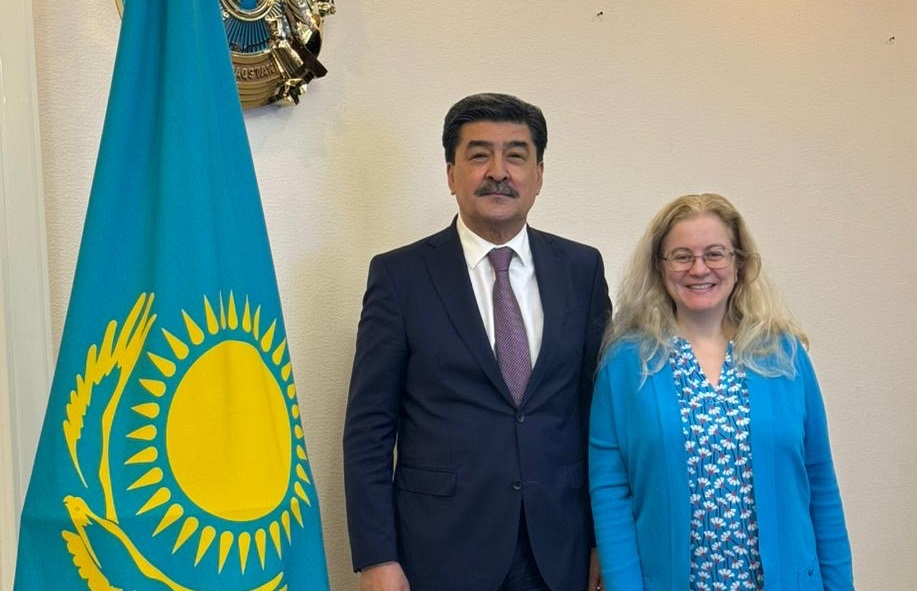
We interviewed Hela Cheikhrouhou, IFC Vice President for the Middle East, Central Asia, Türkiye, Afghanistan, and Pakistan, to explore why reducing methane emissions is so important—and how global development institutions can support Kazakhstan in adapting to climate change.
- Ms. Cheikhrouhou, let's outline firstly why reducing methane emissions is so important, especially given the predominance of CO2 emissions in climate change discussions?
- I agree with President Kassym-Jomart Tokayev that reducing methane emissions is the fastest way to slow global warming. Methane is up to 80 times more powerful than carbon dioxide in heating the planet. Being colorless and odorless, methane is a fast and invisible threat. At the same time, efforts to reduce methane emissions remain underfunded, with less than 2 percent of global climate finance dedicated to tackling the issue.
Agriculture, energy, and waste are the sectors that create about 60 percent of the world's methane emissions. If countries find and implement the right technological solutions, reducing methane emissions in these sectors becomes a realistic scenario. I am glad that the IFC and Kazakhstan are already jointly discussing the implementation of such solutions in the energy sector.
- How does the problem of methane emissions directly affect the economic and environmental situation in Kazakhstan?
- According to the International Energy Agency, the second largest source of methane emissions from human activity is the energy sector - oil, gas, and coal.
In the case of Kazakhstan, a nation with a significant reliance on the oil and gas industry, this matter holds particular significance. The country currently ranks among the top 20 globally in terms of per capita greenhouse gas emissions, a level that exceeds what is expected for an economy of its scale. . As Kazakhstan develops its export potential, it must also take into account the growing number of trade demands from countries such as the EU, which will soon demand to either show emissions reductions or pay extra for them.
By joining the Global Methane Pledge last December and becoming the first country in Central Asia to commit to achieving carbon neutrality by 2060, Kazakhstan is highlighting its dedication to the fight against climate change as well as its determination to tackle the methane issue. I sincerely want Kazakhstan to become a leader in the region to implement climate goals. Its example will help other countries adopt the best practices for preserving nature, and human health, and ensuring economic development in Central Asia.
- How achievable is the goal of reducing methane emissions by 30 percent by 2030 and what resources will be needed to achieve it?
- Achieving a 30 percent reduction in methane emissions across diverse sectors of the Kazakh economy by 2030 is ambitious but feasible. The International Energy Agency estimates it will require at least $1.4 billion in funding . This definitely requires support from international partners - both through investments and through cooperation with donors and financial institutions. IFC is also ready to provide its support. Based on our experience, we believe the public-private partnership (PPP) model will be one of the models we can cooperate with.
To achieve the goal, cooperation, and involvement of all stakeholders - government, companies, and civil society organizations - is also needed. The government will develop policies and incentives to reduce methane emissions, and businesses will implement concrete solutions. Achieving success requires a partnership, and IFC is ready to become one of those partners.
- How in your opinion can IFC assist Kazakhstan in addressing these challenges?
- IFC conducted a preliminary analysis of methane emissions from Kazakhstan’s oil and gas sector, which considered specific facilities and their locations, and we see significant opportunities to reduce methane emissions in the sector. We have also offered technological solutions to the government, including a monitoring program to measure methane emissions in the sector. This will require some government funding and moderate private capital investment.
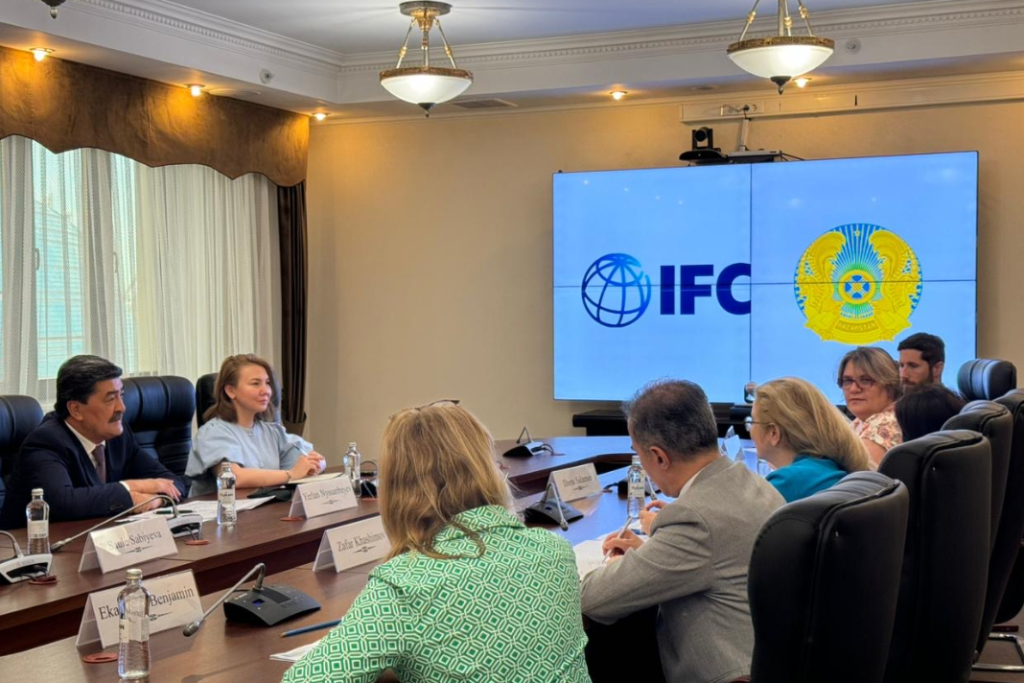
We stand ready to continue to engage with the government and the private sector to mobilize resources to cover these costs and leverage our experience and resources to promote sustainable economic growth.
- You mentioned a project to use surface geothermal energy for heating and cooling buildings in Bishkek. Tell us more about this technology.
- This is truly an interesting technology. While solutions to tackle the climate crisis are being developed around the world, from artificial intelligence to electric vehicles, sometimes a solution may be right at hand or—in this case—right under your feet.
Networked geothermal district heating, when implemented wisely and at scale, can provide stable heating in winter and cooling in summer for large urban areas, as well as clean energy all year-round, while creating new jobs and business opportunities.
By using geothermal heat pumps, which transfer heat from the surface layer of the earth through a coolant in underground loops in a closed system, we can significantly reduce carbon emissions and provide clean energy while preserving the environment. This technology has already proven itself all over the world.
So, we are optimistic about the potential of interconnected geothermal district heating solutions throughout Central Asia. In Kazakhstan, for example, this technology could replace a largely coal-fired public infrastructure system that currently requires a major overhaul. We see interest from the government of Kazakhstan in this and will be happy to provide our support.
Regional Ecological Summit 2026 opens in Astana
Solar pumps and drip irrigation help Kyrgyz farmers cut costs amid rising energy prices
Hormuz closure failed to trigger coal comeback as solar and wind filled the gap
Astana set to launch RES 2026 EXPO and ink key international deals
Central Asian countries to discuss energy transition at RES 2026 in Astana
Moldova surpassed 1 GW of installed renewable energy capacity
China begins building US$1 billion hydropower station in Cambodia
Thousands protest in Germany urging faster green shift
Scientists from Russia and Uzbekistan improved the stability of green energy systems by 24%
Kazakh startup ranks in GCIP global top 3 in Vienna
Kazakhstan poultry farm produces 15 million kWh of energy from waste
China, Spain expand partnership in solar and wind power
Mongolia engages Hanwha Group in industrial and clean energy development
Russia to test horizontal and vertical wind power plants at new renewable energy test site in Adygeya
Brussels sets timeline: grid package by summer, electrification strategy to follow
RES 2026 to address workforce training for renewable energy scale-up
Algeria commissions 400 MW of solar capacity
Deadline approaching: KOREM invites bids for wind and solar power auctions
From crisis to security: IRENA lays out renewables roadmap for governments
Renewable energy generation in Kazakhstan rises 15% in Q1 2026