

World News08.02.2024
Europe’s deepest mine to become giant gravity battery


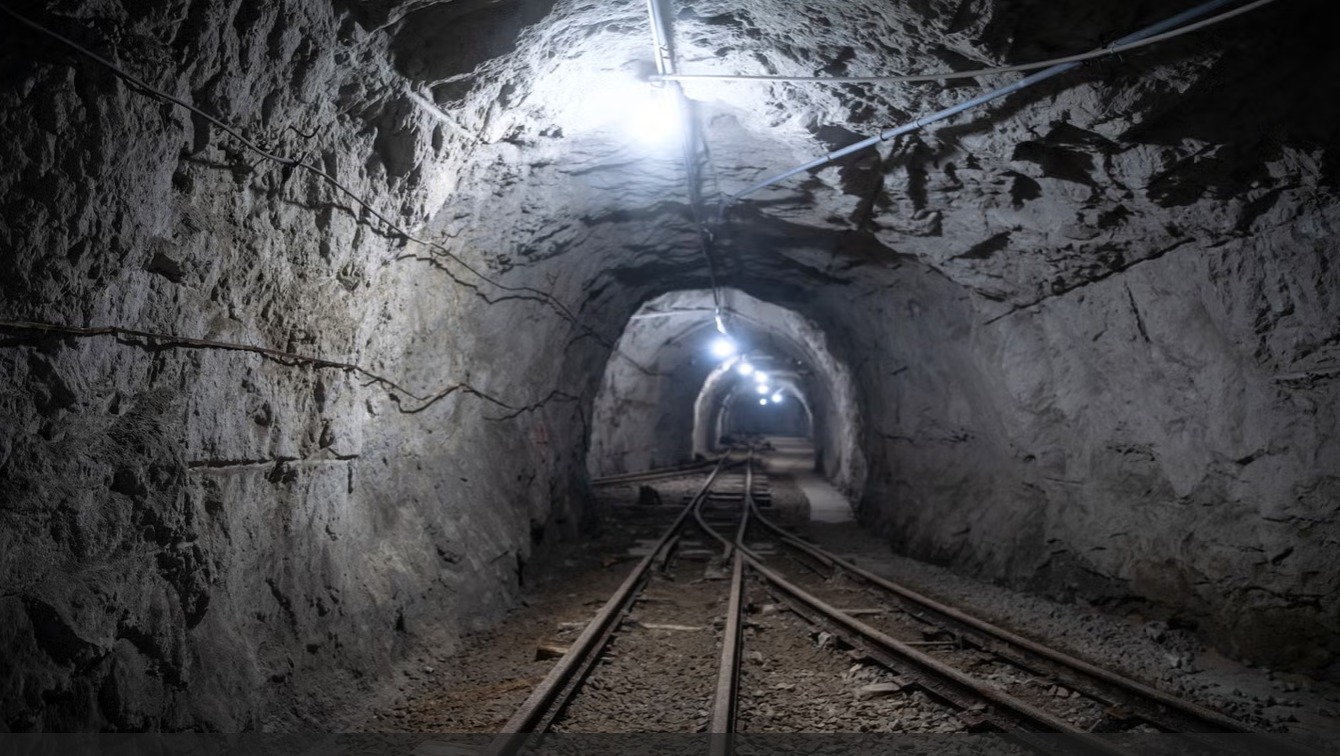
QAZAQ GREEN. Estimates suggest abandoned mine shafts could store enough electricity to power the planet. An abandoned mine in Finland is set to be transformed into a giant battery to store renewable energy during periods of excess production, The Independent reports.
The Pyhäsalmi Mine, roughly 450 kilometres north of Helsinki, is Europe’s deepest zinc and copper mine and holds the potential to store up to 2 MW of energy within its 1,400-metre-deep shafts.
The disused mine will be fitted with a gravity battery, which uses excess energy from renewable sources like solar and wind in order to lift a heavy weight. During periods of low production, the weight is released and used to power a turbine as it drops.
The gravity battery system has been developed by Scottish firm Gravitricity, which plans to use the Finnish mine as a full-scale prototype to demonstrate the technology.
“This project will demonstrate at full scale how our technology can offer reliable long-life energy storage that can capture and store energy during periods of low demand and release it rapidly when required,” said Martin Wright, an executive chairman at Gravitricity.
“This full-scale project will provide a pathway to other commercial projects and allow our solution to be embedded into mine decommissioning activities, offering a potential future for mines approaching the end of their original service life.”
A study last year by the International Institute for Applied Systems Analysis (IIASA) estimated that gravity batteries in abandoned underground mines could store up to 70TWh of energy – enough to meet global electricity demands.
The repurposed mines could also provide economic benefits to the communities that previously relied on the mine for their livelihoods.
The IIASA analysts noted that mines already have the basic infrastructure for such an endeavour, while also being connected to the power grid.
“This significantly reduces the cost and facilities for the implementation of Underground Gravity Energy Storage (UGES) plants,” the study noted.
The Pyhäsalmi Mine was decommissioned in 2022, with Graviticity claiming that 600 direct and indirect jobs were impacted. Other initiatives being explored for the site include a solar farm.
“As the world generates more electricity from intermittent renewable energy sources, there is a growing need for technologies which can capture and store energy during periods of low demand and release it rapidly when required” Gravitricity’s website states.
“We are developing innovative, long-life, underground technologies which store energy safely and deliver it on demand at a lower lifetime cost than current alternatives.”
Solar pumps and drip irrigation help Kyrgyz farmers cut costs amid rising energy prices
Hormuz closure failed to trigger coal comeback as solar and wind filled the gap
Astana set to launch RES 2026 EXPO and ink key international deals
Central Asian countries to discuss energy transition at RES 2026 in Astana
Moldova surpassed 1 GW of installed renewable energy capacity
China begins building US$1 billion hydropower station in Cambodia
Thousands protest in Germany urging faster green shift
Scientists from Russia and Uzbekistan improved the stability of green energy systems by 24%
Kazakh startup ranks in GCIP global top 3 in Vienna
Kazakhstan poultry farm produces 15 million kWh of energy from waste
China, Spain expand partnership in solar and wind power
Mongolia engages Hanwha Group in industrial and clean energy development
Russia to test horizontal and vertical wind power plants at new renewable energy test site in Adygeya
Brussels sets timeline: grid package by summer, electrification strategy to follow
RES 2026 to address workforce training for renewable energy scale-up
Algeria commissions 400 MW of solar capacity
Deadline approaching: KOREM invites bids for wind and solar power auctions
From crisis to security: IRENA lays out renewables roadmap for governments
Renewable energy generation in Kazakhstan rises 15% in Q1 2026
Kazakhstan climbs the Climatescope rankings