

World News05.07.2024
Danish State Railways signed agreement to purchase solar energy


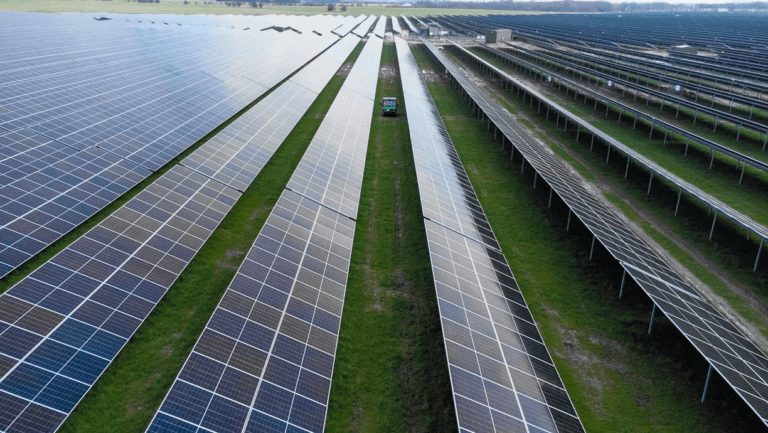
QAZAQ GREEN. Danish State Railways (DSB) are actively working to reduce their carbon footprint and transition to renewable energy sources, this is reported by the railway transport news portal Railway Supply.
As part of these efforts, they have signed a significant agreement with European Energy to purchase a portion of the electricity that will be generated by a new solar power plant in the east of the country.
The new solar park, named Lidsø, will be located in the picturesque area of Rødbyhavn on the southern coast of the island of Lolland.
This project will become one of the largest in Denmark, covering an area of 253 hectares.
It is expected that the park will be able to generate an impressive 262 GWh of electricity annually, which will make a significant contribution to the country’s overall efforts to increase the share of green energy in the energy balance.
The completion of the solar power plant is planned for 2025. After commissioning, DSB will purchase 80 GWh/year, which will account for approximately 50% of the current electricity consumption of the Copenhagen suburban network.
This is a significant step forward in DSB’s pursuit of sustainable development and minimizing environmental impact.
The implementation of such projects is part of Denmark’s long-term strategy to achieve climate neutrality.
Solar parks like Lidsø play a key role in the country’s transition to renewable energy sources, reducing dependence on fossil fuels, and cutting carbon emissions.
The partnership between DSB and European Energy serves as an example of successful collaboration between public and private organizations in the field of sustainable development.
It demonstrates how joint efforts can lead to significant positive changes, not only for the energy sector but for the entire country.
This initiative also highlights the importance of innovative solutions and investments in green technologies.
Solar energy, as one of the cleanest and most accessible sources of renewable energy, is becoming increasingly attractive to large enterprises and public institutions seeking to reduce their environmental impact.
Ultimately, such projects contribute not only to achieving climate goals but also to creating new jobs and developing local infrastructure.
They show that a transition to a sustainable future is possible through joint efforts and innovations in the energy sector.
In this context, the agreement between DSB and European Energy represents an important step towards a sustainable and environmentally friendly future for Denmark.
CAREC and Central Asian universities sign new memoranda on green skills development
100,000 jobs and a skills gap: how Central Asia is preparing for the renewables boom
No transition without transmission: How Central Asia is building its energy future
ADB to invest $5.5bn across 15 projects in Kazakhstan
17 agreements worth over $2.3 billion signed at the opening of RES 2026 EXPO in Astana
World Bank to invest $1bn in Central Asia's energy integration
Kazakhstan and China to launch a 500 MW wind farm in Karaganda region
Kazakhstan and Tajikistan move toward clean power deal over Rogun HPP
Regional Ecological Summit 2026 opens in Astana
Solar pumps and drip irrigation help Kyrgyz farmers cut costs amid rising energy prices
Hormuz closure failed to trigger coal comeback as solar and wind filled the gap
Astana set to launch RES 2026 EXPO and ink key international deals
Central Asian countries to discuss energy transition at RES 2026 in Astana
Moldova surpassed 1 GW of installed renewable energy capacity
China begins building US$1 billion hydropower station in Cambodia
Thousands protest in Germany urging faster green shift
Scientists from Russia and Uzbekistan improved the stability of green energy systems by 24%
Kazakh startup ranks in GCIP global top 3 in Vienna
Kazakhstan poultry farm produces 15 million kWh of energy from waste
China, Spain expand partnership in solar and wind power