

World News16.07.2024
Electrostatic repulsion gaining popularity as method for cleaning solar panels


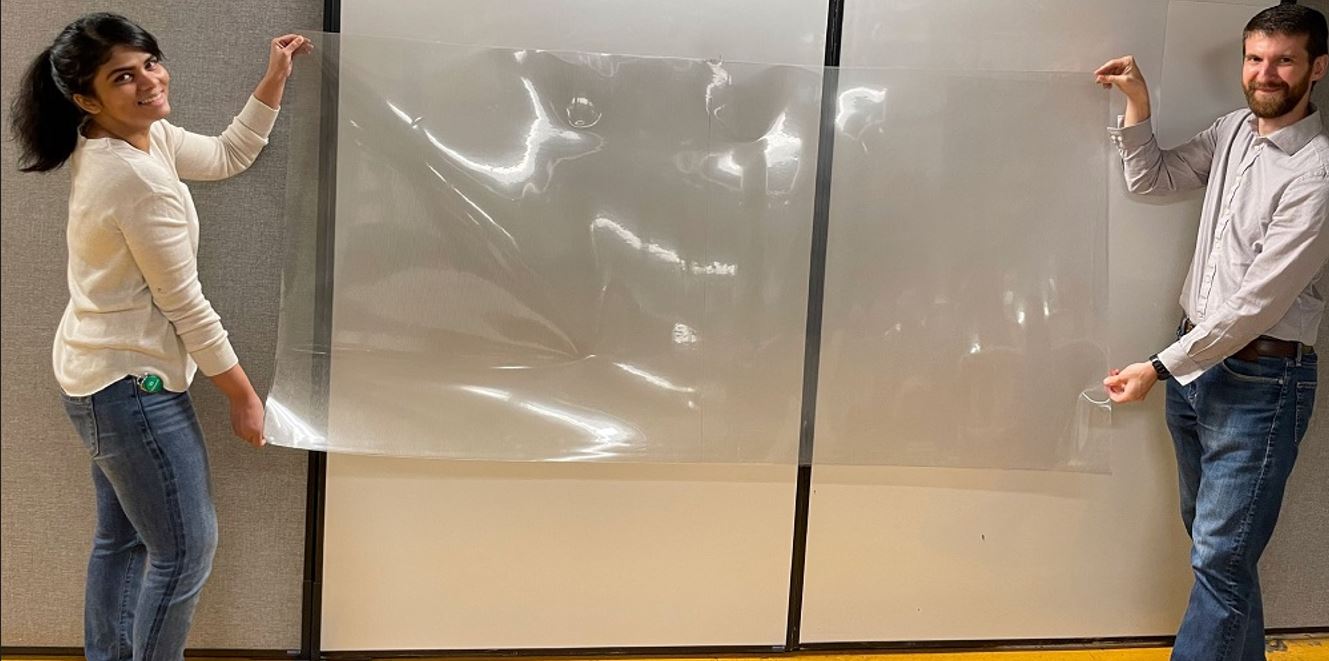
QAZAQ GREEN. Sol Clarity has developed an electrodynamic screen that charges dust particles with a static charge and then sweeps them away from the solar panel using an electromagnetic wave. The innovation has already been tested in Chile, reports Global Energy Prize.
The screen resembles a transparent oilcloth consisting of two layers: a top dielectric layer containing printed electrodes, and a transparent adhesive layer that is placed on the surface of the PV-panel. The system is equipped with a recharging device and requires minimal energy consumption: one kilowatt-hour (kWh) is enough to clean 500 solar modules. The development has been tested in Chile and is due to be deployed in California next year at the Engie power plant.
The innovation will ensure cleaning of solar panels without using water, which is especially valuable for arid regions with a high average annual number of sunny days. In recent years, the principle of electrostatic repulsion has become increasingly popular in solar energy. Thus, scientists from the Massachusetts Institute of Technology (MIT) used it to clean solar panels using a conductor located above the surface of an electric generator and attracting sand particles. In this case, the opposite charge on the surface of the panel repels particles that rise into the air and settle on the conductor.
Another method of dry cleaning was proposed by the company Solavio, which developed the Eco Bot device. The latter uses air flow and the friction of an antistatic microfibre cloth against the surface of the photovoltaic panels. Eco Bot resembles the reel of an agricultural combine, the front rotating part of an oblong shape, which serves to bring the stems of the harvested crop to the cutting apparatus. Microfibre rags are strung on the pole, and wheeled devices are attached to the sides, moving along the surface of the solar panels. The device is powered by a lithium battery, which can be recharged using an AC fast charge adapter, built-in photovoltaic panel or portable docking station.
The spread of dry cleaning methods will provide significant water savings. MIT estimates that in the world, just under 40 billion litres of water are used annually to clean solar panels, which is comparable to the annual water consumption of two million people. At the same time, avoiding the use of brushes will reduce the risk of damaging the surface of solar panels and reducing their efficiency.
Solar pumps and drip irrigation help Kyrgyz farmers cut costs amid rising energy prices
Hormuz closure failed to trigger coal comeback as solar and wind filled the gap
Astana set to launch RES 2026 EXPO and ink key international deals
Central Asian countries to discuss energy transition at RES 2026 in Astana
Moldova surpassed 1 GW of installed renewable energy capacity
China begins building US$1 billion hydropower station in Cambodia
Thousands protest in Germany urging faster green shift
Scientists from Russia and Uzbekistan improved the stability of green energy systems by 24%
Kazakh startup ranks in GCIP global top 3 in Vienna
Kazakhstan poultry farm produces 15 million kWh of energy from waste
China, Spain expand partnership in solar and wind power
Mongolia engages Hanwha Group in industrial and clean energy development
Russia to test horizontal and vertical wind power plants at new renewable energy test site in Adygeya
Brussels sets timeline: grid package by summer, electrification strategy to follow
RES 2026 to address workforce training for renewable energy scale-up
Algeria commissions 400 MW of solar capacity
Deadline approaching: KOREM invites bids for wind and solar power auctions
From crisis to security: IRENA lays out renewables roadmap for governments
Renewable energy generation in Kazakhstan rises 15% in Q1 2026
Kazakhstan climbs the Climatescope rankings