

World News14.08.2024
Experts named leading and outsider countries in the development of wind energy


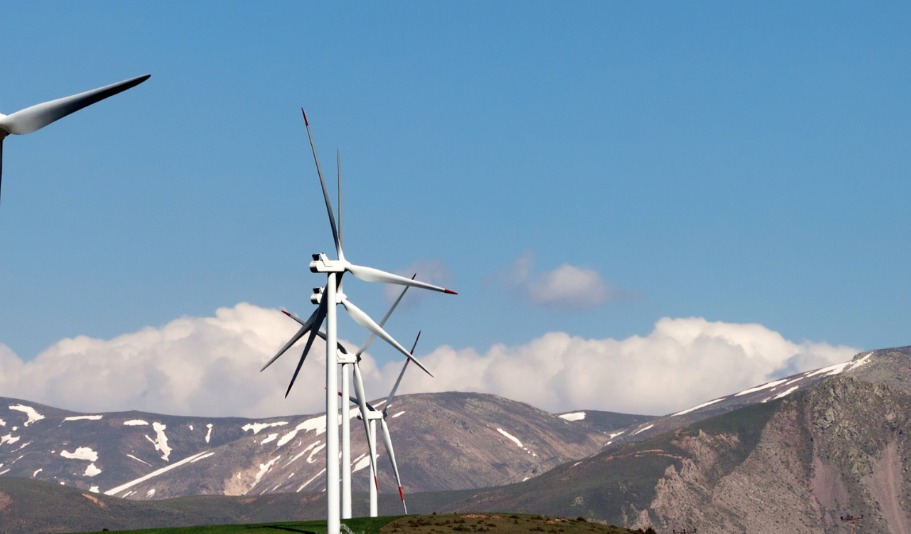
QAZAQ GREEN. In general, the world is not fulfilling its promise made last year at the global climate talks to triple the amount of wind energy. But there are 10 countries that intend to exceed their goals for the development of this area. This is stated in the report of the research center Ember, reports Ecopolitic.
Last December, at the UN climate conference COP28, countries committed to triple the production of electricity from renewable energy sources (RES) by 2030. According to the International Energy Agency (IEA) and other organizations, wind power needs to triple to reach this goal.
Ember analysts examined the national targets of 70 countries, which account for 99% of existing wind power, and predict that wind power will double over the next 6 years, not triple, from a 2022 baseline.
Which countries are most likely to miss their wind energy targets?
The report notes that the US ranked last, falling short of 100 gigawatts, enough to power more than 30 million homes.
The second largest gap between national targets and wind energy projects under development is in India at more than 30 gigawatts. Despite significant wind potential, only 4 percent of the country's electricity is generated from wind, says Cathy Altieri, power analyst at Ember.
Which countries are at the forefront of wind energy development?
The best performers on this indicator are Brazil and Finland, which exceed their wind energy targets by 15 and 11 gigawatts, respectively. They are among only 10 countries expected to exceed their targets. 7 of these 10 countries are in Europe, including Turkey.
Who grazes the hindquarters and why
Altieri named Japan, South Korea and Russia among the coastal countries that have significant wind potential but have just begun to use it.
According to the expert, like many other islands, Japan is also very windy, but produces a little more than 1% of its energy from wind.
"The ocean is very deep immediately off the coast of Japan, so that complicates the task," said John Reilly of the Massachusetts Institute of Technology, who has studied energy policy and climate change for 45 years.
He says the country also has steep mountainous terrain, which also makes siting turbines difficult.
Strict regulation in South Korea makes it difficult to build wind turbines, and public opinion has further slowed the industry's development, the expert says. Around the world, wind turbines often face resistance.
According to NREL, Russia has one of the largest wind energy potential of any country, but according to Ember, it will generate less than 1% of its electricity from wind in 2023. John Reilly explains this by the fact that Russia has huge reserves of natural gas and coal, so it has no real economic incentives for the development of wind energy. In addition, the country does not seek to reduce greenhouse gas emissions.
Why has interest in wind energy waned?
Experts believe that falling prices have allowed solar energy to eclipse wind energy.
"When many of these big commitments were made, wind looked like the cheapest source of renewable energy. But starting in 2020, the price of solar has dropped dramatically," says Reilly.
Although some countries are lagging behind, lead study author Altieri says there are reasons for optimism.
"Europe shows excellent results. And this despite the fact that the North Sea – an incredible wind energy resource – is almost not used," she says.
The expert predicts that Europe and China will continue to dominate the expansion of wind power generation.
Regional Ecological Summit 2026 opens in Astana
Solar pumps and drip irrigation help Kyrgyz farmers cut costs amid rising energy prices
Hormuz closure failed to trigger coal comeback as solar and wind filled the gap
Astana set to launch RES 2026 EXPO and ink key international deals
Central Asian countries to discuss energy transition at RES 2026 in Astana
Moldova surpassed 1 GW of installed renewable energy capacity
China begins building US$1 billion hydropower station in Cambodia
Thousands protest in Germany urging faster green shift
Scientists from Russia and Uzbekistan improved the stability of green energy systems by 24%
Kazakh startup ranks in GCIP global top 3 in Vienna
Kazakhstan poultry farm produces 15 million kWh of energy from waste
China, Spain expand partnership in solar and wind power
Mongolia engages Hanwha Group in industrial and clean energy development
Russia to test horizontal and vertical wind power plants at new renewable energy test site in Adygeya
Brussels sets timeline: grid package by summer, electrification strategy to follow
RES 2026 to address workforce training for renewable energy scale-up
Algeria commissions 400 MW of solar capacity
Deadline approaching: KOREM invites bids for wind and solar power auctions
From crisis to security: IRENA lays out renewables roadmap for governments
Renewable energy generation in Kazakhstan rises 15% in Q1 2026