

World News20.09.2024
IEA calls for stronger solar, wind integration measures


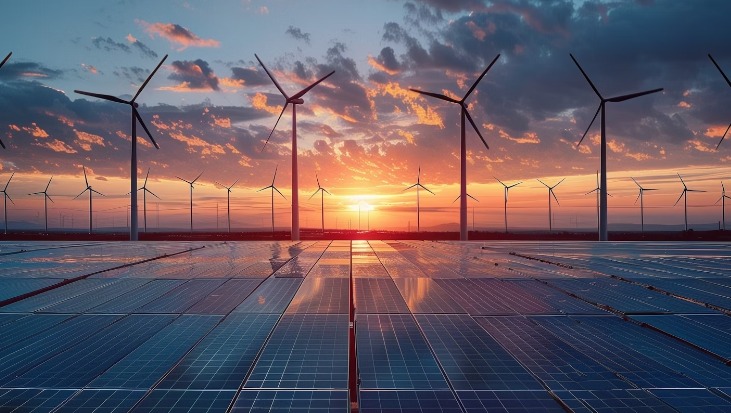
QAZAQ GREEN. The International Energy Agency’s (IEA) latest report warns that failing to support integration at the point of deployment could jeopardize up to 15% of solar and wind projects by 2030. This shortfall would reduce their combined share of the global electricity mix by 5%. New IEA report offers first-of-its-kind global stocktake of efforts to integrate variable renewables across 50 power systems, identifying best practices and key challenges.
As solar PV and wind grow at an accelerated pace around the world, governments must act to ensure that they are well integrated into power systems – or risk losing out on significant benefits, according to a new report from the IEA.
Integrating Solar and Wind: Global experience and emerging challenges, published on 18 September, explores one of the biggest hurdles for policy makers as clean energy transitions gather speed. Between 2018 and 2023, solar PV and wind capacity worldwide more than doubled, and their share of electricity generation nearly doubled. Fuelled by supportive government policies and continued cost reductions, the capacity of these renewable sources is projected to keep expanding rapidly towards 2030. Solar PV and wind are crucial technologies for decarbonisation – especially in the electricity sector, where they account for two-thirds of reductions in carbon dioxide (CO2) emissions on a pathway towards net zero by mid-century.
However, to maximise the advantages of this additional capacity, these variable renewable energy (VRE) sources need to be well integrated into power systems as they are deployed. According to the report, delaying the implementation of measures to support integration could result in electricity generation from solar PV and wind being 15% lower in 2030 and shave five percentage points off their share of the global electricity mix.
“In recent years, the world has seen a remarkable increase in solar and wind capacity as countries have looked to bolster their energy security and reduce emissions. But they won’t reap the full benefits without stronger efforts to support the integration of these technologies into power systems,” said IEA Director of Energy Markets and Security Keisuke Sadamori. “This important new report lays out the challenges ahead, as well as how to tackle them. As global experience grows, so does our understanding of how to keep clean energy transitions moving forward securely.”
The report features a first-of-its-kind global stocktake of integration measures across 50 power systems, which together account for nearly 90% of global solar PV and wind generation today. This includes updated country assessments using the IEA’s framework for the phases of variable renewable energy integration, which was originally developed in 2017 and last updated in 2019.
According to the analysis, in a scenario in which countries meet their announced energy and climate goals, those that currently have low shares of variable renewable energy in their power mixes account for two-thirds of generation growth to 2030. They can typically boost deployment without enacting sweeping, system-wide changes. Well-known and tested measures such as enhancing the flexibility of existing assets and improved forecasting – implemented gradually as the need arises – tend to be sufficient.
Tougher challenges typically materialise at higher levels of solar PV and wind penetration. However, frontrunner systems – including Denmark, Ireland, South Australia and Spain – are finding ways to address these issues, too, clearing the way for others. Developing storage and new power grid technologies, for example, is playing an important role in managing variations in solar PV and wind output throughout the day and across seasons.
According to the report, most technological solutions to address emerging hurdles – namely, a higher need for stability and flexibility – are either mature or nearing maturity, and their successful rollout often lies in appropriate policy and regulatory action rather than new technological breakthroughs. Even so, incorporating higher levels of variable renewables into power systems requires rethinking the ways in which they have traditionally been planned and operated. This will necessitate proactive measures globally as the uptake of renewables continues apace.
Solar pumps and drip irrigation help Kyrgyz farmers cut costs amid rising energy prices
Hormuz closure failed to trigger coal comeback as solar and wind filled the gap
Astana set to launch RES 2026 EXPO and ink key international deals
Central Asian countries to discuss energy transition at RES 2026 in Astana
Moldova surpassed 1 GW of installed renewable energy capacity
China begins building US$1 billion hydropower station in Cambodia
Thousands protest in Germany urging faster green shift
Scientists from Russia and Uzbekistan improved the stability of green energy systems by 24%
Kazakh startup ranks in GCIP global top 3 in Vienna
Kazakhstan poultry farm produces 15 million kWh of energy from waste
China, Spain expand partnership in solar and wind power
Mongolia engages Hanwha Group in industrial and clean energy development
Russia to test horizontal and vertical wind power plants at new renewable energy test site in Adygeya
Brussels sets timeline: grid package by summer, electrification strategy to follow
RES 2026 to address workforce training for renewable energy scale-up
Algeria commissions 400 MW of solar capacity
Deadline approaching: KOREM invites bids for wind and solar power auctions
From crisis to security: IRENA lays out renewables roadmap for governments
Renewable energy generation in Kazakhstan rises 15% in Q1 2026
Kazakhstan climbs the Climatescope rankings