

World News22.11.2025
Record optical power beaming shows path to scalable space power grid


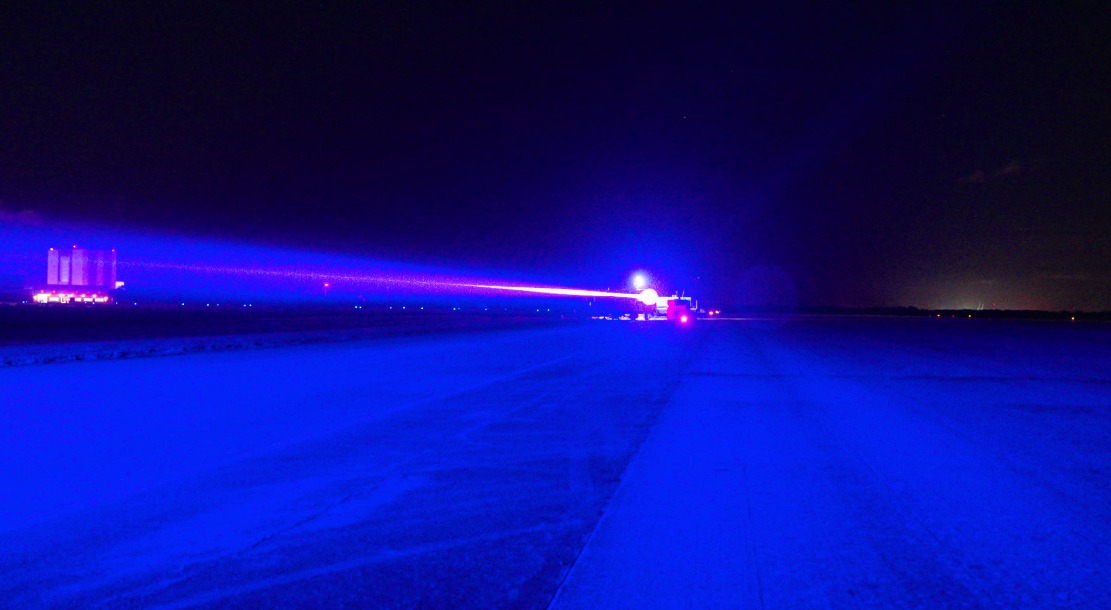
QAZAQ GREEN. Star Catcher Industries has set a new record in wireless optical power transmission, advancing its plan to build the first orbital power grid. The company conducted a series of tests at NASA’s Kennedy Space Center, where its multi-wavelength laser system delivered more than 1.1 kW of electrical power to standard commercial solar panels. This exceeds the previous record of 800 watts set by DARPA in May 2025. Over the course of the campaign, Star Catcher transmitted more than 10 megajoules of energy.
The tests were carried out as part of preparations for the Star Catcher Network, an orbital system designed to provide scalable, on-demand power to satellites. According to the company, six Power Purchase Agreements have already been signed, representing tens of millions of dollars in projected annual revenue through the end of the decade. The agreements cover customers in orbital data infrastructure, remote sensing, and satellite platforms.
CEO and Co-Founder Andrew Rush said the results demonstrate both market confidence and technological maturity, positioning the company to build a resilient orbital power grid. The company argues that limited onboard power remains a key constraint for satellites, particularly for missions requiring high data throughput, AI-enabled sensing, or advanced maneuverability. Its system collects and concentrates sunlight in orbit, converts it into optimized wavelengths, and transmits it to client spacecraft, potentially increasing available power by a factor of two to ten.
In the demonstration campaign, the company delivered one to ten Suns of optical energy to multiple single- and triple-junction solar panels commonly used in space, confirming compatibility with existing hardware. Tests also included an Astro Digital triple-junction panel used on the company’s flight-proven satellite buses.
Star Catcher powered several customer payloads representing emerging space sectors, including space data centers, in-orbit manufacturing, and remote sensing. These systems operated on beamed power during live experiments.
A separate demonstration involved Intuitive Machines’ Lunar Terrain Vehicle, whose batteries were wirelessly recharged. Star Catcher says such capabilities could support continuous LTV operations during the lunar night or in permanently shadowed regions.
The first on-orbit demonstration of the power beaming system is planned for 2026.
Solar pumps and drip irrigation help Kyrgyz farmers cut costs amid rising energy prices
Hormuz closure failed to trigger coal comeback as solar and wind filled the gap
Astana set to launch RES 2026 EXPO and ink key international deals
Central Asian countries to discuss energy transition at RES 2026 in Astana
Moldova surpassed 1 GW of installed renewable energy capacity
China begins building US$1 billion hydropower station in Cambodia
Thousands protest in Germany urging faster green shift
Scientists from Russia and Uzbekistan improved the stability of green energy systems by 24%
Kazakh startup ranks in GCIP global top 3 in Vienna
Kazakhstan poultry farm produces 15 million kWh of energy from waste
China, Spain expand partnership in solar and wind power
Mongolia engages Hanwha Group in industrial and clean energy development
Russia to test horizontal and vertical wind power plants at new renewable energy test site in Adygeya
Brussels sets timeline: grid package by summer, electrification strategy to follow
RES 2026 to address workforce training for renewable energy scale-up
Algeria commissions 400 MW of solar capacity
Deadline approaching: KOREM invites bids for wind and solar power auctions
From crisis to security: IRENA lays out renewables roadmap for governments
Renewable energy generation in Kazakhstan rises 15% in Q1 2026
Kazakhstan climbs the Climatescope rankings