

World News24.11.2025
IEA deepens cooperation on resilient and diversified rare earth supply


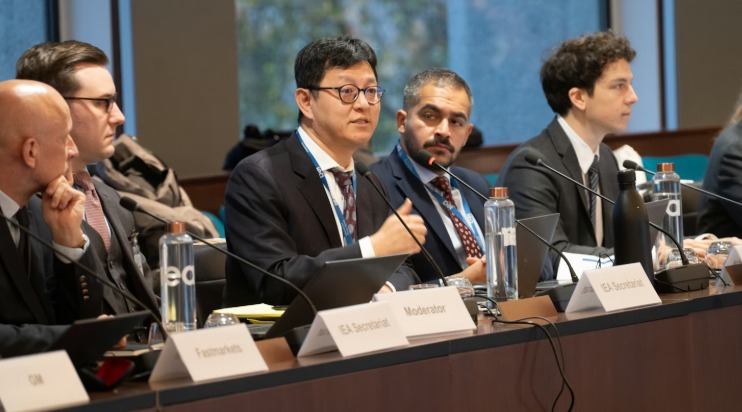
QAZAQ GREEN. IEA member countries met in Paris to advance coordinated action on securing rare earth supply chains, taking part in a Table-Top Exercise and Diversification Workshop held under the IEA Critical Minerals Security Programme, according to IEA.
Rare earth elements remain among the least geographically diversified of all critical minerals, despite their role in key technologies spanning clean energy, automotive production, AI data centres, semiconductors, aerospace and defence. New export controls introduced in April 2025 – along with additional measures announced in October and later suspended for a year – underscored the fragility of existing supply chains.
Building on last year’s exercise on graphite, the 2025 workshop focused on emergency response and long-term diversification. Participants examined immediate supply disruption risks, explored demand- and supply-side measures, and reviewed economic tools to support more resilient supply chains.
Using the IEA’s new Critical Minerals Information Dashboard, countries identified opportunities for collaboration and strategic partnerships, assessed policies to accelerate project development, and discussed approaches for innovation, recycling and development of broader mineral ecosystems.
The IEA plans to further expand its Critical Minerals Security Programme, drawing on historic lessons from the 1970s oil market shocks that led to the creation of the agency and to coordinated emergency stockpiles. With critical minerals now central to strategic industries and economic development, the programme is designed to support collective action to diversify supply chains and reduce structural vulnerabilities.
CAREC and Central Asian universities sign new memoranda on green skills development
100,000 jobs and a skills gap: how Central Asia is preparing for the renewables boom
No transition without transmission: How Central Asia is building its energy future
ADB to invest $5.5bn across 15 projects in Kazakhstan
17 agreements worth over $2.3 billion signed at the opening of RES 2026 EXPO in Astana
World Bank to invest $1bn in Central Asia's energy integration
Kazakhstan and China to launch a 500 MW wind farm in Karaganda region
Kazakhstan and Tajikistan move toward clean power deal over Rogun HPP
Regional Ecological Summit 2026 opens in Astana
Solar pumps and drip irrigation help Kyrgyz farmers cut costs amid rising energy prices
Hormuz closure failed to trigger coal comeback as solar and wind filled the gap
Astana set to launch RES 2026 EXPO and ink key international deals
Central Asian countries to discuss energy transition at RES 2026 in Astana
Moldova surpassed 1 GW of installed renewable energy capacity
China begins building US$1 billion hydropower station in Cambodia
Thousands protest in Germany urging faster green shift
Scientists from Russia and Uzbekistan improved the stability of green energy systems by 24%
Kazakh startup ranks in GCIP global top 3 in Vienna
Kazakhstan poultry farm produces 15 million kWh of energy from waste
China, Spain expand partnership in solar and wind power