

Education and science21.12.2024
Challenges and opportunities of green energy: the path to the 2030 agenda



Rafis Abazov, Vice Principal for International Relations and Strategic Development of KazNARU
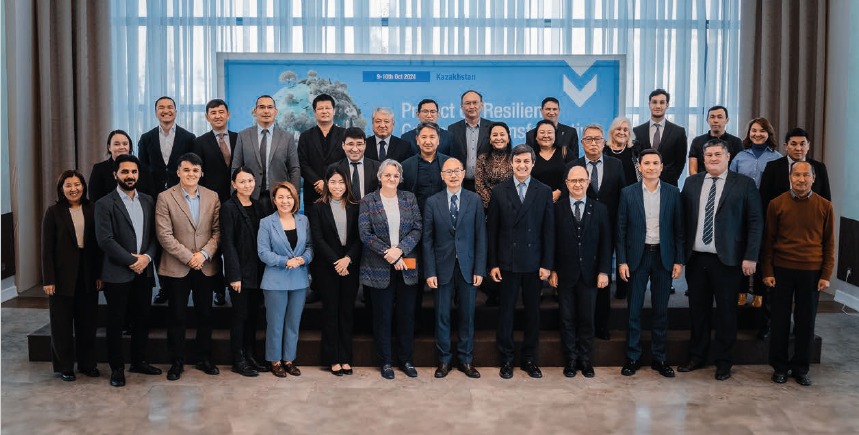
The UNCTAD international conference, held on October 9-10, 2024, has become an important platform for discussing key issues of sustainable, green and transformative development within the framework of the initiative “belt and road” in Asia. Special attention was paid to energy as the main element for achieving the sustainable development goals (SDGs) until 2030, as well as regional cooperation in the field of green growth. The participants discussed integrated policy strategies and coordination of efforts to promote green energy in central Asian countries and Kazakhstan.
ENERGY IN CENTRAL ASIA: CHALLENGESAND POTENTIAL
Central Asia, with its vast reserves of fossil fuels and renewable energy sources, faces a choice — how to balance economic growth and environmental sustainability. One of the key challenges is the region's dependence on hydrocarbons, which creates serious barriers to the development of green energy. Accordi ng to the data presented at the conference, Central Asia produced about 88% of its electricity from coal and natural gas in 2023, i.e. significantly higher than the global average.
Nevertheless, the region's potential for switching to renewable energy sources is huge.
Nevertheless, the region's potential for switching to renewable energy sources is huge. For example, according to a study by the Asian Development Bank, Central Asia could produce up to 20-30% of its electricity from renewable sources by 2030. During the conference, it was discussed that in order to do this, it is necessary to strengthen regional coordination, develop a clear policy framework and attract
international investment.
Mr. Dawei Wang, an economic affairs specialist at UNCTAD, stressed that "Central Asia has unique opportunities for development of green energy, but systemic changes are needed to achieve this goal, including infrastructure modernization and the transition to digital technologies for energy management." He also noted that regional cooperation between Central Asian countries can accelerate this process, especially through joint projects in the field of clean energy and technology transfer.
KAZAKHSTAN: LEADERSHIP IN GREEN ENERGY
The conference discussed the question - wiII Kazakhstan be able to become one of the regional leaders in green development and transition to renewable energy sources?. Since 2015, the country has been actively promoting initiatives to develop renewable energy and reduce carbon emissions. Du ri ng the conference, specific exam pies were given of how Kazakhstan is making progress in these areas.
Thus, in 2024, the share of electricity from renewable sources in Kazakhstan may reach almost 6%, which is 3% more than in 2019. According to official data, the number of renewable energy facilities reached 148 by mid-2024, which is an impressive result, given that only 6-7 years ago, renewable energy accounted for less than 1% of the total electricity production in the country. Such rapid growth is due to a number of factors, including political support, development of new technologies and attraction of international investors.
An example of a successful project is a solar power plant in Zhambyl region with a capacity of 100 MW, commissioned in 2022. This project was implemented with the support of the European Bank for Reconstruction and Development (EBRD) and has become one of the largest solar energy facilities i n Central Asia. Mrs. Ainur Sospanova, Chairman of the Management Board of the Renewable Energy Association “Qazaq Green”, noted: "Projects like this demonstrate that Kazakhstan is able to attract large investments in green energy, as well as implement complex technological projects at the international level."
REGIONAL COOPERATION: THE KEYTO A GREEN FUTURE
One of the central issues discussed at the conference was the possibilities of regional cooperation in Central Asia to promote green development. Mr. Alexander Nikolayenko, Regional Adviser to the Green Central Asia Initiative, noted that the key to success will be the creation of an integrated policy framework that takes into account the specifics of each country and allows them to cooperate in the field of energy, environmental protection and sustainable development.
Du ring the discussion at the conference, the participants came to the conclusion that regional cooperation can include several key areas:
1. Joint projects in the field of renewable energy: creation of cross-border energy networks that will allow Central Asian countries to exchange renewable energy, reducing dependence on fossil fuels.
2. Technology and know-how exchange: Countries in the region can cooperate in research and development by sharing best practices and technologies in the field of energy conservation and renewable energy sources.
3. Development and implementation of innovative projects i n the field of energy savi ng and renewable energy sources that are maximally adapted to the geographical climatic features of the country in the region.
ROLE OF INTERNATIONAL ORGANIZATIONS
International organizations such as UNCTAD play an important role in promoting regional cooperation and green development in Central Asia. They can contribute to the creation of platforms for dialogue between countries, as well as provide financial and technical assistance for implementation of projects in the field of sustainable development.
Mr. Kenzhehan Abuov from the Asian Development Bank stressed that the ADB is ready to support the Central Asian countries in their efforts to switch to green energy. He said: "Our bank will continue to support sustainable infrastructure projects that contribute to reducing carbon emissions and adapting to climate change."
UNCTAD also plays an important role in promoting regional cooperation through its initiatives and research. For example, the ongoing UNCTAD Sustainable Development project under the Belt and Road Initiative helps Central Asian countries develop strategies to transition to a low-carbon economy and reduce their dependence on traditional energy sources.
CONCLUSION
The UNCTAD Conference, held on October 9-10, 2024, confirmed the importance of regional cooperation and integration in Central Asia for achieving green and sustainable development. Kazakhstan has the potential to become a leader in this process, and is already making significant steps towards increasing the share of renewable energy sources and reducing carbon emissions. However, achieving the Sustainable Development Goals will require not only national efforts, but also active cooperation with the countries of the region, as well as support of international organizations and investors.
Solar pumps and drip irrigation help Kyrgyz farmers cut costs amid rising energy prices
Hormuz closure failed to trigger coal comeback as solar and wind filled the gap
Astana set to launch RES 2026 EXPO and ink key international deals
Central Asian countries to discuss energy transition at RES 2026 in Astana
Moldova surpassed 1 GW of installed renewable energy capacity
China begins building US$1 billion hydropower station in Cambodia
Thousands protest in Germany urging faster green shift
Scientists from Russia and Uzbekistan improved the stability of green energy systems by 24%
Kazakh startup ranks in GCIP global top 3 in Vienna
Kazakhstan poultry farm produces 15 million kWh of energy from waste
China, Spain expand partnership in solar and wind power
Mongolia engages Hanwha Group in industrial and clean energy development
Russia to test horizontal and vertical wind power plants at new renewable energy test site in Adygeya
Brussels sets timeline: grid package by summer, electrification strategy to follow
RES 2026 to address workforce training for renewable energy scale-up
Algeria commissions 400 MW of solar capacity
Deadline approaching: KOREM invites bids for wind and solar power auctions
From crisis to security: IRENA lays out renewables roadmap for governments
Renewable energy generation in Kazakhstan rises 15% in Q1 2026
Kazakhstan climbs the Climatescope rankings