

Education and science26.05.2025
A new perspective on energy generation and distribution for a sustainable future


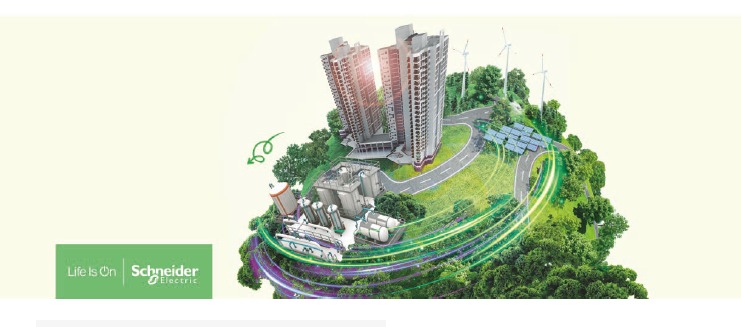
According to the International Energy Agency, 75% of greenhouse gas emissions worldwide come from energy production and consumption, mainly from fossil fuels — coal, oil and gas — which account for 90% of CO2 emissions. We also face risks to energy security and lack of resilience to extreme weather events, as evidenced by a series of heat waves, floods, wildfires, and storms affecting various regions of the world. Notably, 2024 was declared the warmest year in recorded history by the European Copernicus Climate Service. The stability of both the economy and the environment is crucial for business and society. Fortunately, we already have solutions that allow us to make smart decisions for the future, and it is important to accelerate their implementation.
The energy is the foundation of a prosperous society
The energy is a basic need of humans, and its reliable supply is vital for economic progress. Alexander Nikiforov, leader of the Power&Grid segment in Central Asia, notes, "Energy also affects our habits and environmental impact. For example, the growth of the energy industry is associated with an increase in population and consumption culture and technology, which contributes to climate change. As the global economy grows, so does the demand for energy, driven by factors such as electrification, the growth of emerging markets, and the introduction of artificial intelligence. These changes are putting significant pressure on our energy system, underscoring the urgent need for its digitalization, decarbonization, and sustainability for a fair energy transition. This necessary energy transition also requires a change of mindset. Reducing carbon emissions, conserving water and resources, and ensuring reliability are important for growth today."
Towards a new energy world
The methods of energy production and consumption are changing rapidly. The concept of a "prosumer" - both a consumer and a producer of energy - has transformed from a buzzword into a reality over the past two decades. New technologies enable customers to produce, consume and manage their own electricity: using energy generated from on-site solar panels and stored in batteries and electric vehicles. This approach not only allows the use of renewable energy, but also makes it possible to sell excess energy back to the grid. On a scale, it can provide a modular and affordable energy supply for businesses and society. For example, in the United States, 4.2 million homes have solar panels on their roofs as of February 2024. Throughout the year, a new solar panel installation project was implemented every 54 seconds. Technologies such as home energy management systems (e.g., Schneider Home), microgrids, distributed energy resource management systems (DERMS), combined with virtual power plants (VPP) and demand response programs (from companies such as Uplight), enable an integrated approach to the grid and prosumers — enabling utility service providers and energy providers to increase sustainability, lower costs, and reduce their carbon footprint to shape a more sustainable future.
1. Advanced power distribution systems
2. Digital twins
3. Microgrids
4. Distributed Energy Resource Management Systems (DERMS)
5. Virtual Power Plants (VPP)
6. Demand response programs
Smart technologies and Artificial Intelligence – a new era of evolution
As the energy world evolves with the growth of prosumer technologies and distributed energy resources, the traditional model is shifting to a bidirectional structure, creating a shared energy economy that ensures greater energy sustainability and harmonious development of our communities. The backbone of this evolution is the electric grid, which needs to be upgraded to support future energy needs and our vision of a clean energy future. But upgrading a network is a complex, expensive, and time-consuming process. To achieve the countries' climate and energy goals, 80 million kilometers of transmission lines will need to be added or replaced by 2040, which will require significant operational and regulatory changes and a doubling of network investments to more than $600 billion annually by 2030. This task will require a comprehensive technological approach. We have implemented a number of projects at the facilities of our customers and partners using our EcoStruxure solutions with Internet of Things support in various segments, including buildings, utilities and data centers. We use innovative technologies that accelerate the energy transition, such as virtual power plants, which are networks of energy resources to power the grid. They can quickly add significant backup power and flexibility to the network, and when integrated into an advanced distribution management system, the resulting automation becomes revolutionary.
Developing the energy future
"Kazakhstan's energy sector plays a key role in the country's economy. In recent years, the Government has been actively implementing measures to ensure reliable energy supply and the transition to environmentally friendly energy sources. Kazakhstan is actively developing renewable energy sources (RES). Today, there are more than 100 RES facilities in the country. An important project was to strengthen the electrical network of the Western Zone, which increased the reliability of power supply. The next step is planned to connect electric networks, which will improve the transit potential. These initiatives and projects demonstrate Kazakhstan's commitment to sustainable development and global transition to a low-carbon model. Given the existing global references, we would like to use the experience of international companies more actively. The introduction of advanced solutions, such as technologies from Schneider Electric, can significantly improve the quality of life and contribute to the development of the country's energy sector," Alexander Nikiforov added. Schneider Electric believes that AI will be at the center of the modern electric grid, using the vast amount of data collected to develop predictive models of energy production and consumption and manage distributed resources accordingly. But to make the energy transition a reality, we need the collaboration of the entire ecosystem. The utility service providers, grid operators, energy management companies, industry, and prosumers must take steps that transform energy connections, ultimately benefiting business, society, and our planet.
Solar pumps and drip irrigation help Kyrgyz farmers cut costs amid rising energy prices
Hormuz closure failed to trigger coal comeback as solar and wind filled the gap
Astana set to launch RES 2026 EXPO and ink key international deals
Central Asian countries to discuss energy transition at RES 2026 in Astana
Moldova surpassed 1 GW of installed renewable energy capacity
China begins building US$1 billion hydropower station in Cambodia
Thousands protest in Germany urging faster green shift
Scientists from Russia and Uzbekistan improved the stability of green energy systems by 24%
Kazakh startup ranks in GCIP global top 3 in Vienna
Kazakhstan poultry farm produces 15 million kWh of energy from waste
China, Spain expand partnership in solar and wind power
Mongolia engages Hanwha Group in industrial and clean energy development
Russia to test horizontal and vertical wind power plants at new renewable energy test site in Adygeya
Brussels sets timeline: grid package by summer, electrification strategy to follow
RES 2026 to address workforce training for renewable energy scale-up
Algeria commissions 400 MW of solar capacity
Deadline approaching: KOREM invites bids for wind and solar power auctions
From crisis to security: IRENA lays out renewables roadmap for governments
Renewable energy generation in Kazakhstan rises 15% in Q1 2026
Kazakhstan climbs the Climatescope rankings