

Education and science10.09.2025
KazNARU Summer School: Green Transformation of the Economy and a Sustainable Future through Education



Rafis Abazov,
Amid global climate challenges and rapid changes in the world labor market, universities play a key role in preparing the next generation of sustainable development leaders. In June 2025, the Kazakh National Agrarian Research University (KazNARU) organized a Summer School, which became an important educational platform for training young specialists in green economy, renewable energy, digital technologies, and sustainable ecotourism.
The school’s slogan, “Learn, Practice, Transform”, reflects its strategic vision: integrating academic knowledge, practical skills, and current global trends in sustainable development.
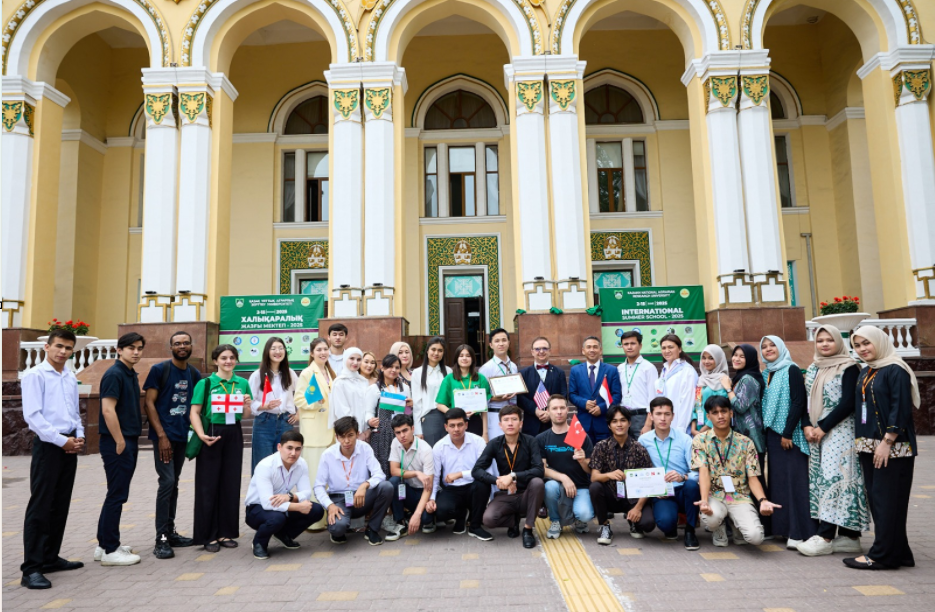
The event brought together over 450 students, young professionals, and faculty members from Central Asia, China, Turkey, Europe, and the Middle East. The program focused on the practical implementation of the United Nations Sustainable Development Goals (SDGs), with a special emphasis on climate, environmental issues, smart agriculture, and employment.
Green Transformation as a Strategic Direction
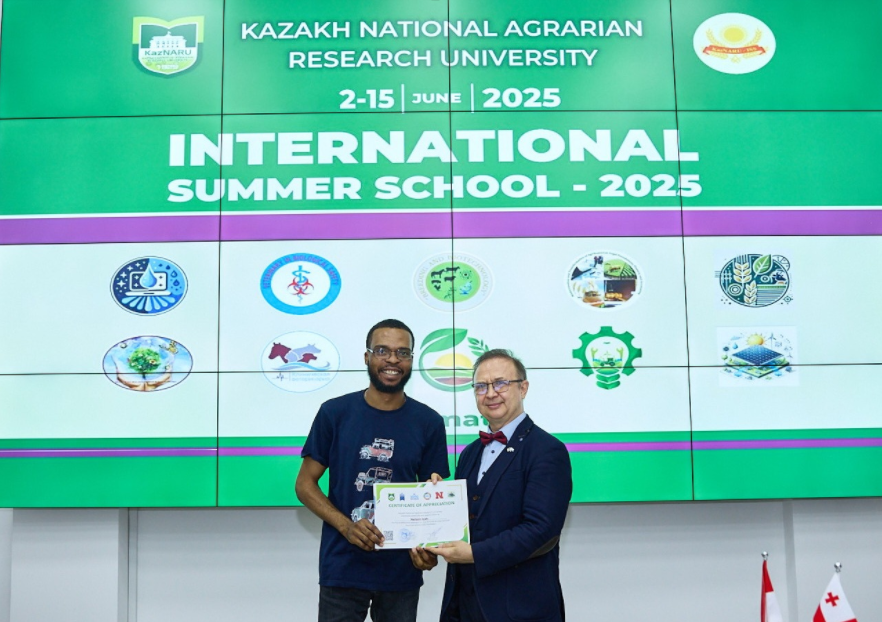
The opening of the Summer School was held in the format of a panel discussion titled “Green Transformation of the Economy: Opportunities for Youth.” Representatives from international universities participated in the discussion.
The event featured a speech by the Chairman of the Board and Rector of the “Kazakh National Agrarian Research University” JSC (KazNARU), Akhylbek Kazhigulovich Kurishbayev.
“Green transformation is not just a shift in technological paradigms, but a rethinking of the entire model of education and entrepreneurship, with a focus on inclusivity, biodiversity preservation, and long-term development,” highlighted the rector in his address.
It is worth noting that the Summer School program paid special attention to the development of renewable energy in rural regions, agro-ecological innovations, and sustainable water management; digitalization in sustainable resource management; ecological entrepreneurship; and the creation of an innovation ecosystem in agro- and ecotourism.
The practical component of the program included workshops, hackathons, and project sessions, where participants created tangible startup ideas to tackle environmental and social challenges in Central Asia.
Sustainable Ecotourism Projects Developed by Summer School Participants
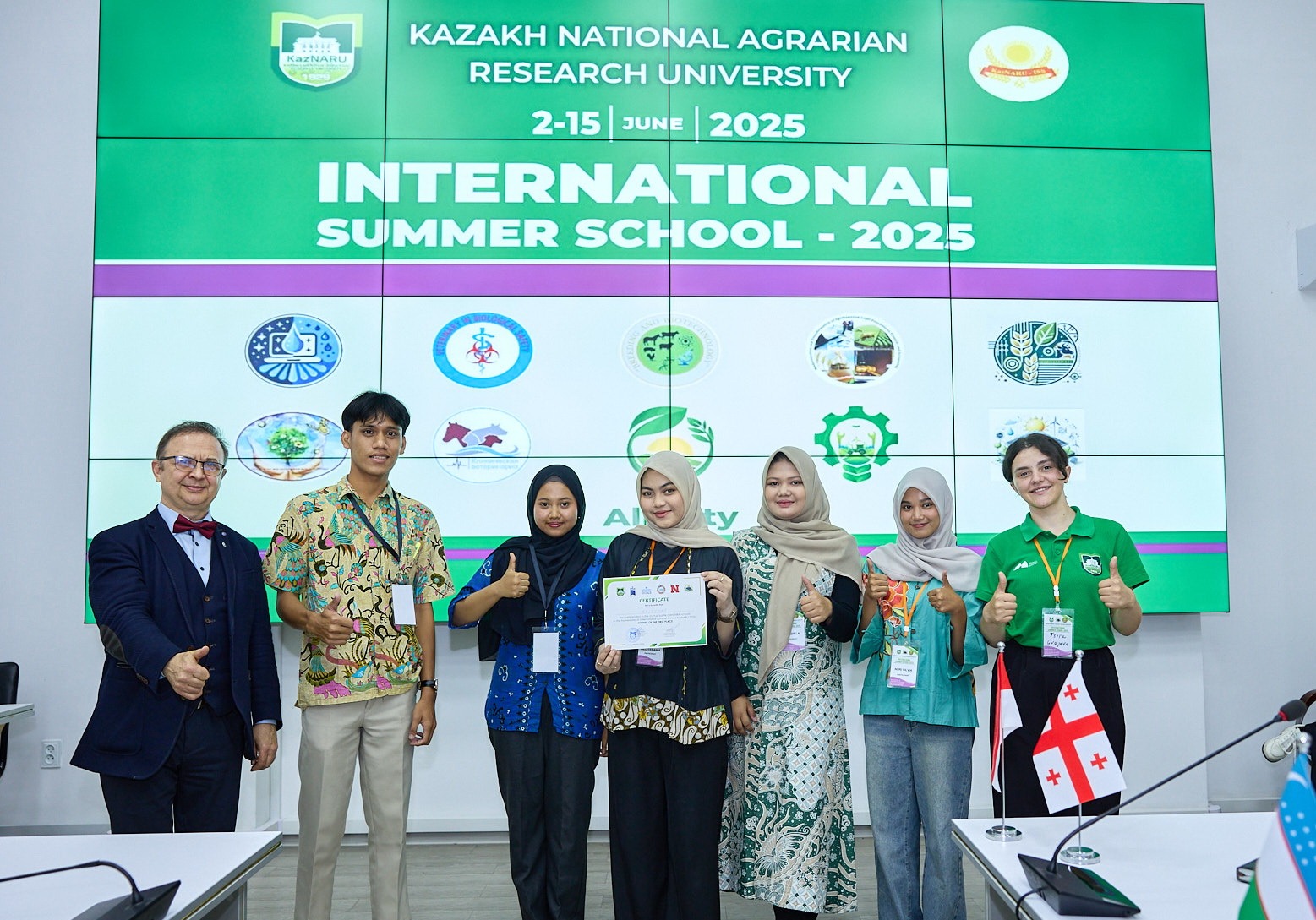
One of the most prominent elements of the Summer School was the project module dedicated to sustainable ecotourism. Over ten days, a group of 35 students from Kazakhstan, Kyrgyzstan, Georgia, Uzbekistan, and Turkey, guided by international mentors, developed concepts for ecotourism routes in the foothills of the Ile Alatau and national parks around Almaty and the Almaty region.
The project included several key stages: analyzing territorial potential; assessing environmental impact; modeling green logistics; applying artificial intelligence and digital maps for navigation; and developing a marketing strategy and ESG reporting.
The project resulted in an innovative concept for the “Green Trail of the Great Silk Road” – a tourist route that integrates scenic landscapes, cultural heritage, and modern digital technologies. Among the solutions proposed were the use of AR guides, QR-based navigation, online eco-platforms, as well as the installation of solar panels along tourist routes in remote areas.
A distinctive feature of the project was the active involvement of local communities and the application of ecosystem-based principles, which allowed for consideration of both the population’s interests and the environmental constraints of the territory.
“This project gave us a unique opportunity to apply the knowledge we gained in practice and truly feel part of the region’s sustainable development process,” said G. Tsyra, a student from Georgia.
It is worth emphasizing that the projects developed by the students received high recognition from representatives of international organizations.
For instance, Vlastimil Samek, Representative of the UN Department of Global Communications and Head of the UN Information Centre in Kazakhstan, noted that youth initiatives in ecotourism have the potential to become a model of local sustainable development and to create new jobs in rural areas.
How can universities integrate the principles of the green economy into their curricula? What support tools are necessary for the development of youth eco-startups? What role does regional cooperation play in promoting green transformations? These are precisely the questions that the Summer School participants sought to address. At the same time, participants showcased their projects during the closing forum.
An important outcome of the forum was the proposal to establish a permanent “Living Laboratory” of sustainable development and ecotourism at KazNARU-an open platform for experiments, startups, and research conducted by students and young scientists.
The organization of the Summer School was made possible thanks to the active participation of sponsors and partners. The programs and projects were successfully implemented with the support of the Almaty Tourism Bureau, as well as universities such as KBTU, Turan, and other educational institutions. Their contribution lay in valuable ideas, knowledge, and experience in entrepreneurship. Thanks to this support, participants had a unique opportunity to develop skills, exchange experiences, and establish professional contacts. We sincerely thank everyone who became part of this important educational event.
The program was further enriched by workshops, lectures, and practical sessions conducted by experts from various fields. Participants not only gained a solid theoretical foundation but also had the chance to apply their knowledge in practice by solving real-life cases. This created an atmosphere of collaboration, inspiration, and the drive to achieve new accomplishments.
“Participation in the Summer School was an excellent opportunity to establish inter-university collaboration and develop joint master’s programs in sustainable development,” commented a representative from one of the universities in Malaysia.
The KazNARU Summer School demonstrated that with the right teaching methodology, an interdisciplinary approach, and student involvement in real projects, it is possible to effectively cultivate ecological thinking, entrepreneurial skills, and leadership qualities in young people. Such events not only inspire but also lay the foundation for building sustainable communities oriented towards a “green future”.
At the same time, the Summer School served as a pilot platform for testing new formats: a Mini MBA in Eco-Entrepreneurship, ESG workshops, and simulation games on international climate diplomacy.
Future Plans and Expansion of Collaboration
“If we want to change the world, we need to start with education. And the Summer School is exactly the place where this is possible,” said Rafis Abazov, Vice-Rector for International Cooperation at KazNARU.
Indeed, in the context of climate challenges and limited natural resources, there is a need for a new wave of leaders capable of thinking systemically, acting locally, and considering the global consequences of their decisions. The KazNARU Summer School clearly demonstrated that such leaders are already emerging among youth who are ready to take responsibility, propose innovative solutions, and work for the benefit of Kazakhstan, the region, and the entire planet.
In the future, the university plans to expand the program, launch an eco-startup accelerator, and integrate best practices in sustainable development into its academic and research activities. Focus will be placed on developing alternative energy sources-namely solar, wind, and bioenergy-as central pillars of the transition to a low-carbon economy.
Furthermore, KazNARU intends to strengthen partnerships with industrial enterprises and businesses to jointly develop applied solutions, implement innovations, and provide students with access to real-world production experience.
Active involvement of international experts and organizations will help to broaden the scope of collaboration, facilitate the exchange of advanced knowledge, and enhance the university’s contribution to building a sustainable future for the region.
CAREC and Central Asian universities sign new memoranda on green skills development
100,000 jobs and a skills gap: how Central Asia is preparing for the renewables boom
No transition without transmission: How Central Asia is building its energy future
ADB to invest $5.5bn across 15 projects in Kazakhstan
17 agreements worth over $2.3 billion signed at the opening of RES 2026 EXPO in Astana
World Bank to invest $1bn in Central Asia's energy integration
Kazakhstan and China to launch a 500 MW wind farm in Karaganda region
Kazakhstan and Tajikistan move toward clean power deal over Rogun HPP
Regional Ecological Summit 2026 opens in Astana
Solar pumps and drip irrigation help Kyrgyz farmers cut costs amid rising energy prices
Hormuz closure failed to trigger coal comeback as solar and wind filled the gap
Astana set to launch RES 2026 EXPO and ink key international deals
Central Asian countries to discuss energy transition at RES 2026 in Astana
Moldova surpassed 1 GW of installed renewable energy capacity
China begins building US$1 billion hydropower station in Cambodia
Thousands protest in Germany urging faster green shift
Scientists from Russia and Uzbekistan improved the stability of green energy systems by 24%
Kazakh startup ranks in GCIP global top 3 in Vienna
Kazakhstan poultry farm produces 15 million kWh of energy from waste
China, Spain expand partnership in solar and wind power