

Environmental policy19.12.2024
COP29 outcomes: $300 billion to fight climate crisis


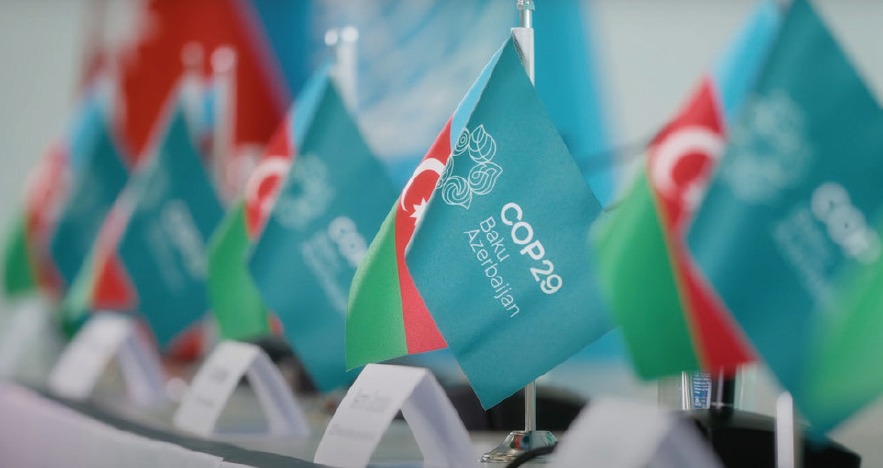
The UN Climate Conference (Conference of the Parties to the United Nations Framework Convention on Climate Change - COP29) closed with a new financial goal to help countries protect their people and economies against climate disasters, and share in the vast benefits of the clean energy boom, reports UN News.
The main theme of COP29 in Baku (Azerbaijan) •was climate finance. The event brought together representatives from nearly 200 countries and a breakthrough agreement that will:
• Triple finance to developing countries, from the previous goal of USD 100 billion annually, to USD 300 billion annually by 2035.
• Secure efforts of all actors to work together to scale up finance to developing countries, from public and private sources, to the amount of USD 1.3 trillion per year by 2035.
Known formally as the New Collective Quantified Goal on Climate Finance (NCQG), it was agreed after two weeks of intensive negotiations and several years of preparatory work, in a process that requires all nations to unanimously agree on every word of the agreement.
"This new finance goal is an insurance policy for humanity, amid worsening climate impacts hitting every country," said Simon Stiell, Executive Secretary of UN Climate Change. “But like any insurance policy - it only works - if premiums are paid in full, and on time. Promises must be kept, to protect billions of lives."
"It will keep the clean energy boom growing, helping all countries to share in its huge benefits: more jobs, stronger growth, cheaper and cleaner energy for all"- he added.
The International Energy Agency expects global clean energy investment to exceed USD 2 trillion for the first time in 2024.
The new finance goal at C0P29 builds on significant strides forward on global climate action at C0P27, which agreed an historic Loss and Damage Fund, and C0P28, which delivered a global agreement to transition away from all fossil fuels in energy systems swiftly and fairly, triple renewable energy and boost climate resilience.
C0P29 also reached agreement on carbon markets - which several previous COPs had not been able to achieve. These agreements will help countries deliver their climate plans more quickly and cheaply, and make faster progress in halving global emissions this decade, as required by science.
Important agreements were also reached on transparent climate reporting and adaptation as summarized below.
Simon Stiell, Executive Secretary of UN Climate Change, also acknowledged that the agreement reached in Baku did not meet all Parties' expectations, and substantially more work is still needed next year on several crucial issues.
UNFCCC Executive Secretary Simon Steele also acknowledged that the agreement reached in Baku fell short of all parties' expectations and that significant work remains to be done in a number of key areas next year.
“No country got everything they wanted, and we leave Baku with a mountain of work to do,” said Stiell. “The many other issues we need to progress may not be headlines but they are lifelines for billions of people. So this is no time for victory laps, we need to set our sights and redouble our efforts on the road to Belem.”
The climate finance agreement at COP29 comes as stronger national climate plans (Nationally Determined Contributions, orNDCs) become due from all countries next year. These new climate plans must cover all greenhouse gases and all sectors, to keep the 1.5°C warming limit within reach. COP29 saw two G20 countries - the UK and Brazil - signal clearly that they plan to ramp up climate action in their NDCs 3.0, because they are entirely in the interests of their economies and peoples.
“We still have a very long road ahead, but here in Baku we took another important step forward,” said
Stiell. “The UN Paris Agreement is humanity’s life-raft; there is nothing else. So here in Baku and all of the countries represented in this room we’re taking that journey forward together.”
A brief summary of other key achievements at COP29 follows below.
ARTICLE 6 OF THE PARIS AGREEMENT
A notable achievement during the past two weeks was the progress made on carbon markets. After nearly a decade of work, countries have agreed on the final building blocks that set out how carbon markets will operate under the Paris Agreement, making country- to-country trading and a carbon crediting mechanism fully operational.
On country-to-country trading (Article 6.2), the decision out ofCOP29 provides clarity on how countries will authorize the trade of carbon credits and how registries tracking this will operate. And there is now reassurance that environmental integrity will be ensured upfront through technical reviews in a transparent process.
On day one ofCOP29, countries agreed standards for a centralized carbon market under the UN (Article 6.4 mechanism). This is good news for developing countries, who will benefit from new flows of finance. And it is particularly good news for least developed countries, who will get the capacity-building support they need to get a foothold in the market.
This mechanism, known as the Paris Agreement Crediting Mechanism, is underpinned by mandatory checks for projects against strong environmental and human rights protections, including safeguards that ensure a project can’t go ahead without explicit, informed agreement from Indigenous Peoples. It also allows anyone affected by a project to appeal a decision or file a complaint.
Under the text agreed on Article 6.4, there is a clear mandate for the UN carbon market to align with science. It tasks the Body getting this market up and running to consider the best available science across all work going forward.
The work on carbon markets doesn’t stop in Baku. The Supervisory Body setting up the new carbon crediting mechanism has been handed a long 2025 to-do list by Parties and will continue to be accountable to them.
TRANSPARENCY AND ACCOUNTABILITY
Transparent climate reporting made big strides forward in Baku, building a stronger evidence base to strengthen climate policies over time, and helping to identify financing needs and opportunities. To date, 13 Parties have now submitted their first Biennial Transparency Reports (BTR) - due from all Parties by the end of the year. Andorra, Azerbaijan, the European Union, Germany, Guyana, Japan, Kazakhstan, Maldives, Netherlands, Panama, Singapore, Spain, and Turkiye have led the way on transparent climate reporting, and set an example for others to follow. The list of received BTRs is continuously being updated here.
In addition, all transparency negotiating items concluded successfully at COP29, with Parties expressing their appreciation for the timely completion of the Enhanced Transparency Framework (ETF) reporting tools, the technical trainings, the support provided to developing countries for reporting under the ETF that took place in 2024, and the successful launch of the review process.
A total of 42 events were organized under #Together4Transparency, a UNFCCC collaborative initiative that promotes climate transparency with Parties and non-Party stakeholders. These events emphasized the vital role of transparency in preparing NDCs and net-zero pathways, as well as in recognizing climate action from non-Party stakeholders. Events included high-level sessions, mandated events and training sessions to prepare countries for their BTRs, as well as to equip technical experts for the upcoming review process.
The critical role of REDD+ was recognized through a £3 million pledge by the UK International Forest Unit to support UN Climate Change’s work over four years. This funding will bolster REDD+ activities in many countries, enabling the secretariat to create dedicated spaces for REDD+ experts to engage in technical dialogue. These efforts are expected to enhance the transparency and implementation of REDD+, in line with the Global Stock take objective to halt and reverse deforestation and forest degradation by 2030.
ADAPTATION
COP29 was an important moment for adaptation, with the delivery of several key outcomes. The COP decision on matters relating to the least developed countries (LDCs) contains a provision for the establishment of a support programme for the implementation of National Adaptation Plans (NAPs) for the LDCs. Parties extensively discussed the second five-year assessment of progress to formulate and implement NAPs, and will continue that in June 2025.
A High-Level Dialogue on National Adaptation Plans convened ministers from least developed countries and small island developing States, financial experts and international donors to address the growing urgency of climate adaptation. Their discussions focused on innovative financing, technical support, and accelerated action to meet the 2025 submission deadline for NAPs. The event concluded with a strong call to action to expedite NAPs and translate plans into tangible outcomes.
The outcome on the global goal on adaptation sets a clear path forward on the road to COP30for the indicators work programme, providing a process for experts to continue their technical work before passing the baton to Parties. COP29 also launched the Baku Adaptation Road Map and Baku high-level dialogue on adaptation to enhance the implementation of the UAE Framework. Finally, the outcome raises ambition by agreeing to continue unpacking transformational adaptation moving forward.
Solar pumps and drip irrigation help Kyrgyz farmers cut costs amid rising energy prices
Hormuz closure failed to trigger coal comeback as solar and wind filled the gap
Astana set to launch RES 2026 EXPO and ink key international deals
Central Asian countries to discuss energy transition at RES 2026 in Astana
Moldova surpassed 1 GW of installed renewable energy capacity
China begins building US$1 billion hydropower station in Cambodia
Thousands protest in Germany urging faster green shift
Scientists from Russia and Uzbekistan improved the stability of green energy systems by 24%
Kazakh startup ranks in GCIP global top 3 in Vienna
Kazakhstan poultry farm produces 15 million kWh of energy from waste
China, Spain expand partnership in solar and wind power
Mongolia engages Hanwha Group in industrial and clean energy development
Russia to test horizontal and vertical wind power plants at new renewable energy test site in Adygeya
Brussels sets timeline: grid package by summer, electrification strategy to follow
RES 2026 to address workforce training for renewable energy scale-up
Algeria commissions 400 MW of solar capacity
Deadline approaching: KOREM invites bids for wind and solar power auctions
From crisis to security: IRENA lays out renewables roadmap for governments
Renewable energy generation in Kazakhstan rises 15% in Q1 2026
Kazakhstan climbs the Climatescope rankings