

News Kazakhstan26.04.2026
Just transition: leaving no one behind in the energy transformation


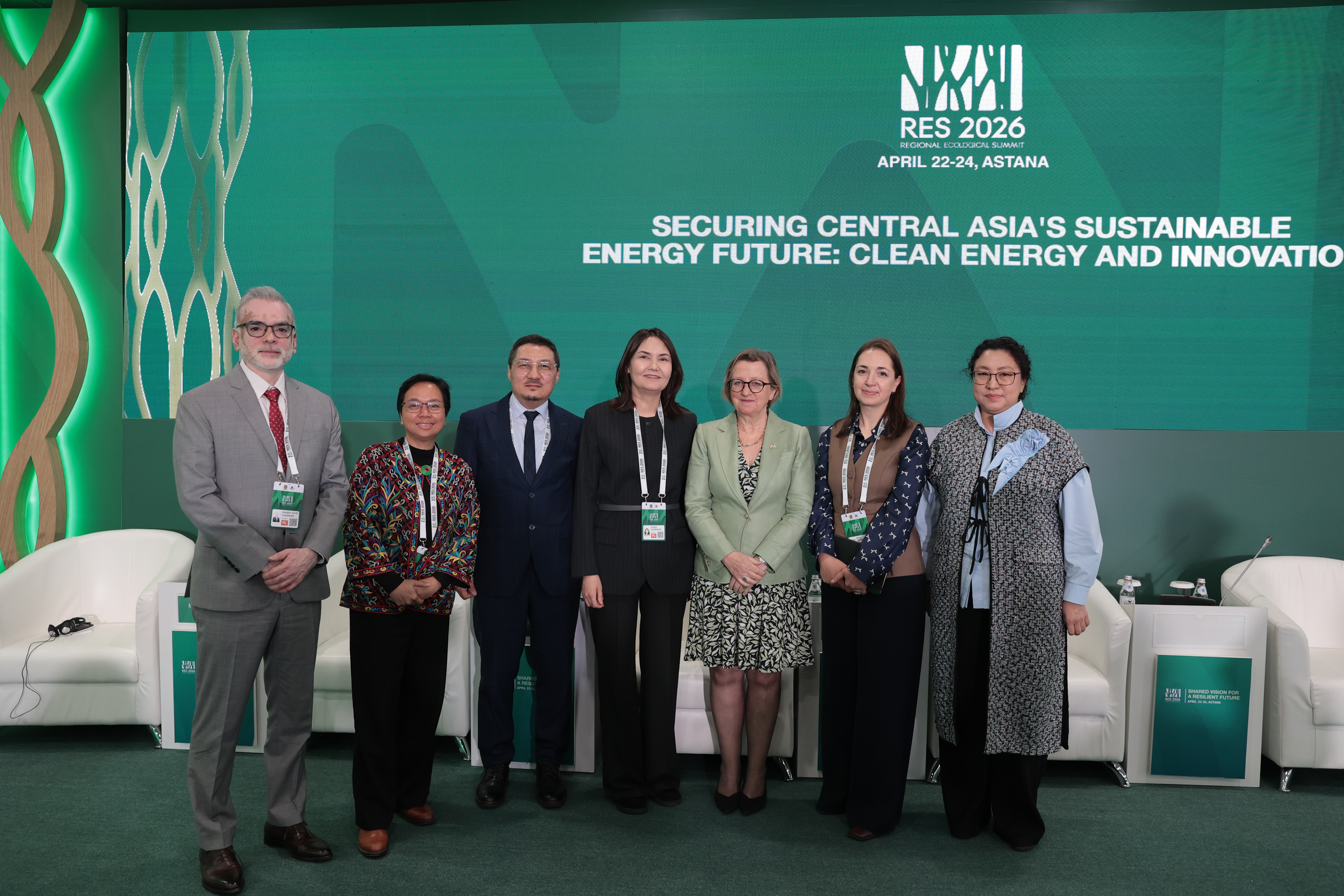
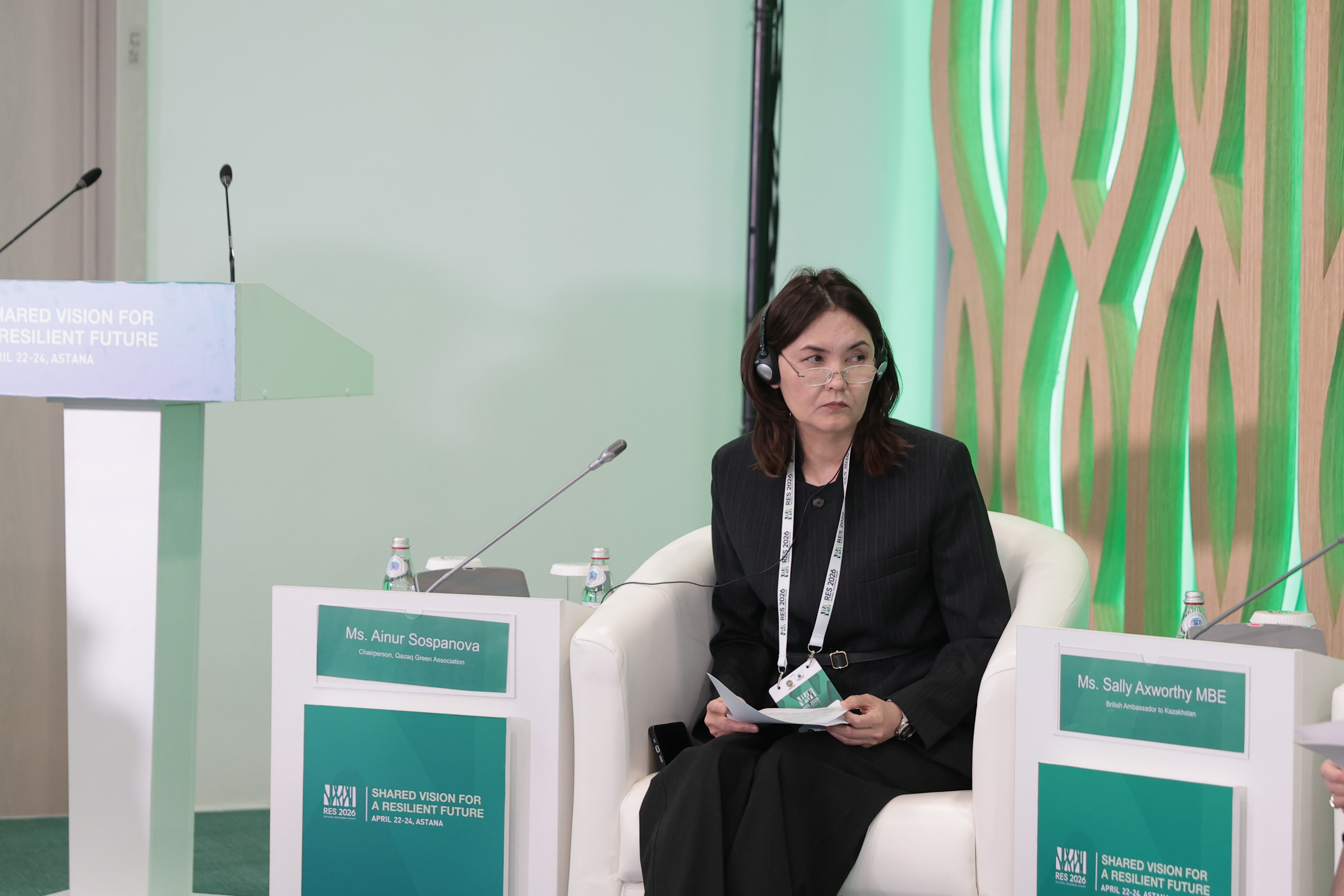
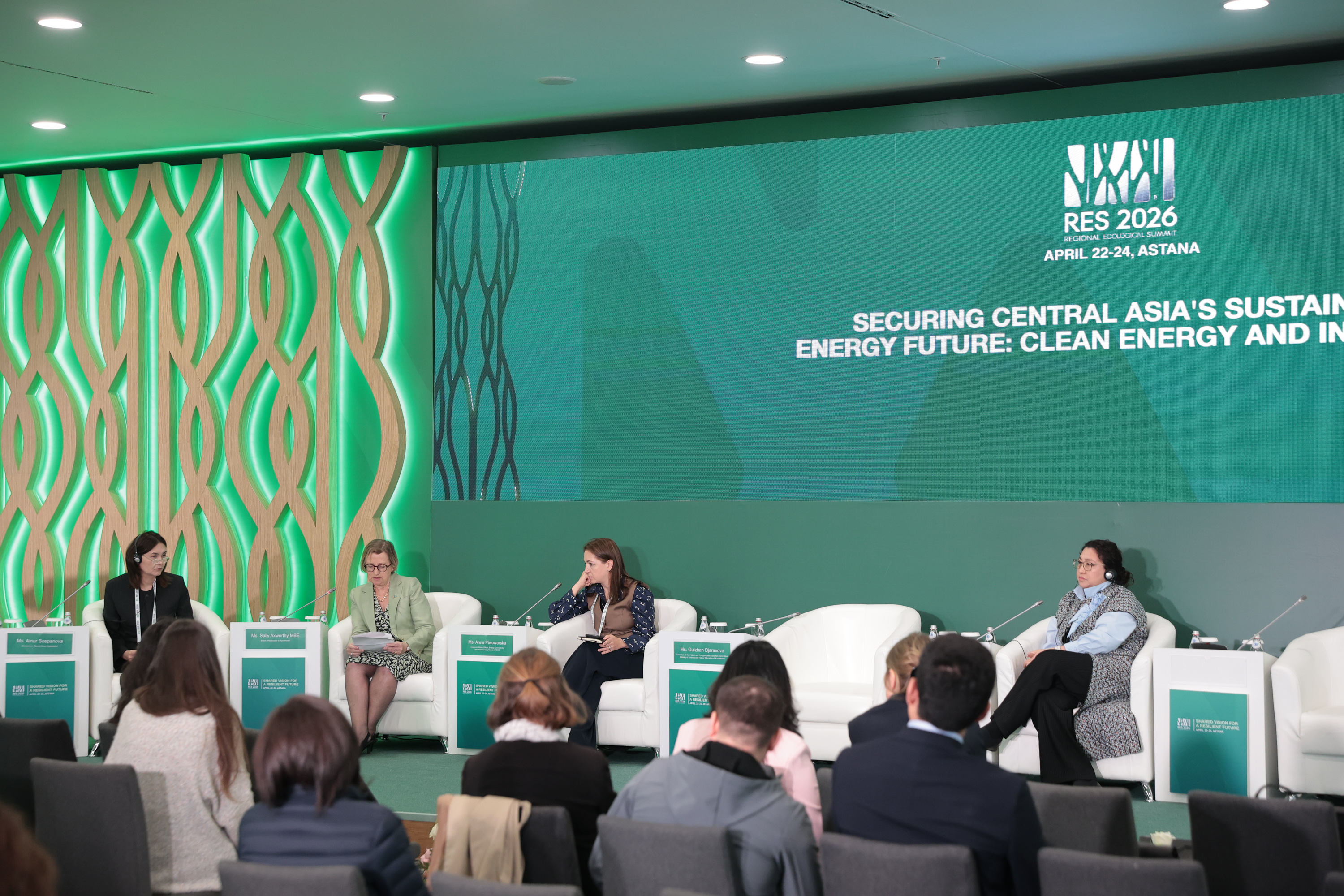
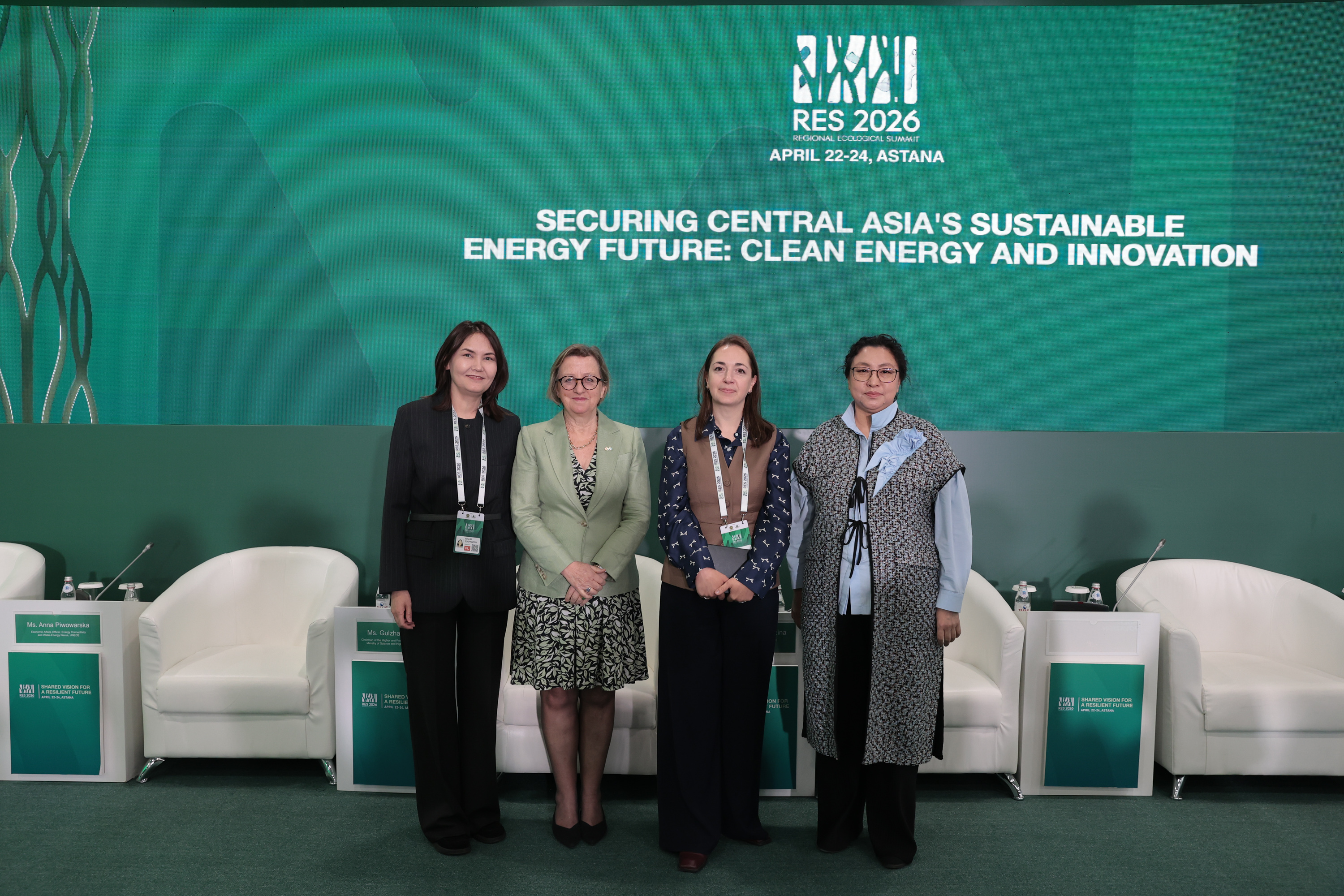
QAZAQ GREEN. At a panel session of RES-2026, experts from ADB, UNECE, representatives of British diplomacy and Kazakhstani business discussed what lies behind the formula of "just transition" — and why without a workforce strategy, community engagement and clear political will, any framework programme will remain on paper. The session was moderated by Ainur Sospanova, Chairwoman of the Management Board of Qazaq Green RES Association.
Three levels of impact: how the transition affects people
Meutia Chaerani, Energy Transition and Climate Risk Professional at the Asian Development Bank, opened with the concrete social dimension of the transition.
The energy transition affects people at three distinct levels. The first is direct and immediate: job losses, wage reductions and deteriorating working conditions in industries that are winding down. The second is indirect: when a mine or oil field closes, an entire ecosystem collapses with it — shops, cafes, transport providers, contractors. The third level is induced, the most diffuse but no less painful: falling tax revenues, declining household purchasing power, and the degradation of entire communities.
"Designing for just transition needs to address all three levels — and doing it deliberately," Chaerani emphasised.
At the same time, she noted, Central Asia is in a distinctive position. The region is not simply losing its old energy base — it stands before an enormous untapped potential of the new. Solar and wind generation, hydropower, strategic reserves of critical minerals — all of this makes the transition not only a necessity but a window of opportunity. "It's not only a risk when we decide to diversify our economic base. It's a large opportunity," she said.
The key condition is inclusivity. Economic diversification reduces social risks only when it is deliberately structured so as not to leave behind workers from legacy industries, youth or women. This requires coherence: industrial policy, energy policy, education policy and social policy must work as a single system rather than as competing departmental programmes.
The British lesson: when there is no plan, people suffer
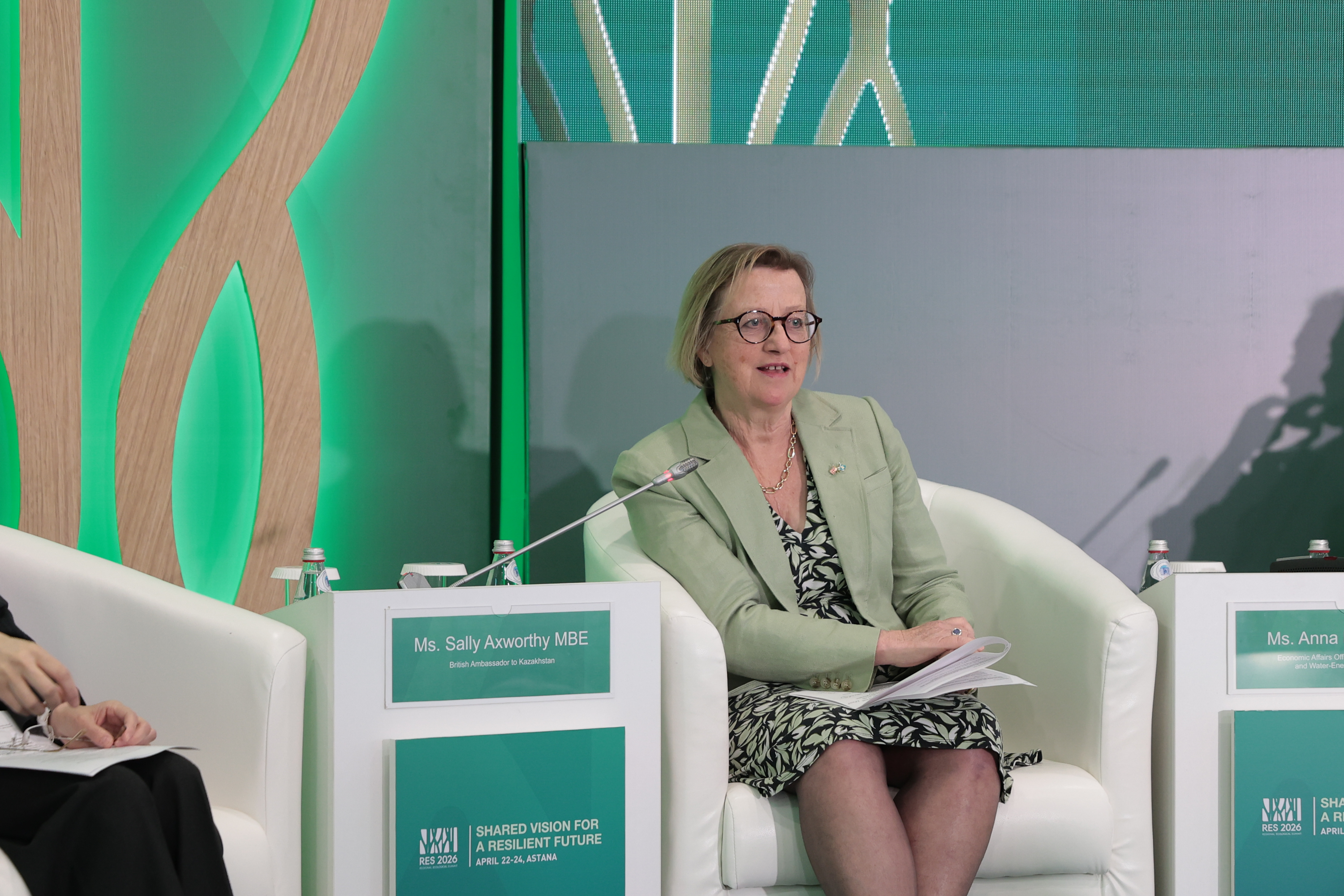
British Ambassador to Kazakhstan Sally Axworthy drew on the experience of her own country.
In the 1980s, the United Kingdom rapidly closed the majority of its coal mines. Over two decades, the country lost around 200,000 jobs. "It was not a transition plan," the Ambassador said. "The government's objective was to close loss-making coal mines. People came second." The communities that had grown up around these enterprises suffered greatly. Three decades on, some of them have still not fully recovered — the number of jobs in those areas remains below the national average.
That experience became the starting point for a different approach when the country embarked on the transition to renewable energy. In 2008, the Climate Change Act was passed, enshrining binding emissions reduction targets in law — initially 80%, then updated to 100% of 1990 levels — with a horizon of 2050.
The mechanism had three elements. The first was an independent Climate Change Committee, providing the government with an objective assessment of whether the country is on track to meet its stated goals. The second was carbon budgets: five-year caps on emissions, above which companies pay. The third was government support schemes giving clean energy investors revenue certainty and protection from wholesale price volatility.
UK emissions are now 53% below 1990 levels. The country's last coal-fired power station, Ratcliffe-on-Soar, closed in September 2024. By mid-2024, renewables were providing more than half of all electricity generation.
Axworthy also emphasised: "Clear direction from government gives investors the confidence to invest. Most of this transition has been carried out not by the state, but by private capital — precisely because the rules of the game were clear." She added what became a recurring theme throughout the discussion: a climate law alone is not enough. A combination of industrial, economic and skills policy is required — otherwise people who lose jobs in the old industries will simply not find their place in the new ones.
In 2023, around 700,000 people were employed in the UK's green energy sector. Offshore wind alone is estimated to create a further 100,000 jobs by 2030. "We hope that the energy transition will be a source of jobs," the Ambassador said. "But the labour market does not adjust automatically. Governments need to invest in retraining institutions, supply chains and regional growth."
Four mistakes that everyone makes
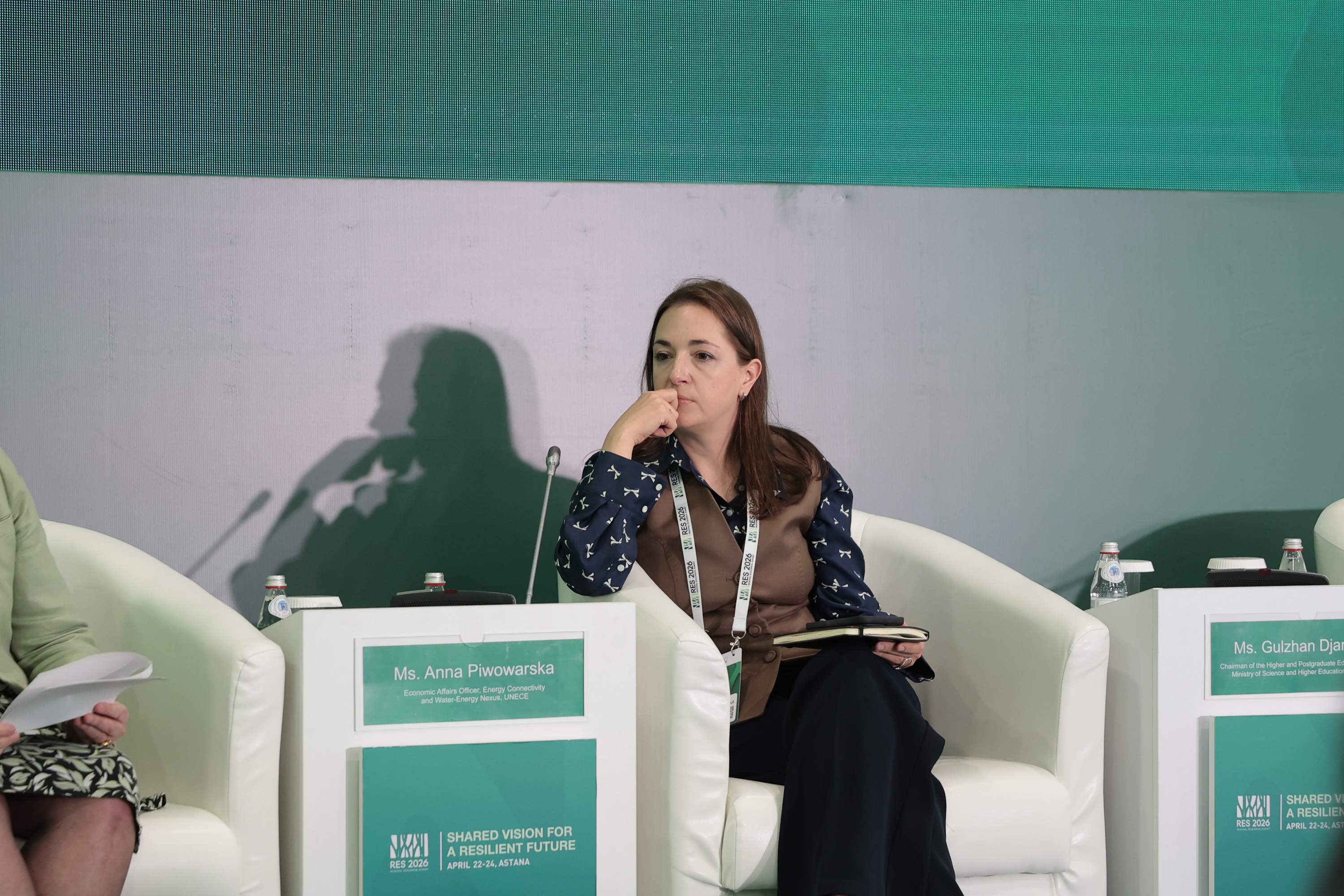
Anna Piwowarska, Economic Affairs Officer at the UNECE Regional Methane Initiative / Centre of Excellence on MMRV, has worked on transitions across the world — from the United States and Canada to the Balkans and Central Asia. Her conclusion: countries make the same mistakes.
The first mistake is the absence of advance planning. "It is a common mistake almost everywhere," she noted. Transitions begin without adequate preparation, when there is no longer enough time to build a proper system.
The second mistake is insufficient stakeholder engagement. Local authorities, trade unions and workers themselves learn of plans after the fact rather than participating in their development. "Local authorities are the real owners of the transition," Piwowarska stressed. "Without them, any programme will remain a declaration."
The third mistake is the unresolved question of financing the social components. Funding is usually found for the technical side of the transition — new capacity, infrastructure. For people, it comes almost always last. The exception she highlighted was Serbia, which managed to embed social dimensions directly into its financial instruments for the transition.
The fourth mistake is the neglect of monitoring and transparency. A long-term plan without ongoing tracking of results is navigation without instruments. "You need to be ready to change course," she said. "And for that, you need to know where you are."
The voice of a Kazakhstan’s employer
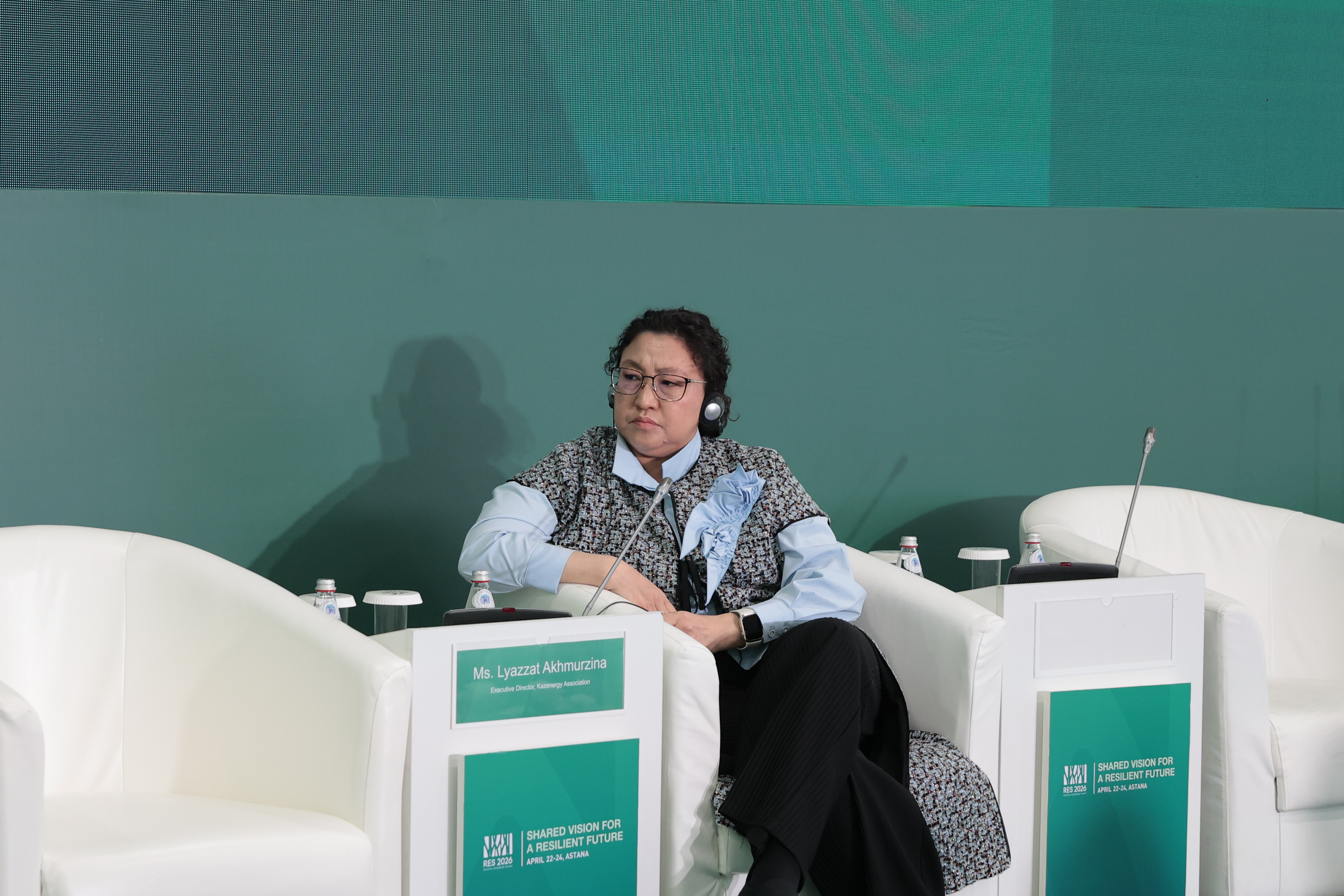
Lyazzat Akhmurzina, Executive Director of Kazenergy Association, which brings together companies across the entire energy value chain of the country, began not with figures or a sectoral position, but with gratitude for the very framing of the question. "Everywhere people discuss storage, capacity, watts. And here is a small audience, half of which has already left — and only here we discuss people. Although we always say: people first."
Kazenergy is a "brown" association, as she herself described it: coal, oil, gas. The very sectors that will find themselves at the epicentre of the transition. That is precisely why, she said, the association appears at such forums — not to slow the process, but to understand what will happen to the people it represents.
The central point of her remarks: the country still has no document that could be called a workforce development strategy for the transition period. Such a document must precede any conversation about retraining. First comes the map: which industries are changing, by how much and on what timeline. Only then — training programmes.
"We have it the wrong way round right now. First people discuss what to teach, where to teach — and four years later it turns out they taught the wrong thing." And more pointedly: "It's not my shift, guys. In my shift I will only do what I was assigned."
Behind this irony lies a concrete concern she conveyed on behalf of thousands of workers. A person of 50 or 55 understands they will lose their job. They just do not know when. They do not know what skills will be needed. And the pension is only at 63. "For people, it is not just the transition itself that is sensitive — even the word 'transition' is. For some industries, it is a little frightening."
She also addressed the situation of women separately. In the industries represented by Kazenergy, women are few — a consequence of hazardous and dangerous working conditions. The 24% who do work in these sectors require particular attention under any transition scenario. In her view, this is one of the most sensitive questions of the transition, one that cannot be deferred — otherwise it will simply fall off the agenda.
ADB framework: from principles to financing
Meutia Chaerani concluded her contribution by setting out the ADB's operational logic — how international institutions move from declarations to real instruments.
The first level is analytics, supported by the Coalition of Finance Ministers for Climate Action. The second is pilot projects, where the principles of just transition are tested in practice and generate experience for scaling. The third is the development of a coherent country-level just transition framework. And separately — a just transition finance facility being developed as a dedicated funding vehicle.
"The framework does not implement itself," she noted. "It needs financing." She added what became the common thread of the entire discussion: technical assistance, financial architecture and partnership with the state must move in parallel — otherwise none of these parts will function on its own.
In conclusion: three things without which just transition does not happen
Drawing together what was discussed at the session, three conditions emerge without which any framework programme will remain on paper.
The first is political will and long-term clarity. The British experience shows that when targets are enshrined in law and the rules of the game are stable and predictable, private capital follows. Without this, no support programme functions.
The second is a workforce strategy as a standalone document — not an annex to an energy programme, not a chapter in a sectoral strategy, but an independent document that maps who changes profession, where, when and in what numbers. Without this map, retraining becomes guesswork.
The third is community engagement from the outset, not after the fact. People directly affected by the transition should participate in developing decisions, not become the subjects of decisions already made.
As Anna Piwowarska put it: "A delay of action is not safe. Proactive just transition planning is not a cost. It is a hedge."
Just transition: leaving no one behind in the energy transformation
CAREC and Central Asian universities sign new memoranda on green skills development
100,000 jobs and a skills gap: how Central Asia is preparing for the renewables boom
No transition without transmission: How Central Asia is building its energy future
ADB to invest $5.5bn across 15 projects in Kazakhstan
17 agreements worth over $2.3 billion signed at the opening of RES 2026 EXPO in Astana
World Bank to invest $1bn in Central Asia's energy integration
Kazakhstan and China to launch a 500 MW wind farm in Karaganda region
Kazakhstan and Tajikistan move toward clean power deal over Rogun HPP
Regional Ecological Summit 2026 opens in Astana
Solar pumps and drip irrigation help Kyrgyz farmers cut costs amid rising energy prices
Hormuz closure failed to trigger coal comeback as solar and wind filled the gap
Astana set to launch RES 2026 EXPO and ink key international deals
Central Asian countries to discuss energy transition at RES 2026 in Astana
Moldova surpassed 1 GW of installed renewable energy capacity
China begins building US$1 billion hydropower station in Cambodia
Thousands protest in Germany urging faster green shift
Scientists from Russia and Uzbekistan improved the stability of green energy systems by 24%
Kazakh startup ranks in GCIP global top 3 in Vienna
Kazakhstan poultry farm produces 15 million kWh of energy from waste