

World News05.11.2025
First full-scale solar system installed on coastal cargo vessel in Netherlands


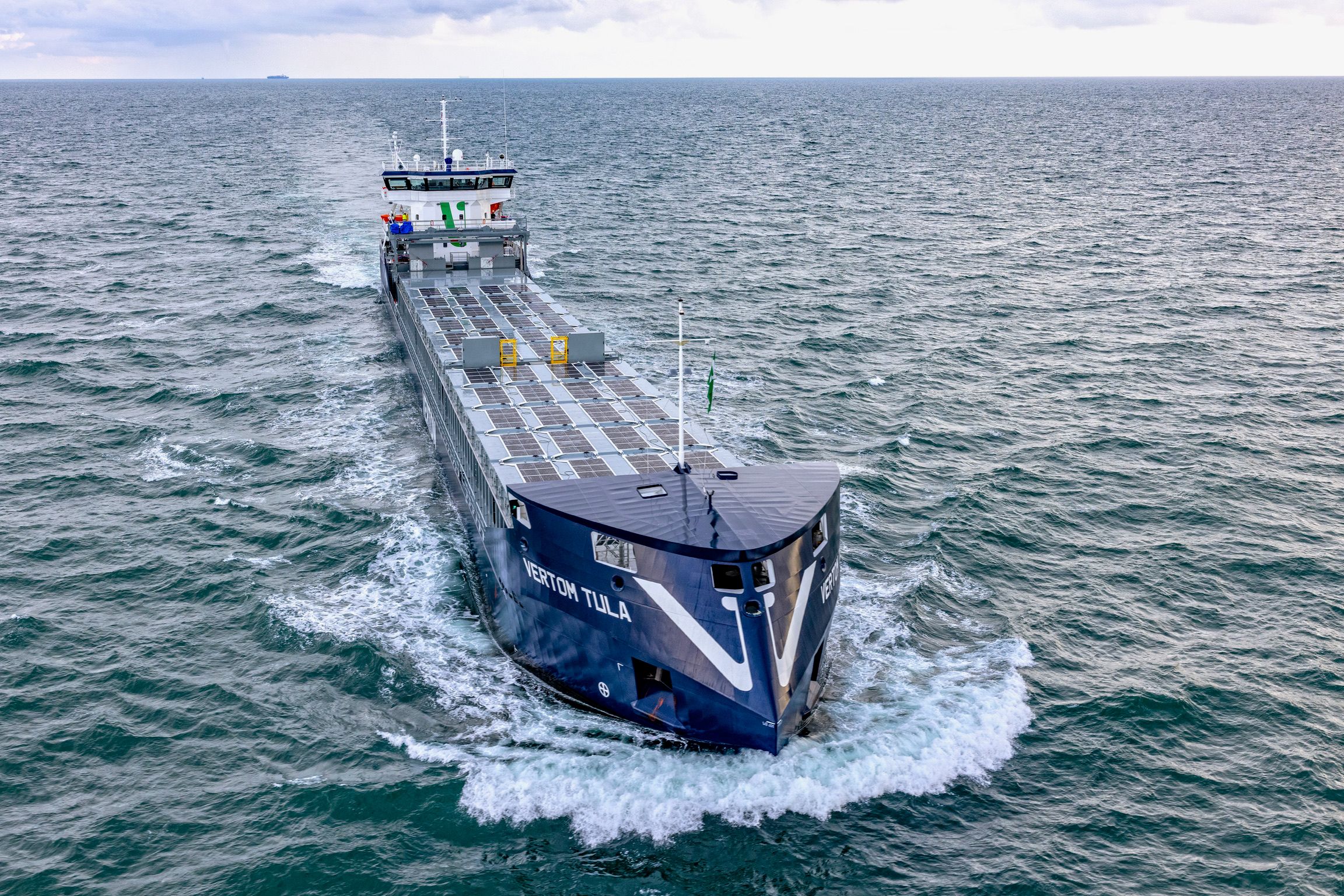
QAZAQ GREEN. Dutch company Wattlab has completed the first full-scale installation of its Solar Flatrack system on the diesel-electric cargo vessel MV Vertom Tula, marking a major step toward sustainable shipping. The system, consisting of 44 solar modules with a total capacity of 79 kWp, will power onboard systems and cut the vessel’s hotel load by 20%.
The installation follows three years of collaboration between Wattlab and Vertom, including two pilot projects that proved the technology’s reliability in demanding maritime conditions. Vertom, which operates a fleet of over 100 vessels, chose to equip its latest 7,280 DWT multipurpose coaster with the solar system after successful tests confirmed both performance and return on investment.
The Solar Flatracks were produced and assembled in Wattlab’s new facilities in Rotterdam and installed within a single day at the Port of Harlingen. The system uses container twist lock fittings, allowing for quick mounting or removal when space is needed for cargo.
Wattlab CEO Bo Salet noted the practical benefits of the design: “The panels can be easily stacked and stored if needed, taking up the footprint of just one 20-foot container.” He credited Vertom for its trust and cooperation and acknowledged co-funding from the EU’s Just Transition Fund.
According to Vertom Business Development Manager Thomas van Meerkerk, research by TNO confirmed that the Solar Flatrack system can effectively reduce greenhouse gas emissions while delivering a positive ROI. “The panels perform well in coastal conditions and require minimal maintenance,” he said.
The Dutch research organization TNO has validated the system’s emission reduction and payback period, with a detailed report to be released soon. The Solar Flatrack has also been nominated for the IBJ Awards in the categories of Environmental Protection and Bulk Ship of the Year.
Wattlab’s solution provides a scalable path to decarbonization for coastal and short-sea vessels, helping shipowners manage fuel costs and regulatory pressure without sacrificing cargo flexibility or deck space.
Regional Ecological Summit 2026 opens in Astana
Solar pumps and drip irrigation help Kyrgyz farmers cut costs amid rising energy prices
Hormuz closure failed to trigger coal comeback as solar and wind filled the gap
Astana set to launch RES 2026 EXPO and ink key international deals
Central Asian countries to discuss energy transition at RES 2026 in Astana
Moldova surpassed 1 GW of installed renewable energy capacity
China begins building US$1 billion hydropower station in Cambodia
Thousands protest in Germany urging faster green shift
Scientists from Russia and Uzbekistan improved the stability of green energy systems by 24%
Kazakh startup ranks in GCIP global top 3 in Vienna
Kazakhstan poultry farm produces 15 million kWh of energy from waste
China, Spain expand partnership in solar and wind power
Mongolia engages Hanwha Group in industrial and clean energy development
Russia to test horizontal and vertical wind power plants at new renewable energy test site in Adygeya
Brussels sets timeline: grid package by summer, electrification strategy to follow
RES 2026 to address workforce training for renewable energy scale-up
Algeria commissions 400 MW of solar capacity
Deadline approaching: KOREM invites bids for wind and solar power auctions
From crisis to security: IRENA lays out renewables roadmap for governments
Renewable energy generation in Kazakhstan rises 15% in Q1 2026