

International experience26.05.2025
Balancing the grid: Photomate and Huawei experience, and lessons for Central Asia


CHALLENGES FACING THE EUROPEAN POWER SYSTEM
The growth of renewable energy sources in Europe
Over the past decade, Europe has become a global leader in the adoption of renewable energy. Driven by ambitious climate goals, policy frameworks such as the European Green Deal, energy safety and significant public and private investment, the share of renewables in the energy mix has seen a substantial rise.
In 2023, the EU’s renewable energy share in electricity consumption climbed to 45.3%, up from 41.2% in 2022, according to Eurostat. The main contributors were:
- Wind energy: 38.5% of total renewable electricity generation.
- Hydropower: 28.2%
- Solar PV: 18.6%
- Bioenergy and others: 14.7%
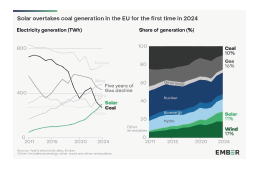
This trend continued in 2024, when solar energy surpassed coal for the first time in EU history, supplying 11% of the electricity compared to coal’s 10%.
The EU aims to further increase this share to at least 63% by 2030, aligning with net-zero goals by 2050. National energy plans from Germany, France, Spain, and others contribute significantly to this momentum, with record additions expected in 2025: 70 GW of solar and 19 GW of wind installations projected.
While the rapid growth of renewables mainly in PV and wind power is commendable, integrating them into traditional electricity grids has presented multi-dimensional challenges.
Intermittency and variability - renewables like wind and solar are non-dispatchable, their output depends on weather and time of day. This introduces uncertainty and volatility in energy supply, unlike fossil fuel-based plants which offer consistent output. This variability leads to frequent mismatches between generation and demand. This can affect grid stability in term to frequency instability or voltage fluctuations.
Grid congestion and curtailment - as renewable installations grow, especially in remote areas with high wind or solar potential, the existing transmission infrastructure becomes a bottleneck. Most renewable generation is built where natural resources are rich, for example wind farms in northern Germany or solar fields in southern Spain but demand is often concentrated in industrial or urban centers elsewhere. This mismatch stresses the transmission infrastructure, which lacks the capacity to move large volumes of power over long distances.
Battery energy storage systems as pillar of modern grid – are they essential?
All the aforementioned challenges, along with the decline in energy storage system prices driven by increased supply and supportive economic programs introduced by European governments, have contributed to a rapid growth in the share of battery energy storage systems since 2024. This has occurred alongside a planned (at minimum) doubling of their deployment.
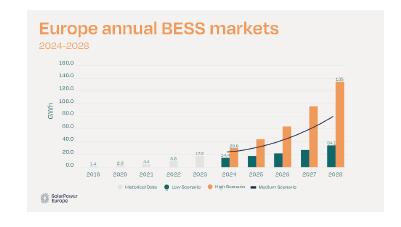
Battery energy storage systems currently represent one of the most advantageous solutions for addressing the tasks and challenges Europe faces in the context of energy transition. How can they contribute to this goal? These systems offer a wide range of advanced functionalities which, when integrated with digital technologies, form an essential component of sustainable development.
Key Functions of Battery Energy Storage Systems
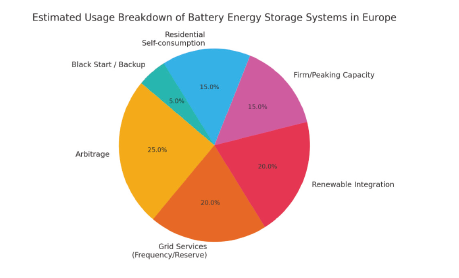
BESS are versatile and can perform a range of functions, broadly categorized as follows:
Arbitrage in battery energy storage means buying electricity when it's cheap (usually during low demand) and selling it when prices peak. This helps BESS operators earn revenue by exploiting daily price fluctuations. A key benefit is reducing renewable energy curtailment—when excess solar or wind energy goes unused due to low demand or grid constraints. By storing surplus green energy and using it during high-demand periods, BESS supports cleaner energy use and boosts profits for developers. In systems without formal electricity markets, this strategy also aids load-leveling—balancing supply and demand by shifting energy use across time.
Firm Capacity or Peaking Capacity is the ability of the power system to meet electricity demand during the highest-use periods of the year. Traditionally, this role is filled by expensive, fast-ramping generators like gas plants. However, Battery Energy Storage Systems (BESS) can also serve as a reliable source of peaking capacity by storing energy during low-demand periods and discharging it when demand spikes.
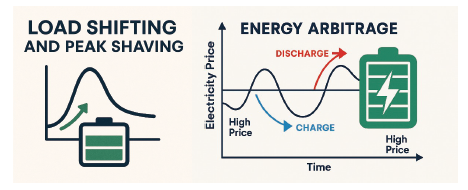
Variable Renewable Energy (VRE) sources (like wind and solar) can contribute to firm capacity, but their output depends on weather and often doesn’t align with peak demand. Because of this, their firm capacity value is limited. By pairing VRE with BESS, system operators can shift renewable generation to match peak load times more effectively. This integration not only improves system reliability but also enhances the capacity value of renewables, reducing reliance on fossil-fuel plants.
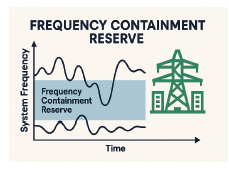
Operating Reserves and Ancillary Services are essential for keeping the power grid stable, ensuring supply matches demand in real time. These services operate on various timescales—from fractions of a second to several hours to respond to sudden changes in grid conditions.
Battery Energy Storage Systems (BESS) are ideal for these tasks because they can react almost instantly, much faster than traditional power plants. This makes them well-suited for fast-response services like Primary Frequency Response (PFR) and Regulation. Larger or longer-duration BESS setups can also support load-following and ramping, helping to balance supply and demand over longer periods. In this way, BESS plays a key role in grid reliability and flexibility.
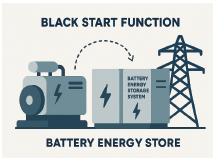
Black Start is the process of bringing power plants back online after a complete grid shutdown, when no external electricity is available. Normally, generators draw power from the grid to activate control systems and restart operations. But during a full outage, an independent source is needed.
Traditionally, this backup is provided by on-site diesel generators. However, Battery Energy Storage Systems (BESS) offer a cleaner and more efficient alternative. BESS can instantly supply the necessary startup power without fuel costs or emissions. Moreover, because large-scale outages are rare, a BESS installed for black start can also be used to deliver other valuable grid services such as frequency regulation or energy arbitrage, when it's not on standby. This makes it a versatile and cost-effective investment for system operators.
As the role of battery energy storage becomes increasingly central to the resilience and flexibility of Europe’s power system, technology providers play a critical part in implementing these technologies effectively.
Photomate - a trusted provider of HUAWEI Battery Energy Storage Systems (BESS) combines European deployment expertise with a deep understanding of storage's critical role in modern energy grids. As a Huawei Value Added Partner, we also deliver cutting-edge solar technologies including FusionSolar inverters, Smart Transformer Stations, EV chargers, and energy management solutions for residential, commercial, and utility-scale applications. Our comprehensive portfolio is supported by advanced consumption analysis services.
ENERGY STORAGE MARKET DEVELOPMENT IN HUNGARY
Hungary's energy landscape is undergoing significant transformation as solar PV capacity continues its rapid expansion, now reaching levels that require additional system support. With renewable penetration increasing, the country has introduced substantial support mechanisms, including the RRF-6.5.1-23 subsidy scheme allocating €150 million for utility-scale energy storage projects. These subsidized projects combine CAPEX/OPEX support with ancillary service obligations, creating favorable conditions for development. Beyond subsidized projects, the Hungarian electricity and ancillary markets already offer viable economics for energy storage systems, with commercial and industrial sector projects demonstrating 3–5-year payback periods. The 6.5.1-23 program has catalyzed development of approximately 440MW of 2-hour storage capacity, with majority expected operational by April 2026.
Application Scenarios and Project Spotlight
Utility-scale storage predominantly supports automated Frequency Restoration Reserve (FRR) and daily arbitrage operations, while C&I installations typically address zero-feed-in limitations by storing PV overproduction for later use.
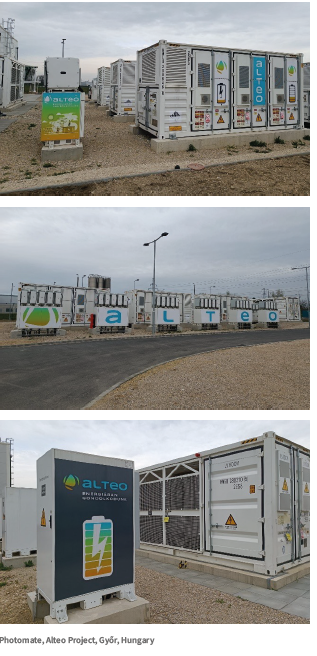
Last year, our team successfully delivered and commissioned a Battery Energy Storage System for Alteo Group—a Hungarian energy service and trading company. The project, located in Győr, Hungary, contributes directly to Alteo’s expanding virtual power plant (VPP) portfolio.
Project Overview
The Alteo Győr BESS project features a 9 MW / 18 MWh storage system produced by Huawei. The system is engineered to deliver frequency containment (FCR), automatic frequency restoration reserve (aFRR), and energy arbitrage, forming a critical part of Alteo’s dispatchable portfolio.
Main components of the installation include:
- 1 x STS-3000K-H1 & 1x STS-6000K-H1 smart transformer stations
- 9 x Luna2000-2.0MWh-2H1 Battery units
- 45 x Luna2000-200KTL-H0 Smart PCS
Integration and Implementation
The BESS was deployed alongside existing gas engine infrastructure and connected to a medium-voltage line shared with wind turbines.
The Huawei system’s high-precision control and rapid response time were crucial for meeting the stringent requirements of FCR (Frequency Containment Reserve) accreditation. From a certification standpoint, Huawei’s technology complies with all necessary regulatory and grid code standards, ensuring seamless integration into ancillary service markets.
Despite its size, the installation process was smooth and well-coordinated - this seamless integration showcases Photomate team’s capability to manage multi-technology environments, ensuring reliability and compliance with grid codes and safety standards.
As Sweden together with other European countries faces growing electricity price volatility and grid imbalances, driven by increased renewable energy and rising demand in the south, BESS have become a key part of the solution. With no direct subsidies available for utility-scale BESS, the market is still booming—thanks to strong business cases driven by frequency regulation, price arbitrage, and peak shaving.
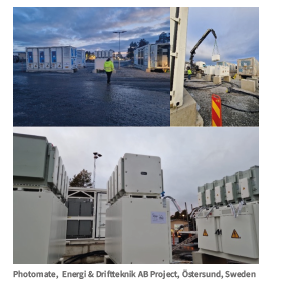
One of Photomate’s standout projects, realized in the country, is the Östersund-BESS tvätthallen, commissioned in 2024 by Energi & Driftteknik AB, a leading Swedish energy infrastructure developer. Located in Östersund, the 4MW/4MWh system supports a virtual power plant (VPP), delivering services such as FCR, aFRR, and energy arbitrage.
The solution includes:
- 1x STS-6000K-H1 smart transformer station
- 2x LUNA2000-2.0MWH-1H1 battery units
Despite harsh winter conditions with temperatures below -30°C, the Huawei BESS has delivered reliable and efficient performance, maintaining strong power output and quality.
Energi & Driftteknik partnered with Photomate for end-to-end support—from system design to installation and performance verification. The project faced several challenges, including:
- A limited 3MW grid connection, which will be expanded in the future
- Installation in extreme cold, requiring detailed planning and supervision
- Compliance with Swedish MV connection standards (IBH21), solved by building a cost-effective intermediary station
The customer chose Huawei BESS for its proven reliability, efficiency, and competitive cost, along with strong local service and support.
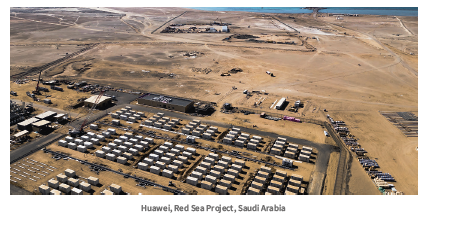
Huawei BESS in the Red Sea Project: Powering Saudi Arabia’s Sustainable Vision
As energy transition efforts expand beyond Europe, Huawei's Battery Energy Storage Systems (BESS) are also being deployed in landmark international initiatives. A notable example is the Red Sea Project in Saudi Arabia—one of the world’s most ambitious sustainable tourism and infrastructure developments. Designed to run entirely on renewable energy, this off-grid mega project relies on advanced storage technologies to guarantee 24/7 clean power supply across hundreds of islands, resorts, and infrastructure nodes.
The Red Sea Project’s integrated energy system includes more than 760,000 solar panels and a large-scale utility battery storage system with a total capacity of 1.3 GWh—the largest off-grid BESS installation globally at the time of commissioning.
Project Overview
Huawei played a direct and critical role in delivering smart energy storage technologies and worked closely with the system integrator SEPCOIII to design and implement the massive energy system. The BESS solution ensures uninterrupted, emission-free power throughout day and night, supporting everything from desalination plants and hotels to airport and transportation services.
Key project highlights include:
• Deployment of LUNA2000 series battery containers across multiple distributed nodes
• Integration with Huawei’s smart Power Conversion System (PCS) for seamless control and high-efficiency conversion
• Full compatibility with the Red Sea’s hybrid renewable infrastructure—including solar PV, smart grids, and microgrid control systems
Huawei is particularly proud of its contribution to this flagship project, which represents a milestone for large-scale off-grid energy storage and showcases the company’s leading role in enabling clean, reliable power for complex infrastructure developments.
ADDRESSING THE FLEXIBILITY GAP: BESS AS A STRATEGIC SOLUTION FOR KAZAKHSTAN
One of the most pressing challenges in Kazakhstan’s power sector today is the shortage of flexible, or “regulating,” capacity—a situation that becomes increasingly critical as the share of renewable energy grows. According to Kazakhstan’s national grid operator, KEGOC, the situation in Kazakhstan's Unified Power System is becoming increasingly challenging due to the expected integration of 16 GW of renewable energy capacity in the coming years. This includes 3.3 GW under existing contracts, 6.7 GW planned through auction tenders for 2023-2027, and 6 GW from major projects with foreign investors.
The approved Forecast Balance of Electricity and Capacity for 2023-2029 projects a shortage of regulating capacity reaching 1,364 MW by 2025. Currently, the power system already operates under monthly deficit conditions, necessitating the implementation of consumer restrictions, that makes balancing and grid stability more urgent than ever.
Many of Kazakhstan’s thermal power plants, particularly older coal-fired, lack the flexibility to ramp up or down quickly. According to KEGOC, the country is experiencing a deficit of maneuverable capacity, especially in the southern regions and during peak hours, such as mornings and evenings.
The variable nature of solar and wind power, which depend heavily on weather conditions, presents additional challenges. These sources often generate electricity in unpredictable patterns, creating sharp fluctuations in supply that Kazakhstan’s current energy infrastructure struggles to manage effectively.
Recognizing this, KEGOC and the Ministry of Energy are actively exploring BESS as a core solution. Battery Energy Storage Systems can store excess renewable power during periods of high generation—such as sunny afternoons or windy nights—and release it during peak demand, helping to smooth out imbalances and strengthen the grid.
Complementary Measures and Smart Grid Integration
In addition to BESS, Kazakhstan is also considering the development of gas-fired power plants and hydropower, both of which offer high flexibility and can play a valuable role in balancing variable renewable generation.
KEGOC is rolling out SCADA/EMS digital control systems and plans to implement predictive algorithms to better forecast renewable output and manage energy flows in real time. These upgrades are part of a broader move toward smart grid infrastructure, which will be essential as the share of renewables increases.
Risks of Inaction
Without sufficient regulating capacity, Kazakhstan risks facing a range of system-level issues, including:
- Load shedding or consumer outages, including for industrial users, due to instability in supply-demand balance
- Increased dependence on electricity imports from Russia, Kyrgyzstan, and Uzbekistan during peak stress periods
- Barriers to further renewable energy deployment, as the system may not be able to accommodate additional variable capacity without stability concerns
National Vision: Flexibility as a Cornerstone of Energy Transition
As Kazakhstan prepares for a major shift toward renewable energy, flexibility is emerging as a critical requirement—and Battery Energy Storage Systems (BESS) are increasingly viewed as a key enabler for stabilizing the grid and supporting future deployment.
KEGOC, Kazakhstan’s national grid operator, is taking the lead in setting clear technical and operational rules for new renewable energy projects. These rules are designed to make sure that clean energy projects also support the reliability and safety of the overall electricity system.
Both KEGOC and the government acknowledge that without new flexible resources and energy storage, the growth of renewables may become a limiting factor for system reliability. In its recent reports from 2023–2024, KEGOC emphasized that storage and flexible generation must be prioritized to enable sustainable renewable integration.
At the same time, the Ministry of Energy is introducing regulatory reforms that require energy storage for large-scale renewable projects (10 MW and above), aligning policy with the technical needs of the grid.
Kazakhstan’s energy strategy through 2035 sets a clear path forward, focused on grid infrastructure modernization, a transition to smart systems, and the implementation of pilot BESS projects. These steps will form the foundation of a more adaptive, secure, and clean energy future.
China raises RES share to 60% of total installed capacity
Batys Kaspiy Energo wins auction for 250 MW wind farm in Atyrau region
Ember: Renewables overtake coal in global power generation for the first time
Kazakhstan continues accepting applications for May RES auctions
Water-energy balance of the region discussed by ministers of four Central Asian countries
Just transition: leaving no one behind in the energy transformation
CAREC and Central Asian universities sign new memoranda on green skills development
Kazakhstan and UNECE discuss energy resilience and low-carbon technologies
100,000 jobs and a skills gap: how Central Asia is preparing for the renewables boom
No transition without transmission: How Central Asia is building its energy future
ADB to invest $5.5bn across 15 projects in Kazakhstan
17 agreements worth over $2.3 billion signed at the opening of RES 2026 EXPO in Astana
World Bank to invest $1bn in Central Asia's energy integration
Kazakhstan and China to launch a 500 MW wind farm in Karaganda region
Kazakhstan and Tajikistan move toward clean power deal over Rogun HPP
Regional Ecological Summit 2026 opens in Astana
Solar pumps and drip irrigation help Kyrgyz farmers cut costs amid rising energy prices
Hormuz closure failed to trigger coal comeback as solar and wind filled the gap
Astana set to launch RES 2026 EXPO and ink key international deals
Central Asian countries to discuss energy transition at RES 2026 in Astana