

International experience26.05.2025
The second life of organic waste in Germany


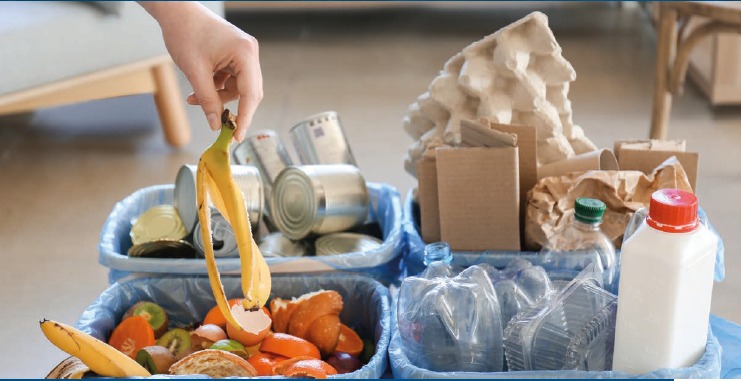

Ardak Zhakezhanova, Lead Expert of KazWaste (Kazakhstan Waste Management Association)

Sholpan Talgat, PR Manager at KazWaste (Kazakhstan Waste Management Association)
The German waste management model is one of the most efficient in the world. Its success is based on three key elements: separate collection, well-developed infrastructure and environmental education. But the main thing is not just rules, but a system of incentives. The strict legislation and high tariffs make recycling profitable, while irresponsible waste management is money-losing. This approach not only reduces the burden on nature, but also creates a culture of conscious consumption among citizens and businesses.
In German, organic waste is referred to by various terms: „Organik“, „Bioabfalle“, „biogene/biologische Abfalle", „Bio-/ Grungut".
A characteristic feature of food waste is its high humidity, which is why it has a significant weight.
High-quality organic waste is a prerequisite for efficient recycling. The properly sorted organic waste with a low content of impurities only can be used to produce high-quality compost suitable for agriculture and horticulture.
Separate collection of organic waste began in Germany back in 1985.
Mandatory requirements for separate waste collection have been in effect since January 1, 2015.
Legislative regulation of organic waste processing
Waste management in Germany is regulated by the regulatory requirements of the Federal Environmental Protection Agency (Umweltbundesamt), which establish rules for the collection, disposal and recycling of waste. These standards are aimed at ensuring environmentally sound waste management and efficient use with minimal impact on nature.
In Germany, the requirements for the composition and quality of organic waste compost are set out in the Organic Waste Ordinance (Bioabfallverordnung, BioAbfV). This regulation monitors the treatment, application and control of organic waste, especially with regard to its use in agriculture and horticulture. According to this Regulation, the maximum content of impurities, such as plastic or glass, in compost should not exceed 0.5% by weight of dry matter. Thisrequirement is aimed at ensuring high-quality compost and preventing soil contamination during its use.
Special regulation applies to organic waste containing materials of animal origin, such as eggs, milk, meat and bones. They are subject to the Law on the Removal of Animal By-products ("Tierische Nebenprodukte- Beseitigungsgesetz"), which ensures hygiene standards and prevents the spread of pests.
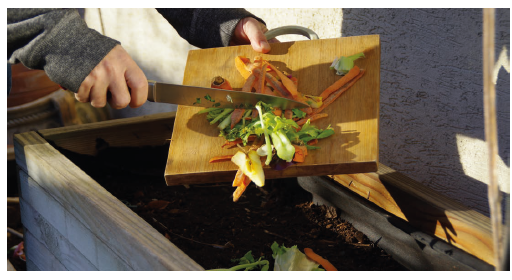
ORGANIC WASTE RECYCLING METHODS IN GERMAN
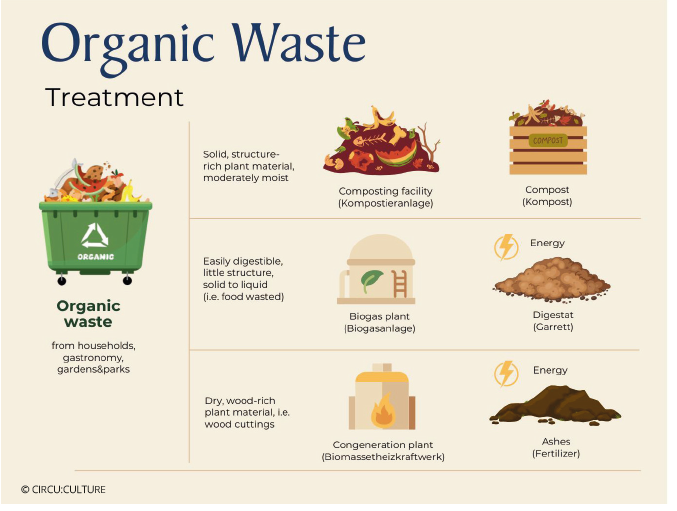
In Germany, organic waste is processed using various technologies that make it possible to efficiently dispose of raw materials and obtain valuable products.
The Cogeneration plants (Biomasseheizkraftwerk) recycle organic waste, converting it into energy and ash, which can be used as fertilizer.
Biogas plants (Biogasanlage) produce biogas and fermented residues (Garrest) suitable for agriculture.
The composting (Kompostieranlage) allows turning organic waste into high-quality compost that enriches the soil.
The organic waste is classified according to its structure and moisture level:
Solid, structure-rich plant material, moderately moist.
Easily digestable, little structure, solid to liquid (i. e. food wastes).
Dry, wood-rich plant material, i.e. wood cuttings.
Thanks to these recycling methods, organic waste is converted into energy, fertilizers and useful resources, reducing the burden on the environment.
Bioconversion is the process of converting organic raw materials (plant and animal waste) into useful products or energy sources using biological processes and microorganisms. This method makes it possible to efficiently dispose of organic waste, minimizing its impact on the environment.
One of the most innovative examples of bioconversion is the use of Black Soldier Fly larvae. They recycle organic waste, turning it into high-protein feed for farm animals and fish. This approach not only reduces food waste, but also contributes to the development of sustainable feed production systems.
The biogas industry in Germany deserves special attention. Biogas plants in this country convert organic waste into clean energy, heat and fertilizers, providing not only efficient processing, but also a significant reduction in greenhouse gas emissions. This plays an important role in the global fight against climate change.
Germany is actively improving the legislative requirements for the development of the biogas industry. According to the amendments to the Law on Renewable Energy Sources, by 2030, 80% of the energy consumed should come from renewable sources. In particular, the capacity of biogas plants is planned to be increased from 5,600 MW in 2024 to 8,000 MW. These ambitious goals are supported by significant investments and government programs, which strengthen the country's environmental sustainability.
Germany's experience in processing organic waste is an excellent example for Kazakhstan.
Kazakhstan has a huge potential for the processing of organic waste and the development of the biogas industry due to the developed agriculture, which annually produces significant amounts of organic waste: animal wastes, crop residues and processing of agricultural products.
The issues of reducing the volume of organic waste disposal and the introduction of effective methods of their processing are also one of the urgent issues for Kazakhstan.
With the use of advanced recycling technologies, the creation of efficient infrastructure and the introduction of government support mechanisms, the recycling of organic waste can take a key place. This will reduce the load on landfills, reduce greenhouse gas emissions and improve the environmental situation in the country.
China raises RES share to 60% of total installed capacity
Batys Kaspiy Energo wins auction for 250 MW wind farm in Atyrau region
Ember: Renewables overtake coal in global power generation for the first time
Kazakhstan continues accepting applications for May RES auctions
Water-energy balance of the region discussed by ministers of four Central Asian countries
Just transition: leaving no one behind in the energy transformation
CAREC and Central Asian universities sign new memoranda on green skills development
Kazakhstan and UNECE discuss energy resilience and low-carbon technologies
100,000 jobs and a skills gap: how Central Asia is preparing for the renewables boom
No transition without transmission: How Central Asia is building its energy future
ADB to invest $5.5bn across 15 projects in Kazakhstan
17 agreements worth over $2.3 billion signed at the opening of RES 2026 EXPO in Astana
World Bank to invest $1bn in Central Asia's energy integration
Kazakhstan and China to launch a 500 MW wind farm in Karaganda region
Kazakhstan and Tajikistan move toward clean power deal over Rogun HPP
Regional Ecological Summit 2026 opens in Astana
Solar pumps and drip irrigation help Kyrgyz farmers cut costs amid rising energy prices
Hormuz closure failed to trigger coal comeback as solar and wind filled the gap
Astana set to launch RES 2026 EXPO and ink key international deals
Central Asian countries to discuss energy transition at RES 2026 in Astana