

News of Central Asia03.04.2026
Uzbekistan launches clean hydrogen initiative for energy transition


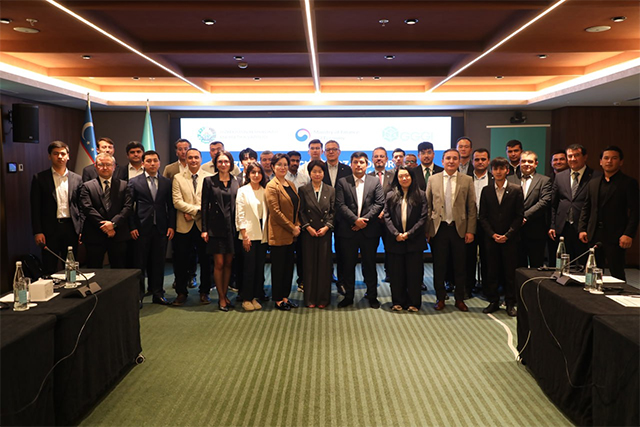
QAZAQ GREEN. On 2 April 2026, the Global Green Growth Institute (GGGI), in collaboration with Uzbekistan’s Ministry of Energy, launched a new project aimed at advancing hydrogen energy in the country, UzDaily.com reported.
The initiative, Clean Hydrogen for Uzbekistan, establishes an ecosystem and regulatory framework for the adoption of clean hydrogen technologies. The project is implemented in partnership with the Ministry of Energy and financed by the Korea Green New Deal Trust Fund (KGNDTF) under South Korea’s Ministry of Economy and Finance.
Uzbekistan is taking active steps to transform its energy sector. The country is implementing the 2019–2030 Green Economy Transition Strategy and national initiatives to expand renewable energy usage and diversify the energy mix.
According to the Nationally Determined Contributions document (NDC 3.0), adopted in October 2025, renewables are expected to account for 54% of electricity generation by 2030. Pilot projects are already underway to assess hydrogen energy potential and implement relevant policy measures.
Clean hydrogen produces minimal or zero greenhouse gas emissions over its lifecycle. It enables energy storage and transport while reducing carbon footprints, making it a strategic resource for industrial decarbonization and enhancing energy system flexibility.
The Clean Hydrogen for Uzbekistan project will focus on three main areas: strengthening the legal and regulatory framework through a national hydrogen roadmap, upskilling public sector specialists via workshops and study tours, and identifying investment opportunities to develop a domestic clean hydrogen market.
During the launch event, participants discussed the project’s potential in the context of national priorities. A roundtable provided an open forum on energy transformation and the creation of export capacities. Attendees included representatives from the ministries of energy, economy and finance, transport, the National Committee on Ecology and Climate Change, the State Environmental Expertise Center, as well as the European Bank for Reconstruction and Development and other international organizations.
The Clean Hydrogen for Uzbekistan initiative is viewed as a key step toward a low-carbon future, supporting decarbonization of heavy industry and opening new industrial opportunities for the country.
Kazakhstan cancels 50 MW solar auction due to lack of participants
Tokayev ratifies Green Energy Corridor Agreement with Azerbaijan and Uzbekistan
China raises RES share to 60% of total installed capacity
Batys Kaspiy Energo wins auction for 250 MW wind farm in Atyrau region
Ember: Renewables overtake coal in global power generation for the first time
Kazakhstan continues accepting applications for May RES auctions
Water-energy balance of the region discussed by ministers of four Central Asian countries
Just transition: leaving no one behind in the energy transformation
CAREC and Central Asian universities sign new memoranda on green skills development
Kazakhstan and UNECE discuss energy resilience and low-carbon technologies
100,000 jobs and a skills gap: how Central Asia is preparing for the renewables boom
No transition without transmission: How Central Asia is building its energy future
ADB to invest $5.5bn across 15 projects in Kazakhstan
17 agreements worth over $2.3 billion signed at the opening of RES 2026 EXPO in Astana
World Bank to invest $1bn in Central Asia's energy integration
Kazakhstan and China to launch a 500 MW wind farm in Karaganda region
Kazakhstan and Tajikistan move toward clean power deal over Rogun HPP
Regional Ecological Summit 2026 opens in Astana
Solar pumps and drip irrigation help Kyrgyz farmers cut costs amid rising energy prices
Hormuz closure failed to trigger coal comeback as solar and wind filled the gap