


News of Central Asia01.08.2022
Kazakhstan exceeds WHO air pollution limit threefold


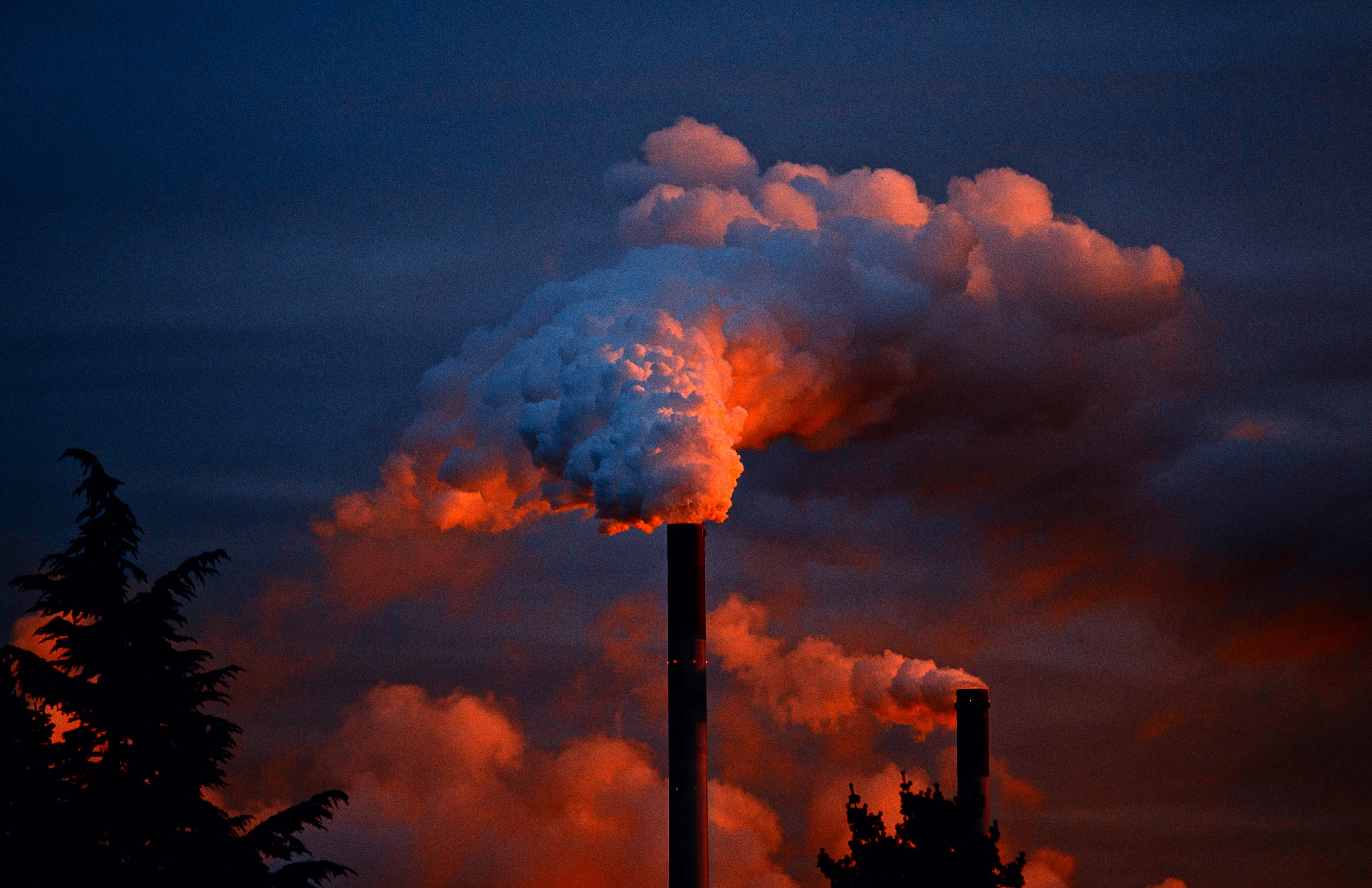
QAZAQ GREEN. Contaminated air poses a serious threat to the health of residents in Kazakhstan's major cities. Air pollution causes more than 10,000 premature deaths a year in Kazakhstan, according to a 2022 World Bank study, Energyprom reports.
Smog not only worsens the health of citizens, but also causes economic losses from premature deaths, illness and lost productivity. In 2019, polluted air cost Kazakhstan's economy $10.5 billion. Worse, the problem is spreading across Central Asia, where none of the five countries has air that meets WHO safety standards.
Air quality is affected by the fine particulate matter PM2.5, this air pollutant is a product of burning substances, it is found in car exhaust fumes, emitted during the burning of wood and coal, and during forest fires.
WHO recommends that concentrations of these particles in the air should not exceed an average of 10 micrograms per cubic metre. However, air pollution in Central Asian countries significantly exceeds this limit.
In 2021, Tajikistan ranked first in terms of air pollution in Central Asia. And fourth in the world, according to IQAir, a global air quality monitoring platform. In the same year, Kyrgyzstan, Uzbekistan and Kazakhstan exceeded WHO standards by five, four and three times, respectively. The least polluted air was in Turkmenistan, where annual particle concentrations exceeded the norm by a factor of two.
In the Tajik capital, Dushanbe, there are at least 24 plants that generate heat by burning coal, Cabar.Asia reports. Coal is also used by more than 400 other industrial enterprises, which fill the grey and stuffy "cloud" over the city. The constant smog makes the city look faded. The operation of the cement factory, which regularly drops dust on the capital, also contributes to this dullness.
For the entire year 2021, there was not a single day in Dushanbe with 'good' air on the AQI scale (data are missing for two days: May 22 and 23). However, there were four days during the year when the air was "dangerous" for health. At such times, everyone should avoid all outdoor activities, the US Environmental Protection Agency recommends.
Nearly a quarter of all days in 2021, the air in Dushanbe was "satisfactory" and posed a danger only to people sensitive to polluted air. However, the rest of the time - that is, three out of four days a year - the air was bad, with pollution levels ranging from "unhealthy for sensitive groups" to "dangerous".
The rest of the Central Asian countries were distributed in the global ranking for 2021 as follows:
- Kyrgyzstan - 7th place;
- Uzbekistan in 12th place;
- Kazakhstan - 23rd place;
- Turkmenistan in 44th place.
All countries have worsened their performance compared to 2020.
Although the air problem occurs throughout the year, it becomes more acute in autumn and winter. During this time, cities drown in smog due to the inclusion of coal-fired heating systems, as well as car exhaust fumes.
The difference is most obvious in Almaty and Bishkek. During winter, these cities shared the highest AQI value in the region, 142. With warming there is a break, and already in November smog returns with an unhealthy value for sensitive groups.
Almaty and Bishkek also show the biggest difference in air pollution in winter compared to summer months, when the air is four and three times cleaner and better respectively. During the warm period of 2021, the air was on average "good" - the AQI did not exceed 50.
In Tashkent (Uzbekistan) and Dushanbe (Tajikistan), the concentrations differed from the Kyrgyz and Kazakh dynamics. Here, the air was bad for almost the whole year, becoming worse in winter by only 17% and 9% compared to summer. This is due to additional sources of pollution, such as dust storms, industrial plants or incinerators, which produce pollutants regardless of the time of year.
In Tashkent, the only exceptions were three months, April, May and June, when the air was satisfactory with the following AQI values: 93, 81 and 92, respectively. In Dushanbe it was March and April with indices of 100 and 86 respectively. But enough for these indices to rise to 101, and the air already becomes "unhealthy for sensitive groups".
Looking at the annual average AQI, Tashkent and Dushanbe were the only two of the five capitals where the air was "unhealthy for sensitive groups". This means that active children and adults, as well as people with respiratory diseases, should limit their long-term outdoor exposure at all times.
In terms of the annual average AQI, Tashkent and Dushanbe were the only two of the five capitals where the air was "unhealthy for sensitive groups". This means that active children and adults, as well as people with respiratory diseases, should limit their long-term outdoor exposure at all times.
As for the capital of Turkmenistan, Ashgabat, it had the lowest AQI scores of all five countries: 69 on average for the year. The AQI score is considered "satisfactory".
German startup develops panel to produce hydrogen directly from sunlight
Uzbeks' income from solar energy sales grows ninefold
Belarus sets 38.7 MW renewable energy quotas for 2026
Solar power turns China's 'sea of death' highway into green corridor
Israel to build its largest-ever solar power plant in the Negev desert
Solar pensions and wind dividends: how South Korea is turning renewables into a rural development tool
Kyrgyzstan announces tender for land plots for construction of six small hydropower plants
ADB to invest $70 billion in Asia's power grids and digital infrastructure
Kazakhstan and World Bank discuss energy integration in Central Asia
Construction of 500 MW wind power plant begins in Karaganda region
50 MW solar power plant auction winner determined in Kazakhstan's Southern Grid Zone
Rooftop solar panels: Kyrgyzstan prepares rules for households and businesses
Europe’s rising heat: Can renewables provide the solution?
Winner announced for 100 MW solar auction in Kazakhstan
Chinese company ready to invest $1 billion in solar and wind generation in Kyrgyzstan
Meta to invest in space solar energy and ultra-long-duration energy storage
Tokyo pushing plan for world’s biggest floating wind power farm
Kazakhstan cancels 50 MW solar auction due to lack of participants
Tokayev ratifies Green Energy Corridor Agreement with Azerbaijan and Uzbekistan
China raises RES share to 60% of total installed capacity