

News Kazakhstan03.06.2024
QazaqGreenFest: Kazakhstan citizens could be allowed to install solar panels on their homes


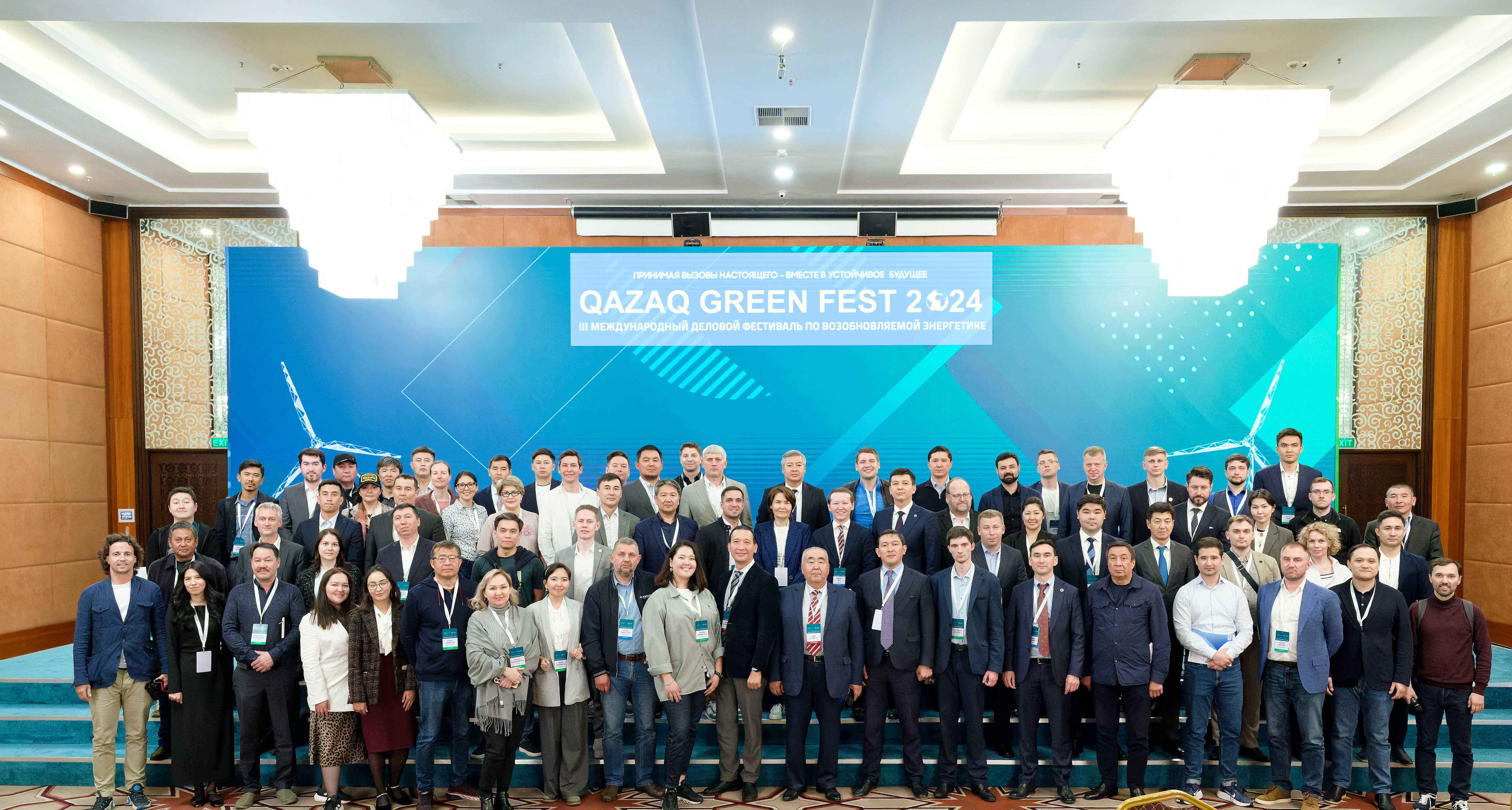
QAZAQ GREEN. Kazakhstan citizens could be allowed to install solar panels with a capacity of up to 200 kW on their homes. Moreover, they could sell electricity to the national grid. However, it is about a limited surplus, reports "24KZ".
The development of renewable energy sources in the country was discussed at the очередном III Qazaq Green Fest festival. Kazakhstan is still firmly set on generating electricity using RES. By 2030, its share will be 15% of the total energy generation in the country.
Qazaq Green Fest has not been the first year to become a unique platform where the interests of all energy specialists of the country, both state and private, as well as investors, intersect. The festival has a "green" name for a reason, as Kazakhstan, like the whole civilized world, is taking a course on the development of RES. In simpler terms, we intend to generate more and more electricity from the sun, wind and water. Of course, it is necessary to put the electricity industry in order so that the system can take the volume, the participants noted.
"The development of the power industry includes not only generation, but also infrastructure, storage systems and other mechanisms. This includes the creation of a balancing market, the presence of a single buyer and other key components. Like a large ship, it will not be able to sail further," said Nurglan Kapenov, Chairman of the Board of Directors of the Qazaq Green RES Association.
Kazakhstan has rich renewable energy resources. To unlock this potential and ensure the energy transition, competent financing is necessary, say the participants of the QazaqGreenFest. Local power engineers are already developing a whole pool of projects for the development of power grids with the active introduction of RES.
"Strengthening the power grids of the southern zone, uniting the western zone with the UES of Kazakhstan, building DC lines from north to south, this is strengthening the power supply of Astana. The implementation of all these projects will allow us to integrate the predicted volumes of RES, manage sub-modes and increase reliability," noted Almaz Saukhimov, Managing Director for Development of the Unified Power System of KEGOC JSC.
Today, the largest amount of RES is concentrated in the south of the country, the speakers noted. More than 100 RES facilities have already been introduced in the country, their share of generation is still fluctuating around 5% of the total generation, while in just 6 years this indicator should be 15%.
Israel to build its largest-ever solar power plant in the Negev desert
Solar pensions and wind dividends: how South Korea is turning renewables into a rural development tool
Kyrgyzstan announces tender for land plots for construction of six small hydropower plants
ADB to invest $70 billion in Asia's power grids and digital infrastructure
Kazakhstan and World Bank discuss energy integration in Central Asia
Construction of 500 MW wind power plant begins in Karaganda region
50 MW solar power plant auction winner determined in Kazakhstan's Southern Grid Zone
Rooftop solar panels: Kyrgyzstan prepares rules for households and businesses
Europe’s rising heat: Can renewables provide the solution?
Winner announced for 100 MW solar auction in Kazakhstan
Chinese company ready to invest $1 billion in solar and wind generation in Kyrgyzstan
Meta to invest in space solar energy and ultra-long-duration energy storage
Tokyo pushing plan for world’s biggest floating wind power farm
Kazakhstan cancels 50 MW solar auction due to lack of participants
Tokayev ratifies Green Energy Corridor Agreement with Azerbaijan and Uzbekistan
China raises RES share to 60% of total installed capacity
Batys Kaspiy Energo wins auction for 250 MW wind farm in Atyrau region
Ember: Renewables overtake coal in global power generation for the first time
Kazakhstan continues accepting applications for May RES auctions
Water-energy balance of the region discussed by ministers of four Central Asian countries