

News Kazakhstan03.06.2024
QazaqGreenFest: Kazakhstan to fully achieve carbon neutrality by 2060


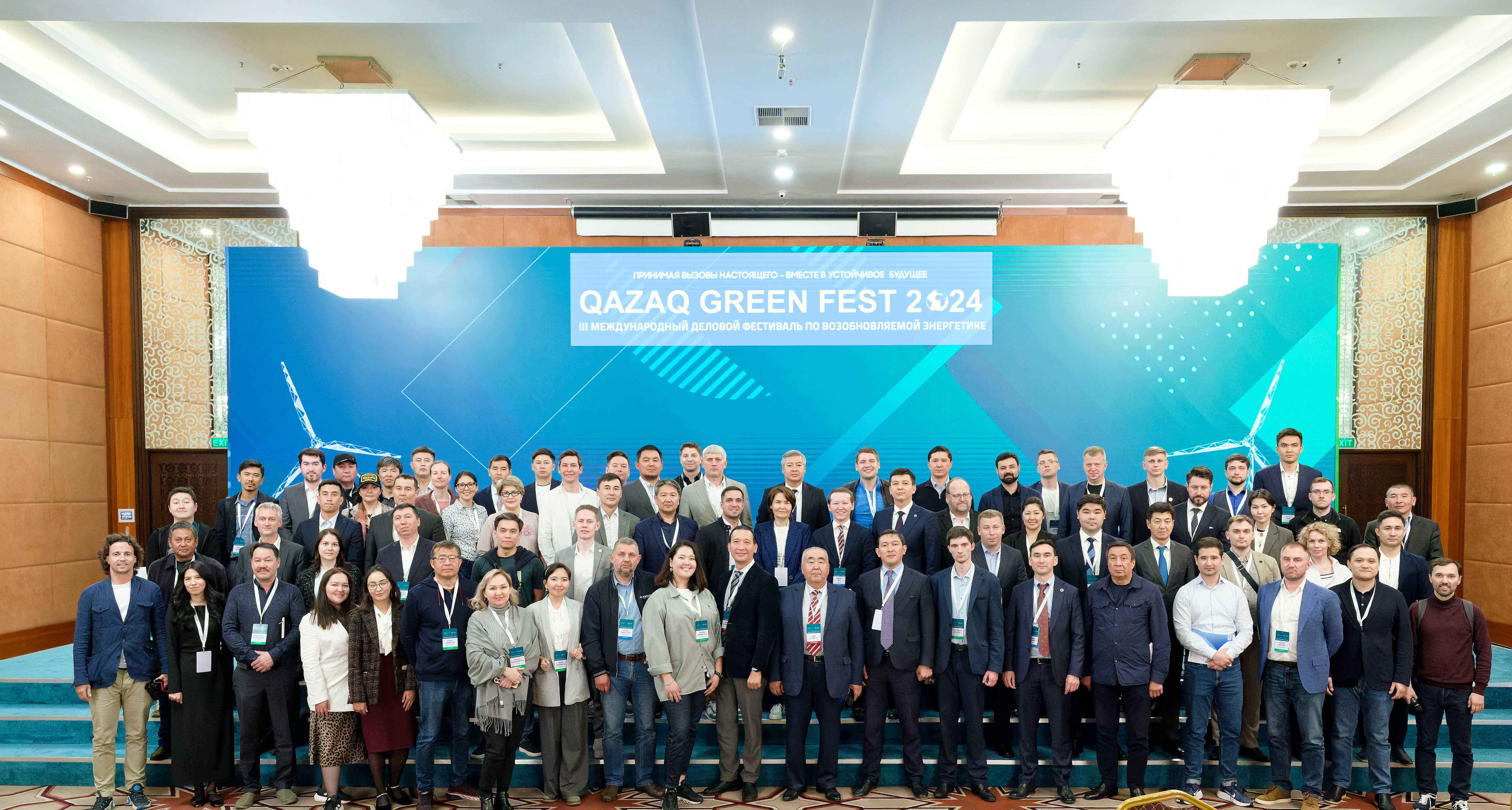
QAZAQ GREEN. 6% of the energy produced in the country comes from renewable sources, reports 24kz.
The government intends to increase the share of alternative energy to 15% by 2030. This was announced at the III International Business Festival ‘Qazaq Green Fest 2024’. Experts gathered at this large-scale event discussed the intricacies of the transition to new technologies. Specialists noted that the trend of green energy utilization is developing dynamically in the country.
The International Business Festival Qazaq Green Fest, dedicated to green energy, has become a unique platform that annually brings together industry specialists. The event was attended by qualified specialists from both state and many public organizations striving for the green economy of the world, along with our country.
"Today, the renewable energy sector faces important tasks. That is, it is envisaged to ensure the country's energy security by introducing new generating capacities. Therefore, we consider alternative energy to be the most effective tool for achieving carbon neutrality," said Nurglan Kapenov, Chairman of the Board of Directors of the Qazaq Green RES Association.
Kazakhstan is one of the few countries that has ratified the Paris Agreement. And it is the first country in the Central Asian region to adopt a carbon neutrality strategy by 2060. Therefore, the development of wind and solar energy is important for the country.
"According to interstate agreements, 3-4 gigawatt projects will be implemented. Then, thanks to the projects that we are developing on the basis of auctions, starting from the 18th year, this is the question of achieving 15% by 2030, set by the Head of State, since this is the first environmental issue for the whole world, therefore we are going to it," - said Vice Minister of Energy of the Republic of Kazakhstan Sungat Yesimkhanov.
Most companies producing renewable energy sources are concentrated in the southern regions of the country. In general, 148 alternative energy facilities are currently operating in the republic.
"Our country intends to fully achieve carbon neutrality by 2060. For this, ways of intensive development of "green" energy are being considered. Now there is progress in the industry. The implementation of the proposed new projects will improve the quality of the environment and prevent challenges," - noted the Chairman of the Board of Samruk-Energy JSC Kairat Maksutov.
The production of an energy source from the sun, wind and water is a requirement of the time. At the same time, the Kazakh country is rich in all the raw materials necessary for green energy. Therefore, alternative energy has a great future.
Kazakhstan cancels 50 MW solar auction due to lack of participants
Tokayev ratifies Green Energy Corridor Agreement with Azerbaijan and Uzbekistan
China raises RES share to 60% of total installed capacity
Batys Kaspiy Energo wins auction for 250 MW wind farm in Atyrau region
Ember: Renewables overtake coal in global power generation for the first time
Kazakhstan continues accepting applications for May RES auctions
Water-energy balance of the region discussed by ministers of four Central Asian countries
Just transition: leaving no one behind in the energy transformation
CAREC and Central Asian universities sign new memoranda on green skills development
Kazakhstan and UNECE discuss energy resilience and low-carbon technologies
100,000 jobs and a skills gap: how Central Asia is preparing for the renewables boom
No transition without transmission: How Central Asia is building its energy future
ADB to invest $5.5bn across 15 projects in Kazakhstan
17 agreements worth over $2.3 billion signed at the opening of RES 2026 EXPO in Astana
World Bank to invest $1bn in Central Asia's energy integration
Kazakhstan and China to launch a 500 MW wind farm in Karaganda region
Kazakhstan and Tajikistan move toward clean power deal over Rogun HPP
Regional Ecological Summit 2026 opens in Astana
Solar pumps and drip irrigation help Kyrgyz farmers cut costs amid rising energy prices
Hormuz closure failed to trigger coal comeback as solar and wind filled the gap