

Expert opinion08.12.2025
Saken Kalkamanov: "The challenge isn't energy versus environment - it's finding the right balance"


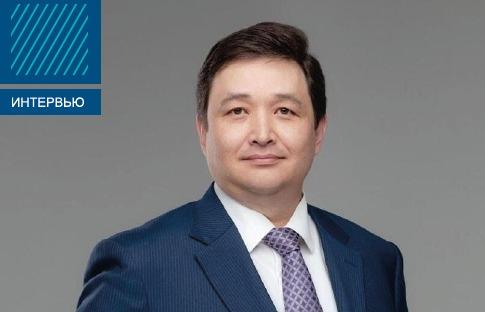
The International Green Technologies and Investment Projects Center (IGTIC) celebrates its seventh anniversary this year. Over this period, the organization has become a key platform for advancing the green agenda and fostering dialogue between science, business, and government. Today, the Center continues its work on implementing best available techniques (BAT), supporting cleantech startups, and expanding international cooperation. In this interview with Qazaq Green, Chairman of the Management Board of IGTIC Saken Kalkamanov discusses current priorities and directions of Kazakhstan's green transition.
– This year marks the 7th anniversary of the International Green Technologies and Investment Projects Center. What goals and objectives does the Center pursue? What has been achieved so far?
– The International Green Technologies and Investment Projects Center celebrated its seventh anniversary this year. During this period, it has become a key platform for advancing the green agenda and creating conditions for Kazakhstan's environmental transformation. Our mission is to facilitate the country's and the region's transition to sustainable development through promoting green technologies, developing the BAT system, and attracting investment in environmentally friendly projects.
The BAT Bureau plays a crucial role. Over recent years, 20 BAT reference documents have been prepared and published, covering sectors such as energy, cement, oil and gas, and metallurgy. These documents formed the foundation for a new format of environmental permits, where enterprises must not only comply with regulations but also implement BAT. This approach ensures genuine industrial modernization and reduced environmental impact.
In parallel, the Center actively develops international cooperation. We serve as the national coordinator for the Global Cleantech Innovation Programme (GCIP) in partnership with UNIDO and GEF, supporting clean technology development and innovation-driven startups in Kazakhstan. Additionally, IGTIC annually represents Kazakhstan at UN Climate Change Conferences (COP), where we promote national initiatives and showcase the country's progress in sustainable development and the green economy.
Another major area is the Green Bridge Partnership Programme, which brings together governments, businesses, research institutions, and investors to facilitate green technology transfer and joint projects. This platform has become a bridge between Europe and Asia, enabling broad international collaboration.
Over seven years, IGTIC has evolved into a strategic platform uniting science, business, and government in pursuit of a sustainable and environmentally responsible future.
– IGTIC is a participant in the Global Cleantech Innovation Programme. Could you tell us about this initiative?
– The Global Cleantech Innovation Programme (GCIP) is a global initiative implemented by the United Nations Industrial Development Organization (UNIDO) and the Global Environment Facility (GEF). Launched in 2011, it aims to transform the future through innovation in clean technologies. The program operates in 16 countries, bringing together entrepreneurs, governments, investors, and scientists to build a sustainable green economy. GCIP not only supports startups but also cultivates a new generation of cleantech pioneers, giving SMEs access to international accelerators, advanced knowledge, global investment, and strategic partnerships. Negotiations with UNIDO to launch GCIP Kazakhstan began in 2021. In 2022, with strong support from the Ministry of Ecology and Natural Resources, an agreement was signed to implement the program nationally. Since 2023, Kazakhstan has been an official GCIP participant. The program covers the full startup lifecycle, from idea to commercialization. Participants receive comprehensive project support, training from UNIDO experts and international partners – including organizations from the United States—on innovation, ecology, ESG entrepreneurship, business modeling, and international certification, as well as assistance in attracting funding. Each participant is mentored by experienced experts who oversee solution development and environmental impact assessment.
Over two years, GCIP Kazakhstan has received more than 200 applications and accelerated 46 startups. Several have reached international recognition—teams such as Ozen-M and Murat Beton Technology won awards at the Cleantech Days finals in Vienna and Istanbul. The results are tangible: more than 500,000 tons of CO₂-equivalent emissions have been reduced, and the participants’ combined economic impact exceeds USD 6 million. Companies like Science and Technology Water Center, KUB-Corporation, and FACEPLATE have demonstrated the highest growth.
Starting in 2026, we plan to scale GCIP Kazakhstan into a regional program, extending it to Central Asia to unite the region’s efforts in advancing cleantech solutions.
– The Center actively supports startups and innovation in cleantech. What technologies are emerging from Kazakhstan’s innovators? How mature are they? What are the main barriers to commercialization, and how can the Center help overcome them?
– Kazakh innovators are developing a broad range of cleantech solutions—from low-carbon materials and renewable energy to digital platforms and waste management systems. Promising areas include energy efficiency technologies, recycling of electronic and industrial waste, green building materials, water treatment, and biotechnology. Many of these solutions have already reached maturity and been piloted across various regions of Kazakhstan. Examples include Science and Technology Water Center with microalgae-based wastewater treatment, KUB-Corporation with an innovative wind generator, and FACEPLATE with a digital platform for energy-efficient construction. These projects are already showing economic returns and attracting investors. However, challenges remain—limited scaling finance, restricted market access, lack of international partnerships, and the need for regulatory support to speed up adoption. IGTIC’s role is crucial. Through GCIP, we accelerate startups, help them attract investors, and bring them to international platforms like Cleantech Days and COP. We also work on regulatory frameworks and partnerships with tech parks and universities. Our goal is to ensure that innovation leaves the lab and becomes a real driver of economic and environmental progress.
– Kazakhstan has committed under its Nationally Determined Contribution (NDC) to reduce greenhouse gas emissions by 15% by 2030 compared to 1990 levels. What progress has been made so far, and is this target achievable?
– Kazakhstan has made visible progress toward meeting its climate commitments. According to official data, emissions have decreased by 9.40% including the LULUCF sector and 11.36% excluding it, compared to 1990 levels. These results show positive momentum but also underline the need to intensify efforts in key sectors. With the current pace, achieving the –15% target by 2030 is realistic, but it requires systemic action—implementing BAT, expanding renewables, fostering green innovation, and improving regulation. With coordinated efforts from government, business, and the scientific community, Kazakhstan can fulfill its international commitments.
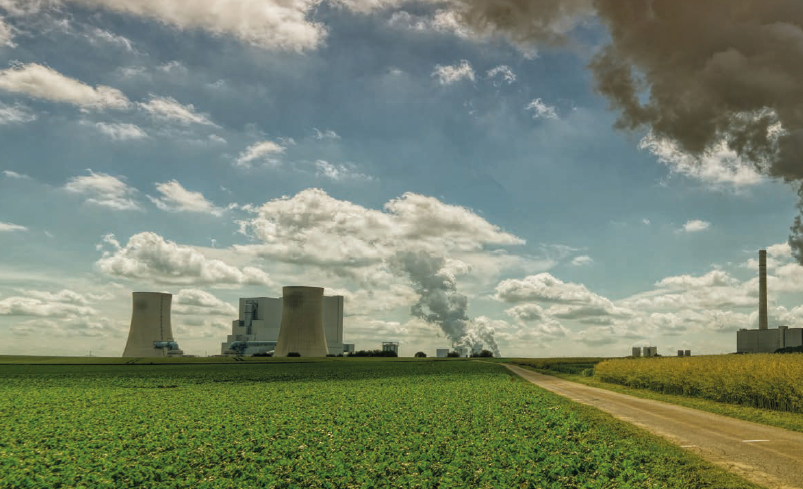
– The energy sector accounts for most emissions, largely from traditional power plants. Yet, new coal plants are being announced. Isn’t there a conflict between energy security and ecology?
– This is a critical question at the core of Kazakhstan’s current energy policy. Energy remains the main source of GHG emissions, and concerns about new coal projects are legitimate. On one hand, the country must ensure energy security and stable supply. On the other, it must honor its emission reduction commitments.
The conflict between coal-based generation and ecology is not inevitable—it arises when a strategic, integrated approach is missing. Kazakhstan’s situation, with simultaneous emission reduction goals and plans for new coal capacity, reflects systemic tension. Yet, part of the country’s power is still imported, and dependence on neighboring systems remains.
Today, around 66% of the generating fleet is critically worn out; 76% of thermal plants have operated for more than 45 years. This poses direct risks to energy security. Simply shutting them down without replacement is impossible.
Meanwhile, demand for electricity grows by about 2% annually, and renewables, despite rapid growth, cannot yet cover the base load due to intermittency. Coal remains cost-competitive and locally available.
Thus, building new coal plants is largely a forced measure—a response to immediate energy deficit risks. This is a short-term solution.
The issue is now being addressed jointly with the Ministry of Energy, the Ministry of Ecology and Natural Resources, and the Government. Projects under development use advanced technologies such as supercritical and ultra-supercritical steam pressure systems, representing BAT in coal generation. BAT should be viewed as a step toward a low-carbon future, not the end goal.
The long-term path is synergy. The key lies in strategic and technological discipline. New plants must strictly follow BAT principles, incorporating infrastructure for flue gas cleaning and ash management systems from the outset.
New coal capacity should function as part of an integrated strategy, balancing the intermittency of renewables rather than competing with them. Diversifying the energy mix through renewables, nuclear, and gas generation is the only long-term way to reduce coal dependency. Thus, the challenge is not to oppose energy and ecology but to balance their development. Kazakhstan must ensure reliability today while confidently moving toward a low-carbon future.
– Last year, the Government postponed the transition of 50 major polluters to BAT from 2025 to 2031. What caused this decision? Will these enterprises be ready by 2031?
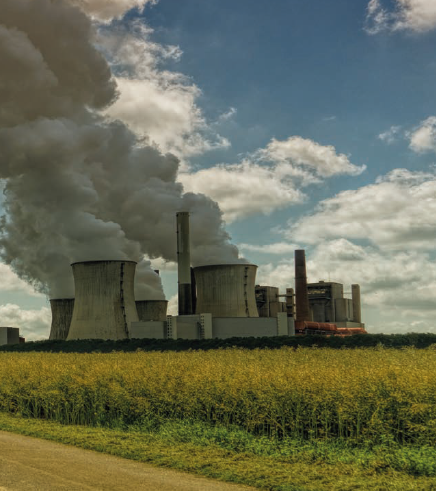
– I need to clarify something important about your question. The Government only extended the deadline for 22 essential service facilities in the heat and power sector. Other category I facilities remain within the original timeline.
The decision followed a comprehensive analysis and was driven by multiple interrelated factors. Audits revealed critical depreciation of key generation assets—averaging 66%.
Modernization is not about installing filters; it often requires full-scale technical re-equipment or new construction. The total investment needed for the 22 energy-producing facilities exceeds 3 trillion KZT. The six-year delay prevented a scenario where enterprises unable to complete upgrades would face forced shutdowns, threatening energy and economic security.
At the same time, Kazakhstan must maintain stable power supply, and it is impossible for all plants to halt simultaneously for modernization.
The extension gives all stakeholders—government, business, investors—time to build financing mechanisms and conduct industrial pilot tests to verify technology effectiveness under local conditions before large-scale rollout.
Will enterprises be ready by 2031? That depends on consistent joint work over the next six years. Progress so far allows for cautious optimism:
– Roadmaps for each of the 22 energy-producing facilities have been approved.
– Industrial pilot test planning is underway. Pilot projects for emission control systems are being prepared to provide real, not theoretical, cost and efficiency data.
Readiness by 2031 is achievable but not guaranteed. Success depends on strict adherence to these roadmaps and continuous state oversight. The delay reflects economic realities but must not become a pretext for endless postponement. In essence, the shift from 2025 to 2031 aims at a realistic, not merely formal, transition to BAT principles.
Israel to build its largest-ever solar power plant in the Negev desert
Solar pensions and wind dividends: how South Korea is turning renewables into a rural development tool
Kyrgyzstan announces tender for land plots for construction of six small hydropower plants
ADB to invest $70 billion in Asia's power grids and digital infrastructure
Kazakhstan and World Bank discuss energy integration in Central Asia
Construction of 500 MW wind power plant begins in Karaganda region
50 MW solar power plant auction winner determined in Kazakhstan's Southern Grid Zone
Rooftop solar panels: Kyrgyzstan prepares rules for households and businesses
Europe’s rising heat: Can renewables provide the solution?
Winner announced for 100 MW solar auction in Kazakhstan
Chinese company ready to invest $1 billion in solar and wind generation in Kyrgyzstan
Meta to invest in space solar energy and ultra-long-duration energy storage
Tokyo pushing plan for world’s biggest floating wind power farm
Kazakhstan cancels 50 MW solar auction due to lack of participants
Tokayev ratifies Green Energy Corridor Agreement with Azerbaijan and Uzbekistan
China raises RES share to 60% of total installed capacity
Batys Kaspiy Energo wins auction for 250 MW wind farm in Atyrau region
Ember: Renewables overtake coal in global power generation for the first time
Kazakhstan continues accepting applications for May RES auctions
Water-energy balance of the region discussed by ministers of four Central Asian countries