

Industry News02.09.2025
The Digital Green Bridge: From Foresight to a Global Platform for Climate Technology Transfer




By Saule Kozyke, Deputy Chair of the Board, International Center for Green Technologies and Investment Projects JSC, PhD in Economics
The global climate agenda demands not only ambitious commitments, but also effective mechanisms to turn them into reality. Kazakhstan, which first proposed the Green Bridge Partnership Programme (GBPP) in 2010, is once again placing this initiative at the forefront of regional and international dialogue.
At COP 29 in Baku, the GBPP received a new boost. The event featured the program's digital relaunch and closer integration into the UN system through ESCAP — the UN Economic and Social Commission for Asia and the Pacific.
In 2023–2024, Kazakhstan conducted the National Foresight on Green Technologies (GreenTech), which identified priority areas for sustainable development and highlighted where the country can position itself as a regional hub for climate innovation and technology transfer.
Open innovation mechanisms — including technology exchange, partnerships with international organizations, and the adaptation of global knowledge to national priorities — play a central role in the updated GBPP model. Kazakhstan is committed to engaging all elements of the innovation ecosystem: government, business, academia, and international institutions.
President Kassym-Jomart Tokayev reaffirmed this commitment at the Abu Dhabi Sustainability Week summit, where he emphasized the importance of international cooperation and outlined three guiding principles for Kazakhstan's technological agenda:
"First, ensuring that green financing becomes far more accessible. Second, expanding international cooperation in technology transfer, technical support, and scientific research. Third, fostering synergies between climate priorities, economic technology transfer, aligning the efforts of government, science, and business.
GLOBAL CONTEXT AND CHALLENGES
The global market for green technologies is expanding at an impressive pace, with annual growth projected at 22-24% between 2025 and 2032 — far outpacing the global economy. According to Fortune Business Insights, the GreenTech market was valued at $17.2 billion in 2023 and could reach $105 billion by 2032.
Investment trends are equally striking: PwC reports that startups in energy technology have attracted nearly 35% of all climate-related financing. Meanwhile, developing countries will require around $2.4 trillion annually through 2030 to adapt to climate challenges. Currently, the most advanced green technology ecosystems are concentrated in North America and Europe (44% and 40% of the world's largest innovation clusters, respectively), with hubs in Silicon Valley, Tel Aviv, Stockholm, London and Los Angeles. This underlines the need to strengthen the role of Asia-Pacific countries, including Kazakhstan in the global green technology market.
KAZAKHSTAN'S POSITION IN GLOBAL INDICES
Kazakhstan's performance in international rankings reflects both progress and persistent challenges. In 2024, the country ranked 78th out of 133 in the Global Innovation Index (GII) and 72nd out of 180 in the Environmental Performance Index (EPI), with a score of 47.8. Within the Asia-Pacific region, Kazakhstan sits in the middle tier, trailing behind innovation leaders such as Singapore, South Korea, Japan, China, India and Iran.
The GII evaluates countries across 81 indicators grouped into innovation inputs and outputs. Kazakhstan performs well in areas such as e-government, patent activity and the creative economy. However, underinvestment in the green economy, scientific research and infrastructure continues to hinder the sector's rapid development.
The EPI shows that Kazakhstan has maintained relative stability in ecosystems and biodiversity, but still struggles with air quality, waste management and reducing greenhouse gas emissions.
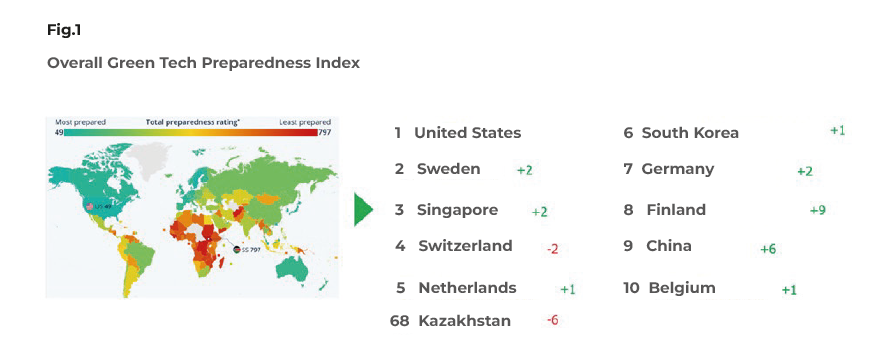
According to the UN Conference on Trade and Development (UNCTAD), the countries most prepared for the green transition are the United States, Sweden, Singapore, Switzerland and the Netherlands. Kazakhstan, by comparison, ranks 68th in terms of readiness to adopt, adapt and deploy green technologies.
It should be noted that the current state of innovation and technological development in the industry is constrained by several factors:
- a low share of R&D expenditure on environmental protection — only 2.7% of total R&D spending;
- a marginal share of investment in the industry's fixed capital — 1.6% of total investment in the country;
- a very small proportion of environmentally friendly products in total output — just 0.2%;
- a low level of green technology adoption among major industrial polluters, with only 141 enterprises (5.5%) out of 2,554 having introduced environmentally friendly technologies;
- a limited number of green jobs — accounting for just 1.3% of total employment nationwide.
At the same time, Kazakhstan possesses significant scientific and technical potential, with 2,531 green patents and a pool of qualified specialists, yet the level of innovative activity among enterprises remains very low - around 0.3%.
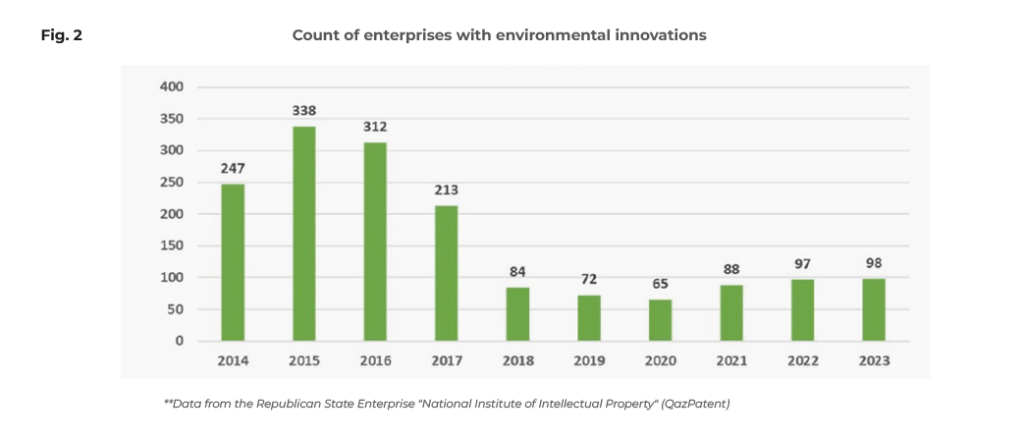
Taken together, Kazakhstan's position in global rankings and these indicators suggest that, while the country possesses the necessary scientific and technical capacity and skilled human resources, it still requires systematic improvements in infrastructure, legislation, and mechanisms to support the adoption of green technologies.
SYSTEMIC CHALLENGES FOR KAZAKHSTAN IN GREEN TECHNOLOGIES
Despite progress in innovation and environmental protection, Kazakhstan continues to face systemic barriers that limit the effective transfer and deployment of green technologies:
- Technological dependence and early-stage readiness: Around 70% of technologies are imported, and many domestic projects remain at an early development stage, creating risks for localisation and commercialisation.
- Insufficient funding and incentives: R&D spending is low (2.7%), access to venture capital is limited, and there is a shortage of instruments to support innovation deployment.
- Weak science-market linkage: A large share of research remains in laboratories without reaching the market. Accelerators, technology parks and demonstration platforms are underdeveloped.
- Limited integration into global networks: Kazakhstani institutions and companies participate insufficiently in international innovation platforms, restricting knowledge exchange and access to advanced solutions.
- Low share of green products and jobs: Environmentally friendly products make up just 0.2% of total output, and green jobs account for 1.3% of total employment. Only 5.5% of large enterprises have adopted clean technologies.
- Gaps in legislation and infrastructure: Incentives for innovation are weak, and there is a lack of demonstration centres and commercialisation support mechanisms.
GREENTECH FORESIGHT OUTCOMES
In 2023, Kazakhstan conducted its first large-scale technological foresight on green technologies. The initiative was organised by QazInnovations JSC in cooperation with the Ministry of Ecology and Natural Resources of the Republic of Kazakhstan. The foresight identified priority areas for technological development and proposed legislative measures to stimulate innovation in the green sector.
The purpose of the GreenTech foresight is to identify priority technologies, niches, products, and services whose development will help reduce carbon emissions and support the country's sustainable development.
The analysis focused on seven priority areas: energy efficiency, renewable energy, waste management, water management, green construction and utilities, clean air and green spaces and sustainable transport.
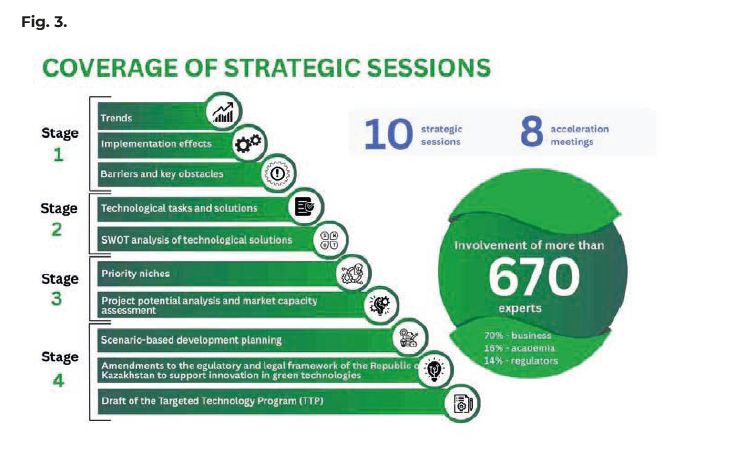
More than 670 experts from academia, business, government agencies, and international organisations took part in the study, and over 18 strategic sessions were held, making it the most comprehensive sectoral dialogue in Kazakhstan in recent years.
The GreenTech technology foresight was carried out in four stages:
• Identification of global trends, barriers, and key challenges in the adoption of green technologies relevant to Kazakhstan.
• Definition of technological tasks and solutions, supported by SWOT analysis and scenario planning for the development of GreenTech sectors.
• Identification of priority niches and promising products, along with an assessment of market potential for each area.
• Collection of expert recommendations and formulation of a legislative package to stimulate innovation across seven sub-sectors.
Results: More than 30% of the required technologies are already available and can be introduced through transfer and scaling (for example, solar panels with an efficiency above 22%, wind turbines up to 5 MW, drip irrigation and precision farming systems, pyrolysis technologies).
The foresight shifted the emphasis from inventing new solutions to creating conditions for transfer and large-scale implementation, paving the way for Kazakhstan to become a regional hub for green technologies in the Asia-Pacific region.
Global GreenTech megatrends:
• Carbon-neutral and climate technologies – advancement of CO₂ capture, utilisation, and storage (CCUS) solutions, hydrogen energy, and new types of renewable energy.
• Convergent climate technologies (NBIC) – integration of nanotechnology, biotechnology, information technology, and cognitive sciences.
• Digitalisation and smart management systems – Smart Grid, Big Data, and artificial intelligence for monitoring and optimising energy use and natural resources.
• Circular economy and waste management – transition from a linear to a circular model through recycling, reuse, and zero-waste solutions.
• Sustainable water use – technologies for purification, reuse, and reduced water consumption in production processes.
• Transport electrification and alternative fuels – mass deployment of electric vehicles, expansion of charging infrastructure, and production of biofuels and hydrogen fuels.
• Expansion of GreenTech investment and venture ecosystems – growth of the global start-up market, support for technology transfer, and climate innovation.
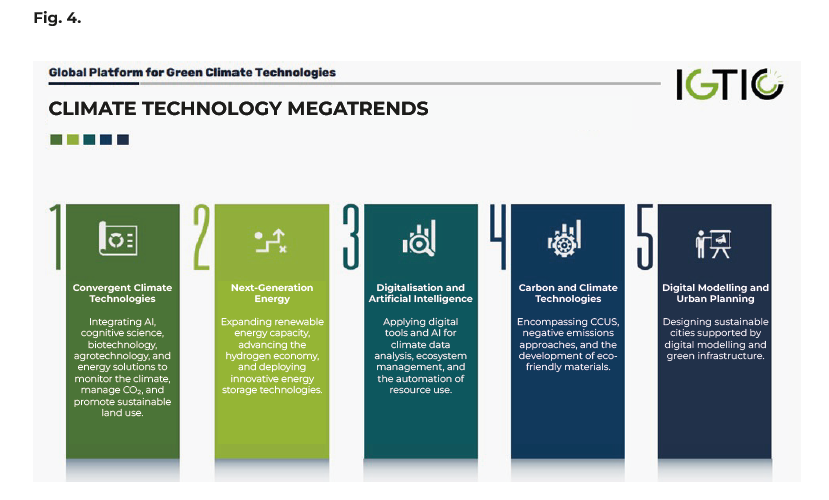
It is significant that experts have highlighted not only specific technologies, but also key trends shaping GreenTech: the use of digitalisation and big data for resource monitoring, rising investment in climate-focused start-ups, and the tightening of international climate commitments. Globally, the agenda is centred on reducing emissions and advancing renewable energy, while in Kazakhstan, a critical priority is adapting these technologies to the country's harsh continental climate and unique infrastructure conditions.
Environmental science worldwide is increasingly focused on convergent technologies (NBIC). The concept, first introduced by M. Roco and W. Bainbridge in their report Converging Technologies for Improving Human Performance (WTEC, 2002), emphasised that the synergy of multiple domains of knowledge generates a new technological and economic "core."
Over the past decade, the United States has developed an innovative system of environmentally friendly technologies capable of rapidly adjusting to new technological waves. NBIC technologies are shaping the markets of the future—ranging from smart materials and personalised medicine to cognitive technologies—which, according to experts, may exert an even deeper influence on human development than nuclear technologies.
This trajectory carries particular relevance for Kazakhstan and the wider Asia-Pacific region: the transition to a green economy cannot be separated from NBIC. Developments in biofuels, hydrogen energy, clean coal technologies, and ecological big data management systems are already directly tied to NBIC-driven innovations.
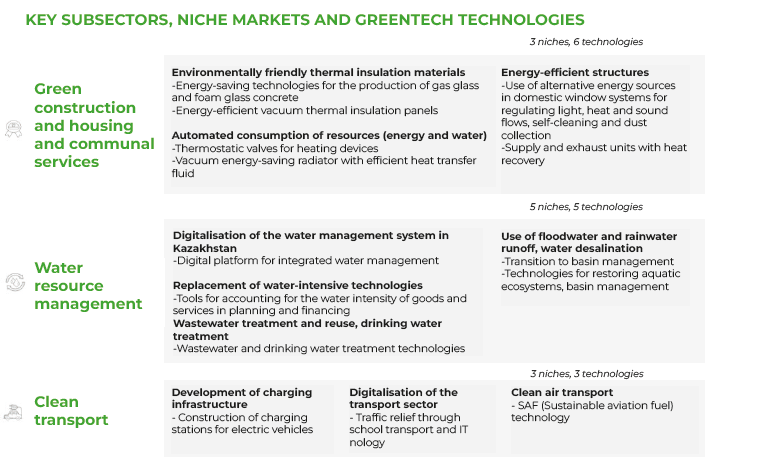
In this context, convergent technologies could provide the foundation for knowledge and technology transfer across the region, while Kazakhstan—by advancing the Green Bridge agenda—has the opportunity to act as a conduit between global scientific centres and regional priorities.
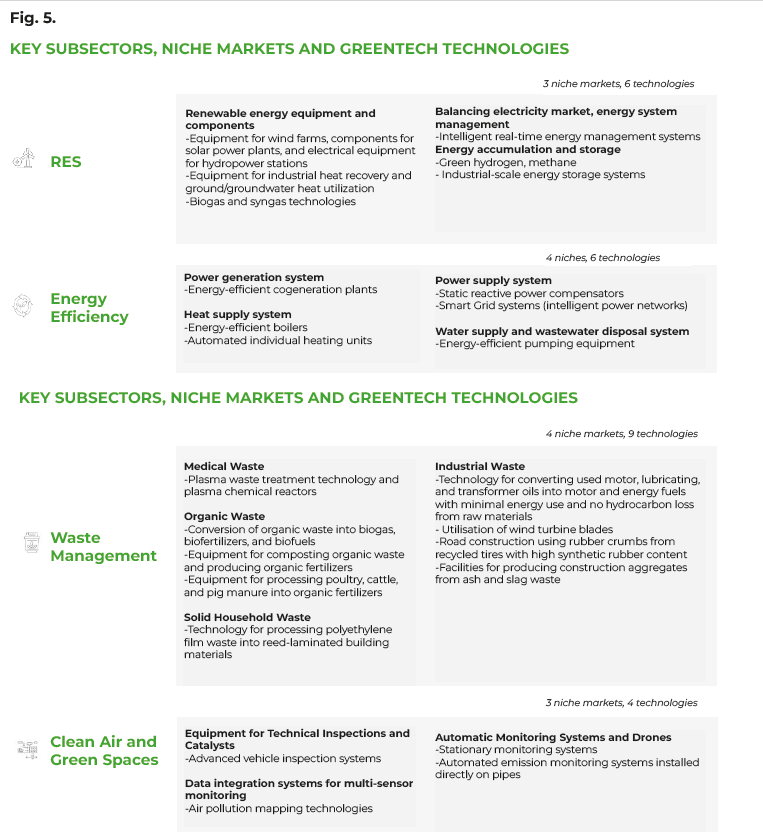
The results of the Foresight study, conducted under the auspices of QazInnovations, identified 26 priority technological niches and 39 "green" technologies for development in Kazakhstan.
In this regard, priority areas in the sphere of ecology include research on mitigating the effects of global climate change, the adoption of energy-efficient and environmentally friendly technologies, the development of alternative energy sources, hydrogen and biofuels, as well as the advancement and application of clean coal technologies.
THE GREEN BRIDGE PARTNERSHIP PROGRAMME: FROM VISION TO IMPLEMENTATION
The Green Bridge Partnership Programme (GBPP) establishes an ideological and political framework for countries transitioning toward sustainable economic models.
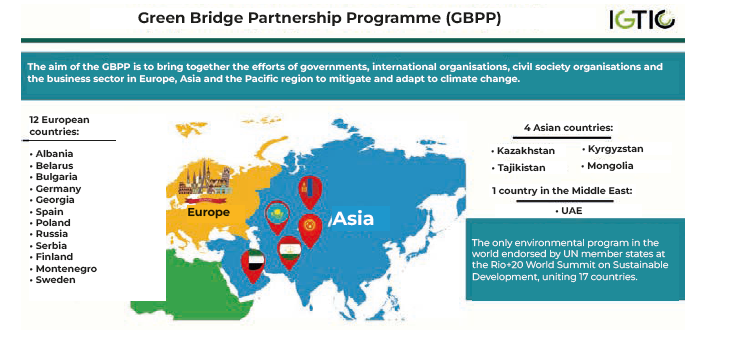
The programme facilitates multilateral cooperation among governments, private sector entities, scientific institutions, and international organizations across Europe and the Asia-Pacific region.
The GBPP's primary objective centers on unifying efforts across diverse stakeholders—government agencies, international organizations, research institutes, and business sectors—to accelerate the adoption of advanced environmental technologies. This collaborative approach has garnered significant international recognition, including acknowledgment as the sole interregional environmental programme endorsed by the United Nations at the Rio+20 World Summit on Sustainable Development. Additionally, both ESCAP (2010) and UNECE (2011) have supported the initiative through relevant resolutions.
Currently, the GBPP encompasses 17 participating nations: Albania, Bulgaria, Germany, Spain, Poland, Serbia, Finland, the United Arab Emirates, Montenegro, Sweden, Russia, Belarus, Georgia, Kazakhstan, Kyrgyzstan, Mongolia, and Tajikistan.
Kazakhstan has initiated a significant renewal of the GBPP by proposing the creation of a global digital platform for green climate technologies and best available techniques.
International Promotion: The initiative has gained significant international traction through active participation at major forums: COP29, Baku, Azerbaijan (November 2024), PowerTech International Forum, Almaty (April 2025), 81st Session of ESCAP, Bangkok (April 2025), Central Asian Conference on Climate Change (CACCC) 2025, Ashgabat.
In 2024, formal communications were dispatched through the Ministry of Foreign Affairs to 17 countries that have joined the GBPP initiative.
In 2025, bilateral meetings were held with key international partners, including the Embassy of the United Kingdom, the Embassy of Qatar, the EU Delegation to Kazakhstan, the Ministry of Environment of Romania, the Ministry of Ecology of Uzbekistan, the Ministry of Foreign Affairs of Turkmenistan, and the Ministry of Foreign Affairs of Azerbaijan.
DIGITAL GREEN BRIDGE PLATFORM
This proposal was formally announced at COP-29 in Baku in November 2024, marking a new chapter in international climate technology cooperation.
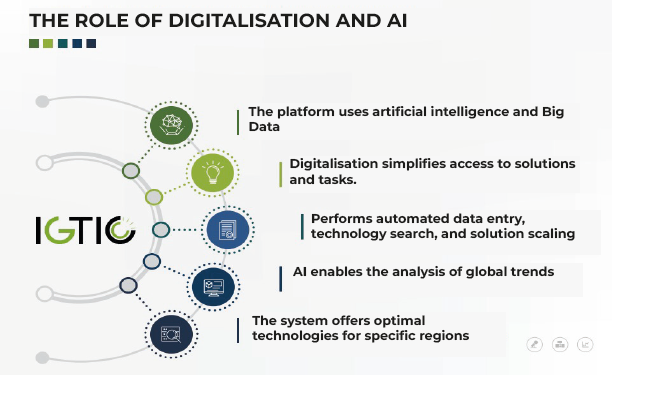
To advance this initiative, Kazakhstan has commenced detailed discussions with ESCAP regarding specific implementation strategies for the Green Bridge digital platform, targeting the 2025-2027 development period. The Digital Green Bridge platform represents a comprehensive ecosystem designed to integrate data, technologies, and stakeholders to accelerate global green transformation. The platform leverages artificial intelligence and big data analytics to systematise vast information flows while automating critical processes including technology identification, assessment, adaptation, and implementation.
Core platform capabilities include access to standardised methodologies and monitoring tools, Digital Measurement, Reporting, and Verification (DMRV) systems, mechanisms for knowledge exchange and experience sharing, integration with established international platforms such as UNEP, UNIDO, IRENA, and WIPO Green, as well as the creation of a unified digital ecosystem serving scientific organizations, businesses, governments, and investors.
The Digital Green Bridge serves as the foundational infrastructure for implementing the International Technical Agreement on Climate Technology Transfer. This framework provides transparent and coordinated mechanisms for technology transfer between nations, addressing critical aspects including intellectual property protection, information technology security, and financing arrangements.
The platform establishes uniform participation conditions for all GBPP countries, accelerates the deployment of advanced environmental solutions, and reduces barriers to technology commercialisation. Through predictive analytics, the system identifies promising technological solutions while strengthening Kazakhstan's position as both a regional leader and global participant in the green economy.
The proposed digital climate technology platform will enable the sharing of knowledge and experience, the adoption of best practices, and the exchange of information among GBPP countries and existing platforms, including those under the supervision of UNECE, as well as other private and regional initiatives.
KEY FOCUS AREAS OF THE DIGITAL PLATFORM INCLUDE:
Mitigation - reducing CO2 emissions, expanding renewable energy sources, deploying energy-efficient technologies, advancing CCUS, promoting waste recycling, and supporting the circular economy.
Adaptation - developing sustainable agriculture through drought-resistant crops and improved irrigation, enhancing water-use efficiency, building climate-resilient infrastructure, and restoring ecosystems.
The establishment of a Global Technology Transfer Platform will play a critical role in advancing international climate commitments, accelerating and strengthening the implementation of NDC, and fostering multisectoral cooperation among GBPP countries at both regional and global levels. It will also create opportunities to attract domestic and foreign investment to regions and cities, support the creation of new enterprises and green jobs, and enhance the economic and technological resilience of participating countries.
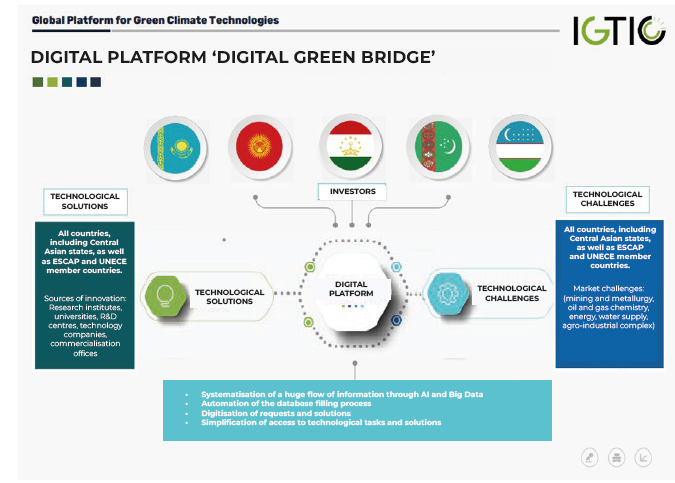
The development of a global digital platform for green climate technologies will include the following stages:
Stage 1: Technology Identification and Prioritisation
The GBPP digital platform employs a sophisticated selection methodology based on foresight analysis, industry statistics, and international benchmarking to identify technologies with significant international potential and maximum multiplier effects.
Priority consideration is given to solutions that simultaneously achieve emissions reduction, resource conservation, and productivity enhancement. Key technology categories include: solar photovoltaic systems and wind turbine technologies, energy-efficient engine systems and heat recovery solutions, advanced agricultural technologies including drip irrigation and vertical farming systems, biological pest control solutions and smart utility metering systems.
Within the GBPP digital platform, technologies with international potential and the highest multiplier effect are selected, based on foresight data, industry statistics, energy audits, and international benchmarking.
Stage 2: Technology Readiness Assessment and Local Adaptation
Each technology undergoes comprehensive analysis to determine its applicability within Kazakhstan's unique environmental conditions, including harsh continental climate, water quality variations, existing infrastructure limitations, and raw material availability.
Kazakhstan's leading academic and research institutions play crucial roles in this assessment process: Nazarbayev University, Research Institute of Ecology, Al-Farabi Kazakh National University, Kazakhstan-British Technical University (KBTU), Satbayev University. These institutions contribute through regulation development, equipment adaptation, comprehensive testing, methodological guidance, personnel training, and pilot project support.
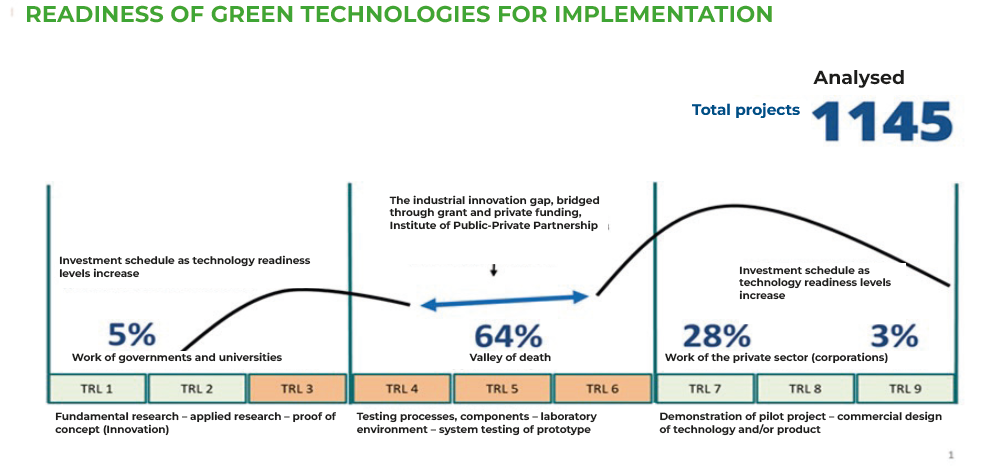
The 2023 Green Kazakhstan Foresight analysis examined 1,145 green technologies and projects, revealing that approximately 70% of initiatives are in early implementation readiness stages.
Building on this foundation, the International Centre for Green Technologies and Investment Projects conducted extensive research in 2024, collecting innovative solutions from 112 research institutes, 83 universities and 24 specialised organizations. This comprehensive effort yielded 623 scientific, technical, and business projects, including 391 research initiatives and 232 business-focused projects. Significantly, over 30% of these projects have achieved commercialisation readiness, including developments from the established Green Technology Register.
The December 3, 2024 agreement with The Republican State Enterprise "National Institute of Intellectual Property" and the establishment of WIPO Technology and Innovation Support Centre status provided access to international patent databases. This capability enables objective assessment of technological novelty, inventive level, and industrial applicability, confirming technology maturity and market potential.
Patent analysis has produced a preliminary catalogue of 34 green technologies with demonstrated international potential. To expand research scope, the analysis incorporated international and Eurasian patent applications, creating a comprehensive foundation for the GBPP digital platform and facilitating integration with WIPO GREEN for enhanced commercialisation and widespread technology implementation.
Thus, collaboration between universities, research institutes, and the GBPP ensures a comprehensive approach to assessing technological readiness, adapting technologies, and training specialists, which accelerates deployment and enhances the effectiveness of green projects in Kazakhstan.
Stage 3: Financial Support and Implementation Incentives
To address financial barriers that often impede green technology adoption, the GBPP provides multiple funding mechanisms: grant funding for pilot project development, preferential lending arrangements, tax incentive packages, international financing through established mechanisms including the Green Climate Fund (GCF), Global Environment Facility (GEF), and Asian Development Bank (ADB). This comprehensive financial framework enables enterprises to test technologies with minimal risk while accelerating subsequent commercialisation efforts.
Stage 4: Strategic Partnerships and International Collaboration
The GBPP has established collaborative relationships with leading global centers of excellence, including the United Nations Economic and Social Commission for Asia and the Pacific (ESCAP), the Climate Technology Centre and Network (CTCN), the International Renewable Energy Agency (IRENA), the United Nations Industrial Development Organization (UNIDO), the United Nations Environment Programme (UNEP), and the World Intellectual Property Organization GREEN platform. The programme utilises results from National Technology Assessments (TNAs) and implements various cooperation initiatives including international internships for Kazakh engineers, joint solar panel production projects with localisation components, and formal agreements with South Korea on smart city development.
The strategic focus has evolved toward creating a comprehensive global digital platform for climate technologies, facilitating new country participation, information and technology exchange, partner identification, funding attraction, and project monitoring capabilities.
Based on the recommendations of the 81st ESCAP Session, the development of the GBPP focuses on creating a global digital platform for climate technologies that facilitates country accession, knowledge and technology exchange, partner identification, funding attraction, and project monitoring. The Joint Action Plan for 2025-2027, submitted to ESCAP, provides for the establishment of a digital centre in Kazakhstan, transforming the country into a bridge between Europe and Asia, accelerating the exchange of green technologies in energy, transport, and agriculture, and elevating national initiatives to the level of global climate policy. Kazakhstan is becoming a central hub for technology transfer in the region, connecting Central, East, and South Asia with the Pacific Islands.
Stage 5: Demonstration, Evaluation, and Scaling
Successful pilot projects are developed into demonstration sites across Kazakhstan. The Almaty Region showcases advanced drip irrigation systems, while the Pavlodar Region features comprehensive waste processing facilities. Astana demonstrates smart lighting infrastructure, and Shymkent implements Hydro Process wastewater treatment technology.
Economic and environmental efficiency assessments enable the creation of model solutions suitable for broader scaling. International experience from UNEP and UNIDO programmes demonstrates that this systematic approach reduces innovation implementation time by 2-3 times while decreasing piloting costs by 30-40%.
GBPP STRATEGIC SIGNIFICANCE AND FUTURE PROSPECTS
The establishment of a global GBPP platform provides a robust foundation for achieving carbon neutrality by 2060 while strengthening Kazakhstan's leadership position in the green economy. This initiative creates new opportunities for investment attraction, job creation, and technology export development.
Particular importance is placed on developing mechanisms for advanced green technology transfer and fostering active international cooperation to accelerate innovation adoption and experience sharing. Regional scaling of the GBPP by 2030 will establish a Central Asian hub for technology transfer, contributing to sustainable development across the entire region.
Long-term success requires legislative framework improvements and necessary legal amendments to ensure effective green economy functioning, reduce ecosystem burden, and enhance Kazakhstan's global competitiveness.
INCENTIVE MEASURES AND PROPOSALS FOR LEGISLATIVE AMENDMENTS IN KAZAKHSTAN
Following the GreenTech technology foresight, a package of amendments to the Environmental, Tax, and Budget Codes, the Subsoil Code, and the draft Construction Code was developed together with the expert community to drive innovation across all seven areas of green technology. These amendments were presented and discussed at a joint roundtable with the Committee on Ecology and Environmental Management of the Mazhilis of the Parliament of the Republic of Kazakhstan.
These amendments align with the green economy vision outlined in the Concept for the Transition to a Green Economy, the Strategy for Achieving Carbon Neutrality by 2060, and related strategic documents. The initiatives focus on developing green financing mechanisms and enhancing investment attractiveness through financial institution involvement, creation of green technology infrastructure and enterprise incentive systems.
Key Legislative Priorities
- Expanding Green Financing Access involves the utilisation of administrative offense fine revenues, large subsoil user participation requirements, and grant financing expansion.
- Creating a Favorable Business Environment focuses on regulatory burden reduction for green enterprises and comprehensive tax incentive packages.
- Infrastructure and Acceleration Support encompasses the establishment of the GreenTech Hub International Technology Park with tax incentives and access for foreign companies under the Astana Hub model.
This approach also requires mandatory inclusion of projects in the green technology registry to ensure consistency and transparency in support measures.
GLOBAL DIGITAL PLATFORM FOR CLIMATE TECHNOLOGIES GBPP: OPPORTUNITIES, ACHIEVEMENTS, AND CHALLENGES
To date, 17 countries have already joined the GBPP, confirming the relevance of the initiative and its potential for regional and global impact.
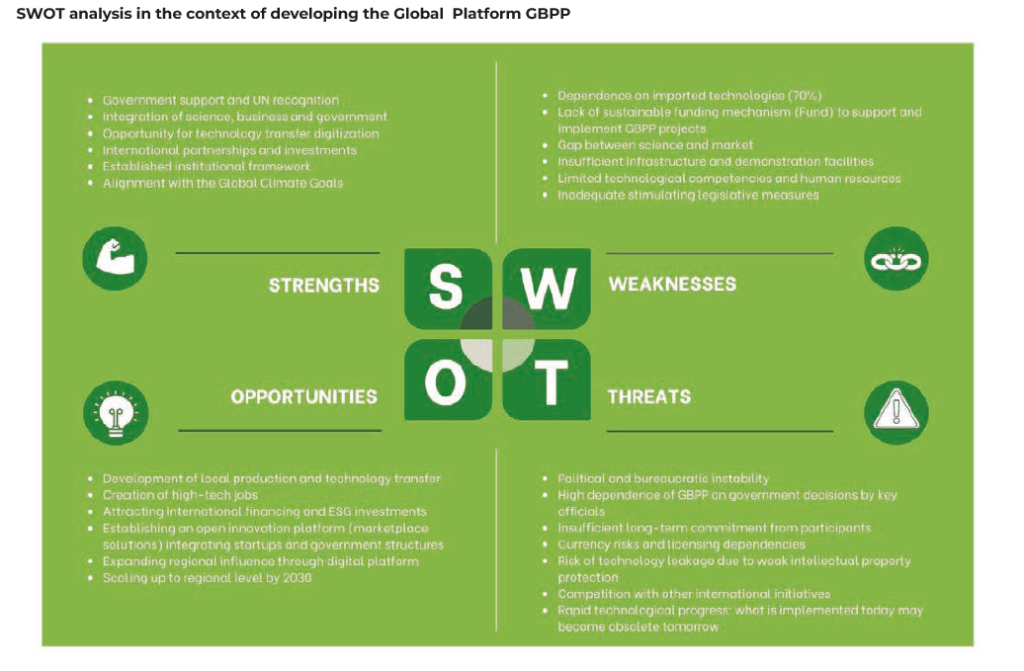
Despite the significant potential of the Green Bridge Partnership Program—including government support, specialist expertise, and international cooperation—innovation implementation faces a number of challenges. There are difficulties with trust and coordination in the corporate sector, limited resources for project implementation, and hesitancy at the level of sectoral ministries. The lack of stimulating legislative measures further slows the process of technology transfer and implementation of innovative solutions. At the same time, new opportunities are emerging: leveraging international experience, creating high-tech jobs, and developing partnership networks between universities, business, and government. The main risk lies in the instability of the political and bureaucratic environment, as well as insufficient long-term commitment from participants to the program's strategic objectives. Rapid technological progress means what is implemented today may become obsolete tomorrow.
An analysis of strengths, weaknesses, opportunities and threats shows that Kazakhstan has significant potential for the development of the Green Bridge Partnership Programme (GBPP), despite the existing challenges. Strengthening the institutional base, digitising technology transfer and actively involving international partners create the basis for overcoming the limitations identified in the SWOT analysis.
KEY STEPS FOR 2025-2027 INCLUDE INSTITUTIONAL DEVELOPMENT AND STRATEGIC PROMOTION OF THE GBPP:
- Joint Action Plan Approval: Formalisation of the roadmap between Kazakhstan's Ministry of Ecology and Natural Resources of the Republic of Kazakhstan and ESCAP, establishing long-term partnerships
- International Technical Agreement Development: Creation of comprehensive climate technology transfer framework including intellectual property, information technology protection, and financing aspects
- Engaging new interested countries in the global GBPP platform
- Presentation of the pilot version of the global digital platform and climate technology transfer methodology at international venues, such as COP30 in Belem, Brazil, in November 2025.
- Unified Ecosystem Creation: Integration of science, business, and government stakeholders with international platforms (UNEP, UNIDO, IRENA, WIPO Green, TNA), including the participation of 17 countries to demonstrate international demand of GBPP and global expansion potential
CONCLUSION
Today, Kazakhstan has a unique opportunity to provide the world with an effective tool—the Green Bridge Partnership Programme—that will drive green technology transfer and strengthen the country's role as both a regional and global leader in sustainable development. The Green Bridge Partnership Programme represents a vital link between global climate challenges and regional opportunities. Kazakhstan possesses the potential to become a key hub for green technology transfer in the Asia-Pacific region through strategic investment attraction, partnerships with technology leaders, and integration of national efforts into international mechanisms such as the United Nations and ESCAP frameworks.
The digital relaunch creates a unified platform for knowledge sharing, technology implementation, and climate initiative coordination.
For the successful advancement of the GBPP, it is essential to establish an open innovation ecosystem - a digital platform that brings together government, business, research centers, and international partners to accelerate the transfer of green climate technologies and enhance their accessibility.
Thus, GBPP needs to be elevated to a new stage: from a declarative initiative to a digital, technological, and institutional mechanism.
Winner announced for 100 MW solar auction in Kazakhstan
Chinese company ready to invest $1 billion in solar and wind generation in Kyrgyzstan
Meta to invest in space solar energy and ultra-long-duration energy storage
Tokyo pushing plan for world’s biggest floating wind power farm
Kazakhstan cancels 50 MW solar auction due to lack of participants
Tokayev ratifies Green Energy Corridor Agreement with Azerbaijan and Uzbekistan
China raises RES share to 60% of total installed capacity
Batys Kaspiy Energo wins auction for 250 MW wind farm in Atyrau region
Ember: Renewables overtake coal in global power generation for the first time
Kazakhstan continues accepting applications for May RES auctions
Water-energy balance of the region discussed by ministers of four Central Asian countries
Just transition: leaving no one behind in the energy transformation
CAREC and Central Asian universities sign new memoranda on green skills development
Kazakhstan and UNECE discuss energy resilience and low-carbon technologies
100,000 jobs and a skills gap: how Central Asia is preparing for the renewables boom
No transition without transmission: How Central Asia is building its energy future
ADB to invest $5.5bn across 15 projects in Kazakhstan
17 agreements worth over $2.3 billion signed at the opening of RES 2026 EXPO in Astana
World Bank to invest $1bn in Central Asia's energy integration
Kazakhstan and China to launch a 500 MW wind farm in Karaganda region