

International experience14.09.2025
EU4SustainableCentral Asia: Renewable Energy in Central Asia: New regional effort to strengthen EU-Central Asia energy collaboration and regional integration


Deutsche Gesellschaft fur Internationale Zusammenarbeit (GIZ) GmbH (The German federal enterprise for international cooperation), EU4SustainableCentralAsia project
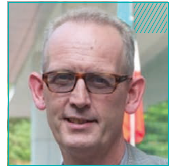
Sven Ernedal, Programme Manager

Galiya Daniyarova, Communication Specialist
Central Asia has a unique opportunity to build a green energy power system through an integrated regional approach based on variable renewable energy. Though each country – Kazakhstan, Kyrgyzstan, Tajikistan, Turkmenistan, and Uzbekistan – faces its own challenges, they share common needs, resources, and a long history of interdependence.
The region has a population of over 80 million people, with unique energy resources that are unevenly distributed. In particular, in Turkmenistan, Uzbekistan and Kazakhstan there are large reserves of fossil fuels, while Tajikistan and Kyrgyzstan have unique reserves of hydro resources. Currently, Uzbekistan and Kazakhstan are the driving force in the region in promoting solar and wind, setting the pace for renewable energy adoption. Meanwhile, Tajikistan and Kyrgyzstan hold the potential to become the region’s balancing hubs, leveraging their vast hydroelectric resources to ensure stability and support the growth of variable renewable energy.
The energy transition here is far more than an environmental imperative – it is equally an economic, social, and geopolitical transformation. The region experiences climate impacts more acutely than many parts of Europe, grappling with extreme weather and water scarcity to seasonal blackouts. Expanding solar, wind power and energy storage capacity can provide critical electricity during droughts and could potentially decrease the demand of electricity from hydropower and mitigating climate risks. Beyond just resilience, this renewable energy transition will also contribute to economic growth and new employment opportunities.
To address environmental and socio-economic challenges, contributing to a sustainable future for Kazakhstan and Central Asia through the promotion of renewable energy integration, Deutsche Gesellschaft für Internationale Zusammenarbeit (GIZ) GmbH (the German federal enterprise for international cooperation) is implementing a regional project, the EU4SustainableCentralAsia: Renewable Energy in Central Asia (EURECA).
About the project
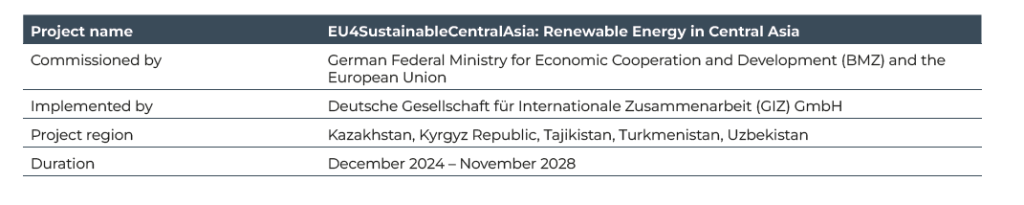
EURECA supports policymakers, power grid operators, and government agencies in all five Central Asian countries to create the right conditions for developing and integrating renewable energy sources. Commissioned by the German Federal Ministry for Economic Cooperation and Development and co-funded by the European Union, the project provides a platform for cross-border collaboration and targeted national-level assistance. It aligns with individual country priorities while advancing shared goals for climate action, water management, and energy transition.
“A key goal of the EURECA project is to optimize coordination, dispatching and management between energy companies in Central Asia. Just as important is fostering regional exchange and partnerships – creating spaces for public dialogue and encouraging the free flow of knowledge between our political partners, energy sector institutions, universities, researchers and private sector in Central Asia”.
The project is both an expansion of GIZ’s substantial green portfolio — spanning climate action, water management, hydrogen development, and energy efficiency — and a continuation of Germany’s Strategic Partnership with Central Asia through its Green Central Asia initiative. By promoting regional stability and reducing the impacts of climate change on glaciers and other critical resources such as water, land, and soil, EURECA contributes to improved food security, reliable water access, and healthier habitats for people, plants, and wildlife.
At the same time, the project marks a proactive step in fulfilling the European Union’s commitment to Central Asia. As part of the EU’s Global Gateway and Team Europe Initiative, it reflects a shared commitment to a strategic partnership based on shared values and mutual interests. “The EU remains a reliable, forward-looking partner for Central Asia, investing in its long-term sustainable development for mutual, long-lasting benefit. Consistency, predictability and ambition will continue to drive our joint efforts,” said António Costa, President of the European Council, following the first EU-Central Asia Summit in Samarkand.
First EU-Central Asia summit, 4 April 2025
On 4 April 2025, the first Central Asia - European Union Summit was held in Samarkand. It was chaired by the President of the Republic of Uzbekistan Shavkat Mirziyoyev. The EU was represented by the President of the European Council António Costa and the President of the European Commission Ursula von der Leyen. Together with President Mirziyoyev, Central Asian countries were represented by the President of the Republic of Kazakhstan Kassym-Jomart Tokayev, the President of the Kyrgyz Republic Sadyr Japarov, the President of the Republic of Tajikistan Emomali Rahmon and the President of Turkmenistan Serdar Berdimuhamedov.
Against the backdrop of increasing high-level bilateral engagements over the past years and a rapidly evolving multilateral- and regional agenda, the EU and Central Asia leaders agreed to elevate relations between the two regions by establishing a strategic partnership.
“Significant efforts have been made to strengthen regional cooperation within Central Asia, overcoming challenges and fostering closer partnerships to ensure prosperity, sustainable development and to accelerate the energy transition and decarbonisation, strengthening stability, security, and good neighbourly relations. In this respect, the EU welcomed strengthened regional cooperation through regular Consultative Meetings of the Heads of State of Central Asia. The EU expressed its readiness to support ongoing and future actions in support of further regional integration…”
From planning to action
During 2024-2025, the EURECA team engaged with key partners across the region through interviews and consultations. These in-depth discussions with national and regional stakeholders helped shape a clear consensus on the project’s main objectives and activities.
EURECA aims to create the right environment for renewable energy growth – supporting partners in crafting effective policies, adopting digital tools, and enhancing grid management practices. The project will also aim to continue coordinating among donors, builds on previous efforts, and ensure continuity in the region’s energy transition journey.
Anticipated activities will support the region in planning and managing more flexible energy systems, while helping partners attract investments in variable renewables.
Learning and collaboration in Europe
In October 2025, the EURECA project will host a regional study tour to Belgium for delegations from Central Asia. The group includes key decision-makers shaping energy policies and regulatory frameworks, along with the representatives from the regional Coordinating Dispatch Center.
While the agenda includes many meetings with Belgian counterparts, the tour also offers invaluable opportunities for participants from Central Asia to connect, exchange insights, and spark fresh ideas among themselves.
The tour will showcase Europe’s experience in integrating variable renewable energy - covering enabling policies, financing tools to flexible grids, storage technologies, digital systems, and institutional cooperation models.
By the end of the tour, participants aim to align on shared priorities, identify concrete steps to boost cross-border electricity trade, and open new avenues for regional collaboration.
Central Asia at the Global Gateway Forum 2025
At the same time, Central Asian ministers and deputy ministers will travel to Brussels to take part in the second Global Gateway Forum during 9–10th October 2025. Building on the success of its inaugural event in 2023, the Forum will bring together high-level representatives from governments, financial institutions, the private sector, and civil society to explore ways to scale up sustainable investment partnerships amid a complex geopolitical and economic landscape.
Confirmed speakers include Ursula von der Leyen, President of the European Commission; Jozef Síkela, European Commissioner for International Partnerships; Dubravka Šuica, European Commissioner for the Mediterranean; and Marta Kos, European Commissioner for Enlargement — underscoring the EU’s deep commitment to engaging with partner regions on shared strategic priorities.
Launched in 2021 Global Gateway is the European Union’s flagship strategy to boost smart, clean, and secure connections across digital, energy, and transport sectors, while strengthening health, education, and research systems worldwide. With ambitions to mobilise up to €300 billion in investments through a Team Europe approach, it combines the resources and expertise of EU institutions, Member States, and development banks to leverage private sector capital.
Rooted in democratic values, transparency, and high environmental and social standards, Global Gateway seeks to close the global investment gap by delivering quality infrastructure and fostering equal partnerships.
For Central Asia, participation in the Forum offers a platform to strengthen ties with the EU, explore transformative projects, and align regional priorities with the broader global agenda for sustainable and resilient growth.
Engagements like these are vital for raising the region’s profile on the world stage, ensuring that Central Asia’s priorities are reflected in global decisions on sustainable infrastructure, energy transition, and climate resilience. This is one of the opportunities EURECA aims to present to the partners to help unlock new global partnerships, attract investment, and accelerate the implementation of projects that deliver lasting benefits across the region.
Israel to build its largest-ever solar power plant in the Negev desert
Solar pensions and wind dividends: how South Korea is turning renewables into a rural development tool
Kyrgyzstan announces tender for land plots for construction of six small hydropower plants
ADB to invest $70 billion in Asia's power grids and digital infrastructure
Kazakhstan and World Bank discuss energy integration in Central Asia
Construction of 500 MW wind power plant begins in Karaganda region
50 MW solar power plant auction winner determined in Kazakhstan's Southern Grid Zone
Rooftop solar panels: Kyrgyzstan prepares rules for households and businesses
Europe’s rising heat: Can renewables provide the solution?
Winner announced for 100 MW solar auction in Kazakhstan
Chinese company ready to invest $1 billion in solar and wind generation in Kyrgyzstan
Meta to invest in space solar energy and ultra-long-duration energy storage
Tokyo pushing plan for world’s biggest floating wind power farm
Kazakhstan cancels 50 MW solar auction due to lack of participants
Tokayev ratifies Green Energy Corridor Agreement with Azerbaijan and Uzbekistan
China raises RES share to 60% of total installed capacity
Batys Kaspiy Energo wins auction for 250 MW wind farm in Atyrau region
Ember: Renewables overtake coal in global power generation for the first time
Kazakhstan continues accepting applications for May RES auctions
Water-energy balance of the region discussed by ministers of four Central Asian countries