

World News16.08.2023
High-tech solar ‘leaves’ create green fuels from the sun


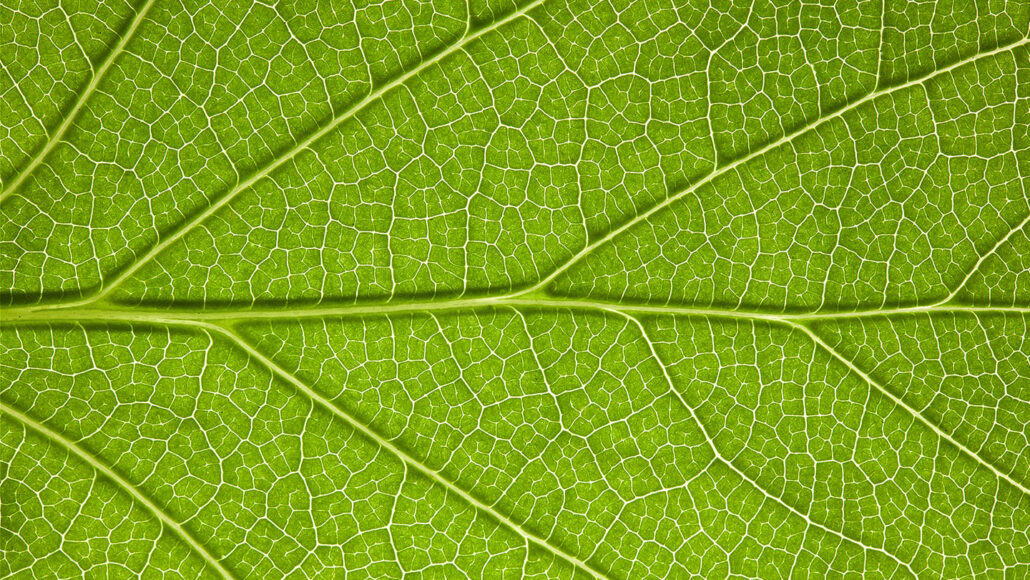
QAZAQ GREEN. Green plants are amazing. Powered solely by the sun, they make their own food, or fuel. Researchers around the world have been striving to make fuels for human use in much the same way. A new device taps the power of sunlight to make a liquid fuel, Science News Explores reports.
If it can be affordably scaled up, the device might help decarbonize societies around the world. That’s a needed step toward limiting climate change.
The leaves of most plants contain chlorophyll. In the presence of sunlight, this green pigment converts water and carbon dioxide (CO2) into sugars and oxygen.
A single protein in chlorophyll splits apart molecules of water, explains Yulia Pushkar. She’s a biophysicist at Purdue University in West Lafayette, Ind. “In artificial photosynthesis,” she says, “we try to mimic the function of [plant] proteins.”
Breaking the bonds that link water’s hydrogen and oxygen atoms releases energy. That’s what powers the rest of photosynthesis. The end result: sugars that fuel a plant’s growth. Researchers want to make Earth-friendly replacements for fossil fuels. These might power heating or engines, such as those in cars and airplanes.
Researchers at the University of Cambridge, in England, have found one way to do this. Their new “artificial leaf” makes alcohol fuels — ethanol and propanol — from CO2 and water.
And it does this “using sunlight as the only energy source,” says Motiar Rahaman. He led the new work. Burning those alcohols will release energy, water and oxygen, this scientist notes — but no planet-warming gases.
Turning over a new ‘leaf’
Many different materials can split water molecules. The Cambridge team’s new device uses minerals for the task.
Their “leaf” consists of a solar cell made with a mineral, perovskite (Pur-OV-skyte). It absorbs light and releases electrons. This part is connected to a catalyst, made from copper and palladium. It converts CO2 into an alcohol fuel. Another mineral — bismuth vanadate — absorbs light and breaks water molecules apart, releasing oxygen.
Those elements all together make up a solar leaf.
In sunlit water enriched with CO2, this solar leaf begins the water-splitting process. This releases oxygen, and the catalyst converts the CO2 into alcohol fuels.
Peidong Yang at the University of California, Berkeley also works on artificial leaves. This chemist praises the Cambridge “leaf” for being able to make liquid fuels from the sun. But there are more efficient ways to make solar fuels, he notes.
Instead of using light-absorbing minerals, Yang’s team works with bacteria. This method captures sunlight to split molecules of water into oxygen, electrons and protons. Bacteria then combine CO2 with these ingredients to efficiently make the chemical acetate (AA-seh-tayt). This small fatty acid can later be converted into other types of fuels.
Partnering with bacteria creates more than just fuel, says Joanna Kargul. She’s a biochemist at the University of Warsaw in Poland. There she runs its Solar Fuel Lab. “We can make plastics, fertilizers and basically everything we use that currently relies on fossil fuels,” she says of these bacterial systems.
Kargul, too, praises the Cambridge team’s device. But she notes that it’s challenging to take any of these devices beyond the lab and into the marketplace. The tools must first become far more efficient. And making them larger can run into new technical problems (such as short circuits).
Also, she says, relying on minerals is a less efficient pathway to create these fuels. Scaling up such systems will require lots of those materials. So it’s important they are readily available and not too costly.
Lanzatech, a company in Skokie, Ill., has just scaled up one artificial-leaf technology. Its system makes jet fuel, plastics and synthetic fabrics from bacteria fed with CO2 pollution from nearby factories.
When will solar-derived liquid fuels become widely available? Kargul thinks portable systems should be able to make such fuels, as needed, in another 25 years or so. These systems won’t rely on toxic products — or make pollution — while producing fuels straight from the sun.
The leaves of most plants contain chlorophyll. In the presence of sunlight, this green pigment converts water and carbon dioxide (CO2) into sugars and oxygen.
A single protein in chlorophyll splits apart molecules of water, explains Yulia Pushkar. She’s a biophysicist at Purdue University in West Lafayette, Ind. “In artificial photosynthesis,” she says, “we try to mimic the function of [plant] proteins.”
Breaking the bonds that link water’s hydrogen and oxygen atoms releases energy. That’s what powers the rest of photosynthesis. The end result: sugars that fuel a plant’s growth. Researchers want to make Earth-friendly replacements for fossil fuels. These might power heating or engines, such as those in cars and airplanes.
Researchers at the University of Cambridge, in England, have found one way to do this. Their new “artificial leaf” makes alcohol fuels — ethanol and propanol — from CO2 and water.
And it does this “using sunlight as the only energy source,” says Motiar Rahaman. He led the new work. Burning those alcohols will release energy, water and oxygen, this scientist notes — but no planet-warming gases.
Turning over a new ‘leaf’
Many different materials can split water molecules. The Cambridge team’s new device uses minerals for the task.
Their “leaf” consists of a solar cell made with a mineral, perovskite (Pur-OV-skyte). It absorbs light and releases electrons. This part is connected to a catalyst, made from copper and palladium. It converts CO2 into an alcohol fuel. Another mineral — bismuth vanadate — absorbs light and breaks water molecules apart, releasing oxygen.
Those elements all together make up a solar leaf.
In sunlit water enriched with CO2, this solar leaf begins the water-splitting process. This releases oxygen, and the catalyst converts the CO2 into alcohol fuels.
Peidong Yang at the University of California, Berkeley also works on artificial leaves. This chemist praises the Cambridge “leaf” for being able to make liquid fuels from the sun. But there are more efficient ways to make solar fuels, he notes.
Instead of using light-absorbing minerals, Yang’s team works with bacteria. This method captures sunlight to split molecules of water into oxygen, electrons and protons. Bacteria then combine CO2 with these ingredients to efficiently make the chemical acetate (AA-seh-tayt). This small fatty acid can later be converted into other types of fuels.
Partnering with bacteria creates more than just fuel, says Joanna Kargul. She’s a biochemist at the University of Warsaw in Poland. There she runs its Solar Fuel Lab. “We can make plastics, fertilizers and basically everything we use that currently relies on fossil fuels,” she says of these bacterial systems.
Kargul, too, praises the Cambridge team’s device. But she notes that it’s challenging to take any of these devices beyond the lab and into the marketplace. The tools must first become far more efficient. And making them larger can run into new technical problems (such as short circuits).
Also, she says, relying on minerals is a less efficient pathway to create these fuels. Scaling up such systems will require lots of those materials. So it’s important they are readily available and not too costly.
Lanzatech, a company in Skokie, Ill., has just scaled up one artificial-leaf technology. Its system makes jet fuel, plastics and synthetic fabrics from bacteria fed with CO2 pollution from nearby factories.
When will solar-derived liquid fuels become widely available? Kargul thinks portable systems should be able to make such fuels, as needed, in another 25 years or so. These systems won’t rely on toxic products — or make pollution — while producing fuels straight from the sun.
30.04.2026
Kazakhstan and World Bank discuss energy integration in Central Asia
Kazakhstan and World Bank discuss energy integration in Central Asia
30.04.2026
Construction of 500 MW wind power plant begins in Karaganda region
Construction of 500 MW wind power plant begins in Karaganda region
30.04.2026
50 MW solar power plant auction winner determined in Kazakhstan's Southern Grid Zone
50 MW solar power plant auction winner determined in Kazakhstan's Southern Grid Zone
30.04.2026
Rooftop solar panels: Kyrgyzstan prepares rules for households and businesses
Rooftop solar panels: Kyrgyzstan prepares rules for households and businesses
30.04.2026
Europe’s rising heat: Can renewables provide the solution?
Europe’s rising heat: Can renewables provide the solution?
29.04.2026
Winner announced for 100 MW solar auction in Kazakhstan
Winner announced for 100 MW solar auction in Kazakhstan
29.04.2026
Chinese company ready to invest $1 billion in solar and wind generation in Kyrgyzstan
Chinese company ready to invest $1 billion in solar and wind generation in Kyrgyzstan
29.04.2026
Meta to invest in space solar energy and ultra-long-duration energy storage
Meta to invest in space solar energy and ultra-long-duration energy storage
29.04.2026
Tokyo pushing plan for world’s biggest floating wind power farm
Tokyo pushing plan for world’s biggest floating wind power farm
28.04.2026
Kazakhstan cancels 50 MW solar auction due to lack of participants
Kazakhstan cancels 50 MW solar auction due to lack of participants
28.04.2026
Tokayev ratifies Green Energy Corridor Agreement with Azerbaijan and Uzbekistan
Tokayev ratifies Green Energy Corridor Agreement with Azerbaijan and Uzbekistan
28.04.2026
China raises RES share to 60% of total installed capacity
China raises RES share to 60% of total installed capacity
28.04.2026
Batys Kaspiy Energo wins auction for 250 MW wind farm in Atyrau region
Batys Kaspiy Energo wins auction for 250 MW wind farm in Atyrau region
27.04.2026
Ember: Renewables overtake coal in global power generation for the first time
Ember: Renewables overtake coal in global power generation for the first time
27.04.2026
Kazakhstan continues accepting applications for May RES auctions
Kazakhstan continues accepting applications for May RES auctions
27.04.2026
Water-energy balance of the region discussed by ministers of four Central Asian countries
Water-energy balance of the region discussed by ministers of four Central Asian countries
26.04.2026
Just transition: leaving no one behind in the energy transformation
Just transition: leaving no one behind in the energy transformation
24.04.2026
CAREC and Central Asian universities sign new memoranda on green skills development
CAREC and Central Asian universities sign new memoranda on green skills development
24.04.2026
Kazakhstan and UNECE discuss energy resilience and low-carbon technologies
Kazakhstan and UNECE discuss energy resilience and low-carbon technologies
24.04.2026
100,000 jobs and a skills gap: how Central Asia is preparing for the renewables boom
100,000 jobs and a skills gap: how Central Asia is preparing for the renewables boom